
Does Elevation Change Tire Pressure?
It’s true that tire air pressure is important for fuel economy and range, stopping power, traction, control, and the life of your tires. While tire air pressure can be affected by temperature and time, elevation, also referred to as “altitude” by some, does not have a significant impact on tire air pressure. If you plan to visit higher or lower elevations, especially during the winter months, there are a few things you can do to ensure those tires stay properly inflated.
Why Tire Pressure Changes at Higher Elevations
While tires will typically lose about 1-2 PSI (pounds per square inch) per month as air escapes from the valve stem, bead seat, and tread, significant elevation changes over a short period of time do not alter the actual amount of air in your tires.
Even with elevation changes, the amount of air in your tires will remain mostly the same, even if you’re going from a low elevation, such as San Francisco, to Leadville, Colorado (the highest city in the U.S. at 10,200 feet).
So, why do air pressure dashboard indicators light up at higher and lower elevations? It’s all due to atmospheric pressure.

Lower Elevations = Air Pressure Pushing Against Tire
That pressure increases as you move closer to sea level, pushing against your tires. This can cause the air pressure reading in your tires to increase slightly.

Higher Elevations = Air Pressure Pushing Out
As you go up in elevation, the air pressure on the tires decreases, allowing the air inside the tires to push out more easily, lowering the overall air pressure reading.
Not sure what air pressure you need in your tires? Stop by your local Les Schwab for a free air check and top-off.
How Much Does Tire Pressure Change With Elevation?
The short answer: very little on its own.
Changes in elevation do not add or remove air from your tires. Instead, small differences in atmospheric pressure at higher and lower elevations can cause minor changes in how tire pressure is measured, even though the amount of air inside the tire stays the same.
Overall, the air pressure in your tires will increase by 0.5 PSI for every 1,000 feet you climb in elevation. For most drivers, elevation changes over a typical trip may result in small pressure reading fluctuations, often around 1 PSI or less. These minor shifts are usually not enough to affect handling or safety, but they can contribute to a TPMS tire pressure warning if your tires were already near the lower end of the recommended range.

Elevation vs Temperature: Why Tire Pressure Changes Can Be Confusing
The biggest changes in tire air pressure usually come from temperature, not elevation. Driving in mountain regions or colder climates can reduce the overall pressure inside your tire by 1 PSI for every 10º F drop in temperature.
Because higher elevations may be colder, it’s easy to assume elevation is the primary cause of pressure loss. In reality, cold air causes the air inside your tires to condense, taking up less space inside the tire. That shift can have a much greater impact on tire pressure than elevation alone. This is why tire pressure warnings are more common during seasonal temperature shifts and/or winter travel.

Why Your Tire Pressure Light May Turn On or Off in the Mountains
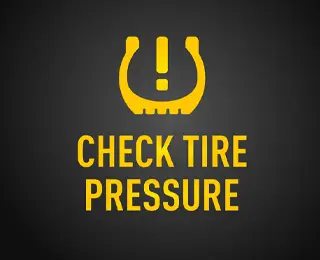
Temperature drops, especially with the first freeze in your region, can play havoc with your car’s tire pressure monitoring system (TPMS). Even small changes in pressure can cause the warning light to turn on, particularly if your tires were already slightly underinflated.
If your TPMS light comes on, don’t worry. The professionals at Les Schwab are here to check the air pressure in your tires. They’ll even add air if needed.
Do You Need To Adjust Tire Pressure at High Elevation?
As long as the PSI in your tires remains within manufacturer specifications, you might not need to add to or remove air from your tires as you gain or lose elevation.
To play it safe, here’s how to check your tire pressure at any elevation. A good practice is to check and adjust your tire pressure when they are cold, before you leave, and after you reach your destination. This helps prevent over-adjusting for small, temporary pressure changes that can occur during the drive.
When It Makes Sense To Check or Adjust Tire Pressure
There are a handful of times that it makes sense to check the air pressure in your tires. Those include just before leaving on a long trip, before and after towing a heavy trailer or hauling a lot of weight, venturing into colder or warmer climates, and after significant elevation changes. A quick check of your tire pressure will probably be enough. Here’s how to check your air pressure and put air in your tires.
Schedule your free pre-trip safety check at Les Schwab. Our professionals will give your tires, wheels, battery, brakes, and alignment a free visual inspection. They’ll even check your tire air pressure and top them off if needed.
Practical Tips for Mountain and Long-Distance Driving
Keeping your tire air pressure in check with changes in elevation and temperature is easy with these quick tips.
- Establish a baseline pressure while you’re at home.
- Know your home town’s elevation for reference during trips.
- Review the driver’s side door placard for the manufacturer’s suggested PSI.
- Check the air pressure in your tires in the morning, before you drive anywhere.
- Follow the 10º F rule. If the temperature changes by 40º, you could lose up to 4 PSI.
- Don’t forget to check the spare tire.
- Watch your elevation gain. While most trips won’t see enough elevation gain or loss to affect the air pressure significantly, it’s always best to play it safe.
Still Concerned? Get Your Tire Pressure Checked for Peace of Mind
It’s totally normal for the tire pressure to fluctuate over time and with temperature and elevation. To add safety to your next outing, stop by your nearby Les Schwab, and our professionals will be glad to check your tire air pressure for free.
Book an Appointment
Les Schwab Tire Team
Published: April 21, 2026
Find more content from our expert tire team on YouTube.
What you need to know
TPMS Light Coming on in Cold Weather? Here’s Why
Your tire pressure light might come on when temperatures drop. Follow these steps to diagnose your tire pressure light and make sure you have enough air in your tires.
Guide to Tire Pressure Monitoring Systems
A guide to tire pressure monitoring systems, why they’re so useful, and what to do if your TPMS light is on.
Resetting the Tire Pressure Light on Your Car
How do you reset the tire pressure light on a car? You'll find the answer in our complete guide plus find a ton more information on how to maintain your tires.