Quick Tips to Start Your Overlanding Journey
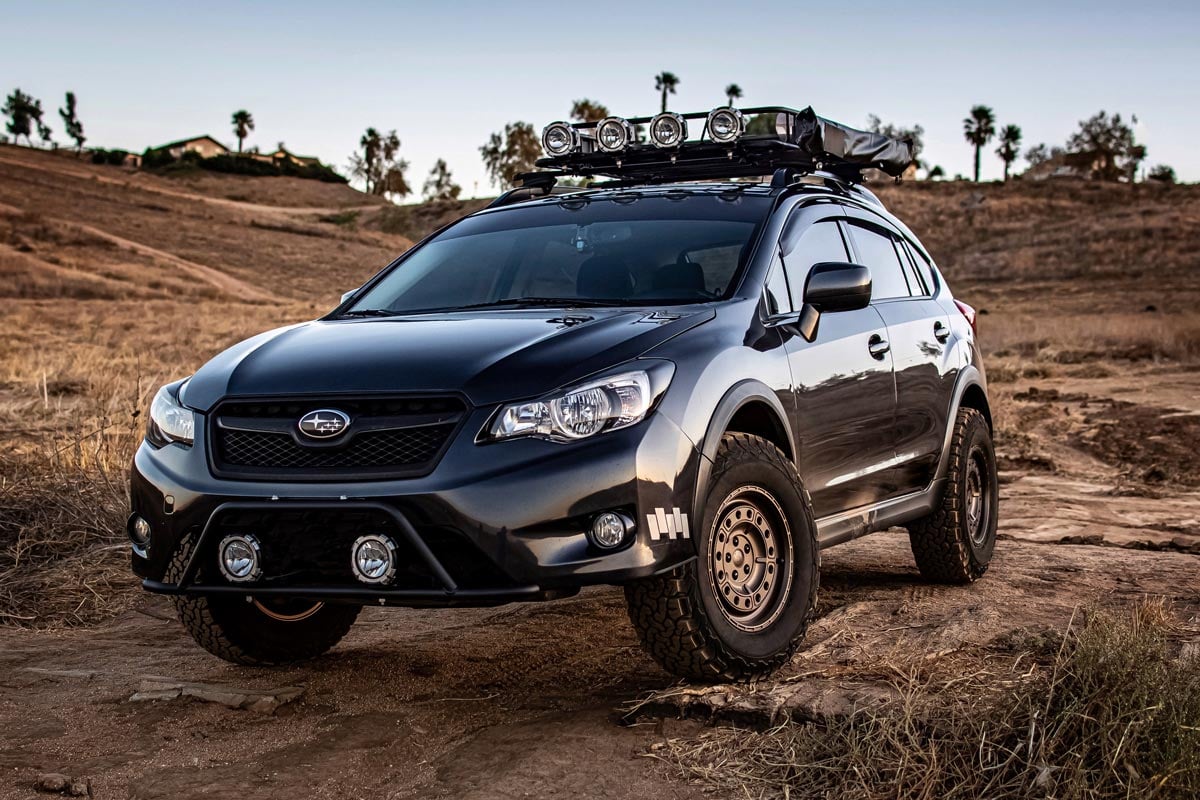
Overlanding got its start in the Australian outback as a way to journey into the wilderness while always having everything a person needs to survive. Fast forward to today, and Overlanding has become something of a personal statement. When your vehicle is modified for an overland adventure, it stands out with an extra bold stance and added clearance to accommodate beefier tires.
Here are some quick tips to get your vehicle ready for an overland journey.
Start With the Vehicle
Overlanding is all about the journey. But it’s hard to enjoy that journey in the wrong vehicle. Popular options that can easily be raised a few inches include light trucks and SUVs like the Toyota 4-Runner and crossovers such as the Subaru Crosstrek.
Give Yourself Some Clearance
Even adding just two inches to your vehicle’s suspension can make a big difference. Of course, people will notice as you drive around town. But more importantly, you’ll be better prepared for off-roading and outfitting your vehicle with the remaining necessities, including gear, food, and a roof-top tent.
At Les Schwab, we have suspension lift kits in stock for most vehicles. When we install it, we’ll double-check the suspension, brakes, shocks, steering, and alignment. You know, the important stuff. We’ll even perform a retorque and check the alignment to ensure your lift is done right.
Do You Need Bigger Wheels and Tires?
Once you’ve lifted your vehicle a couple of inches, you can choose to keep the same height tires on the vehicle. However, you could be missing out on some added clearance and traction. Upgrading to a bigger wheel and tire package will allow you to choose beefier off-road tires for your vehicle, which are designed for taking you off the beaten path.
Off-road tires typically have larger voids between the tread blocks. Those voids allow the tires to dig into dirt, sand, and rocks, giving you more traction. Plus, the thicker tread blocks in off-road tires can better withstand cuts and punctures.
Les Schwab Tip: We can help you pick the right combination of off-road and highway capabilities to meet your needs.
Items You’ll Need
Once you’re ready for an overland adventure, you’ll want to outfit your vehicle with all the necessities. This includes a tire-patch kit and air compressor, a spare tire that is mounted to the top or back of your vehicle, a jack, plenty of food and prep tools, water, a roof rack, and possibly a roof tent.
Why a roof tent? These popular options allow for easy set up after a long day of driving off-road. Plus, they don’t take up precious cargo space on the inside of your vehicle, where you’ll be storing food, sleeping bags, and clothes. You could also bring along extra flashlights, a portable generator, and a first-aid kit.
Les Schwab Tip: As with any outdoor adventure, always pack out what you pack in...and more.
Get Your Overland Lift Done Right
The pros at Les Schwab have been lifting trucks, crossovers, and SUVs for years. Stop by today and we’ll show you all of your options, including the perfect wheel and tire packages for added style and off-road attitude.
Schedule an Appointment
How to Choose a New Set of Custom Wheels
Adding a set of custom wheels can add a lot of visual appeal to just about any vehicle. We’ve put together some recommendations to help you choose the right wheels for your car or truck, including aesthetics, safety, size, fit, and tech compatibility.
Looking Good
The style and finish on a set of custom rims can dramatically change the look of your car or truck. Start shopping right now or visit your local Les Schwab where you’ll find Wheel Discovery Centers. There, you can see specific sets of custom wheels on the make, model, year, and color of your vehicle. This is a great way to sift through the many options and narrow your choices before making a commitment.
Think Safety
Proper fit is crucial when choosing custom wheels. The pros at Les Schwab will help you look at three vital areas before choosing your set of wheels.
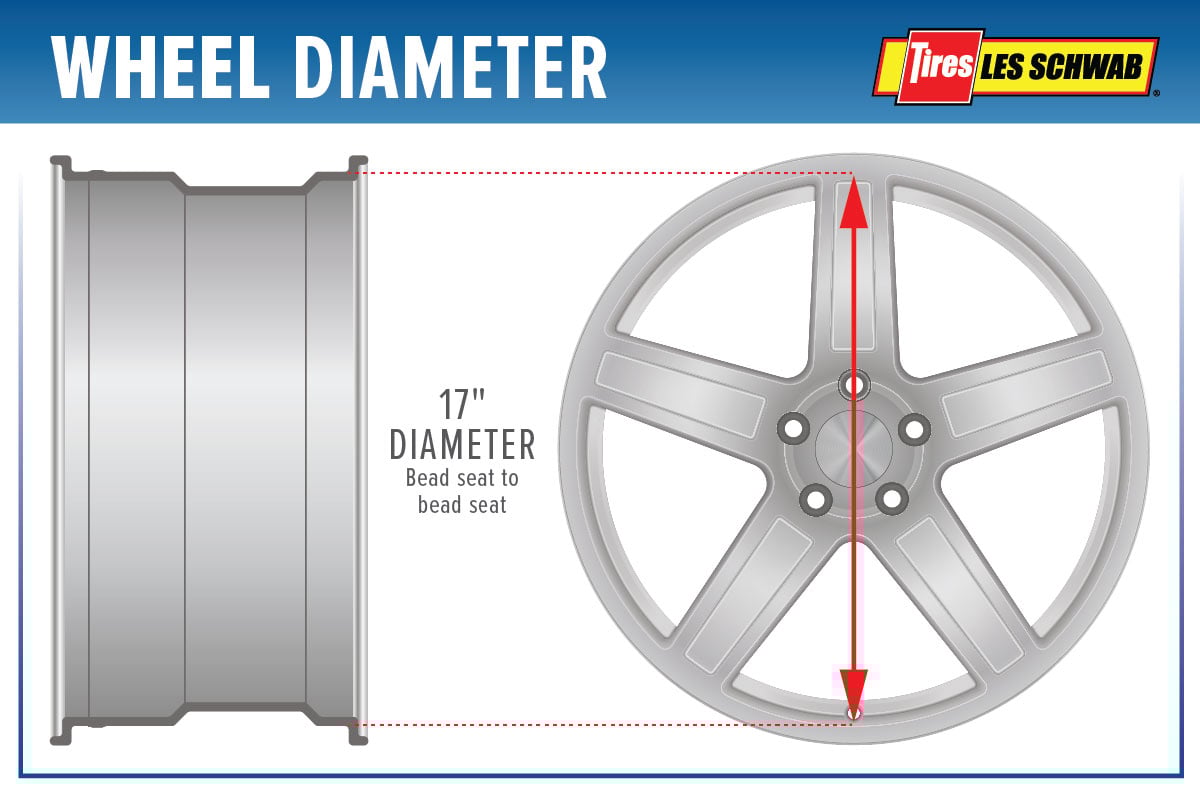
Overall Diameter: The wheel and tire combination should always clear the braking components, suspension parts, and the body of the vehicle. This is important whether you want to increase the diameter of your wheels for a street-worthy look, or decrease the wheel diameter for more tire sidewall and better off-road performance.
Offset and Backspace: To ensure proper clearance, it’s critical to know how far inside and outside the entire wheel and tire package will sit in the wheel well. Improper backspace or offset can cause interference with things like the body and steering components, and possibly decrease your turning radius.
Proper Mounting: Many of today’s vehicles come from the factory with wheels that fit precisely around the hub. This is referred to as hub-centric fitment, which helps provide a consistent centering of the wheel and tire assembly when mounted to the vehicle. This reduces the chance of an imbalance that may result in a vibration in the steering wheel or seat while driving. Our team understands the importance of maintaining a hub-centric fit whenever aftermarket wheels are being considered.
How to Pick the Right Size
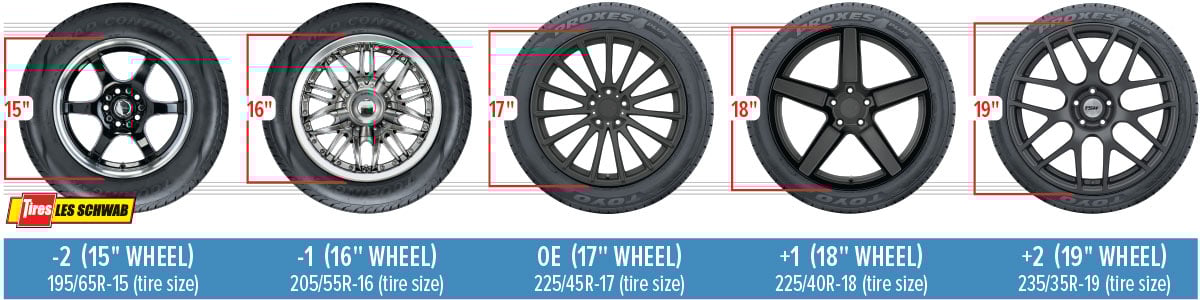
There are many sizes to consider when purchasing new wheels. The image below is an example of how plus and minus sizing works. Plus sizing boosts the diameter of your wheels while decreasing the profile of the tire sidewall to match the overall tire diameter suggested by the manufacturer. Minus sizing works in the opposite way to allow for a taller sidewall.
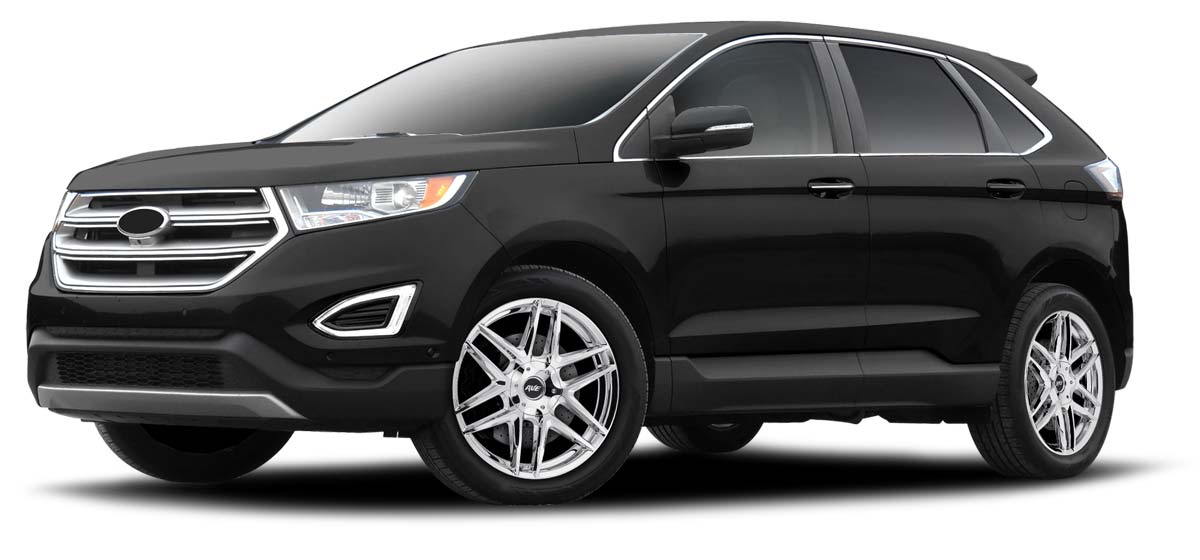
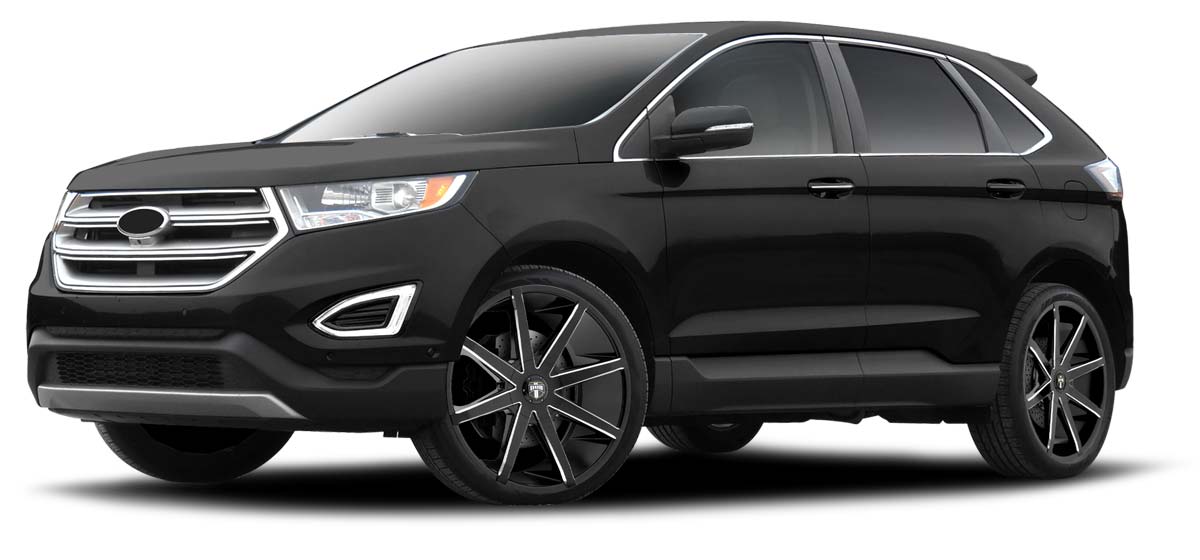
Here’s a comparison of how two wheel-tire packages of different sizes look on the same vehicle.
Bolt-Pattern Matters
There are a variety of bolt patterns and your new custom wheels must match in order to fit your vehicle properly. Even if your vehicle has five lugs, there’s no guarantee that every five-hole wheel will fit. At Les Schwab, we stock thousands of custom wheels and can help you find the right bolt pattern and fit for your vehicle.
Check the Tech
TPMS (Tire Pressure Monitoring System) compatibility is also important. Equipped in most new vehicles, the TPMS in your vehicle should be reset after installing new wheels. At Les Schwab, we take care of that for you.
Les Schwab Knows Custom Wheels
Keep in mind, that your options will be specific to the make and model of what you drive. Our team of pros understands what wheel and tire sizes will fit your vehicle and meet your performance expectations. Stop by today and to check out your options. With every custom wheel sale, Les Schwab will give you a free, written warranty good at any of our locations. This gives you peace of mind as you roll away on your new custom wheels.
Lift vs. Leveling Kit: What’s the Difference?
Choosing between a lift or a leveling kit for your vehicle starts by understanding what they are and what they can do for today’s Jeeps, Crosstreks, Tacomas, F-150s, and more. Whether you want a customized look, the chance to level out the front and rear of your truck, or simply more clearance, lift and leveling kits can make a big difference. Especially with Les Schwab standing behind every lift and leveling kit we install with a full parts-and-labor warranty. Let’s look at what these kits are, what they can do for your ride, and how to choose the right option.
What Is a Lift Kit?
Lift kits raise the front and rear of a vehicle, giving your crossover, SUV, or truck a more customized look and added off-road performance. Most options allow you to raise a vehicle anywhere from 2 to 4 inches. With certain vehicles (including full-size trucks), there are options that offer up to 6 to 8 inches of lift or clearance.
What Is a Leveling Kit?
Some new trucks are designed with a nose-down look (also known as the factory rake). This rake ensures the truck is level when hauling heavy loads. A leveling kit is designed to raise the front of a truck so that it’s level with the back when not hauling, eliminating that factory rake.
The Difference Between Leveling and Lift Kits
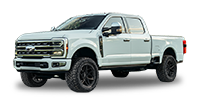
The biggest difference between a lift and a leveling kit is which suspension parts are altered and lifted. A leveling kit lifts the front end of a truck with a factory rake (nose-down look). This levels out the front and back end of the truck. A lift kit raises the front and back suspension for more clearance, a bolder stance, and the option to install larger wheels and tires. A quick look at those differences can be found below.
| Choosing a Lift or Leveling Kit | ||||||||||
|
Handling May Be Affected
When the suspension of a vehicle has been modified, the vehicle may handle differently from factory-equipped vehicles. As with any vehicle, Extreme Care must be used to prevent loss of control or rollover during sharp turns or abrupt maneuvers.
Safety Systems May Be Affected
If your vehicle uses Advanced Driver Assistance Systems (ADAS), a lift or leveling kit may alter the ADAS calibration, requiring it to be recalibrated by a trained professional. Les Schwab has the expertise and experience to recalibrate your ADAS after installing lift or leveling kits.
Should You Choose a Lift or Leveling Kit?
The choice between a lift and leveling kit depends on what you drive, what look you’re going for, and how much lift you want. Some of the more common options include:
Truck Lift and Leveling Kits
If you’re driving a full- or mid-size truck or SUV, the right lift or leveling kit can quickly change the look and stance of your vehicle. Just tell us what you want, and we’ll provide options (including larger wheels and tires on lifted vehicles), order the parts, schedule an appointment, and get the job done on a day and time that works for you.

Overlanding Lift Kits for Crossovers and SUVs
It’s all about the journey, right? For some, it’s also about how you look during your daily commute. Adding just a little more height to your off-road crossover or SUV will give it an extra bold stance and added clearance to venture further into the wilderness. Stop by your local Les Schwab for your customization options. Plus, we’ll order everything you need if it’s not already in stock at the store.

Full-Size Lift Kits
A full-size lift kit often raises a vehicle four or more inches. These kits may include specialized parts (such as longer shocks and struts, crossmembers, steering knuckles, and leaf springs) for proper steering, control, safety, and ride quality with larger/higher lifts. Aftermarket wheels and tires might be necessary with full-size lift kits.

Les Schwab Takes Care of the Details
When we install a lift or leveling kit on your vehicle, we’ll double-check the suspension, brakes, shocks, steering, and alignment. We’ll also perform a retorque and recheck your alignment a few miles down the road.
Get Your Lift and Leveling Kit Installed at Les Schwab
Giving your vehicle more clearance and a better stance is an easy update when you know what you’re doing. The pros at Les Schwab have been lifting and leveling trucks, crossovers, and SUVs for years. Stop by and tell us what you want to do to your vehicle, and we’ll show you how to get it done.
Schedule A Lift or Leveling Kit Install