What is Wheel Offset?
Customizing your ride with aftermarket wheels and tires is a fun way to make your car or truck your own. If you’re shopping around, it helps to have a basic understanding of wheel offset.
Proper offset assures your new package has enough clearance so nothing rubs against the suspension, brakes or vehicle body (like fenders, bumpers and mud flaps).
It’s also important for driving safety, since the wrong offset can reduce vehicle stability or interfere with braking.
Wheel Offset and Backspacing Explained
Offset refers to how your car’s or truck’s wheels and tires are mounted and sit in the wheel wells.
- Zero wheel offset is when the hub mounting surface is in line with the centerline of the wheel.
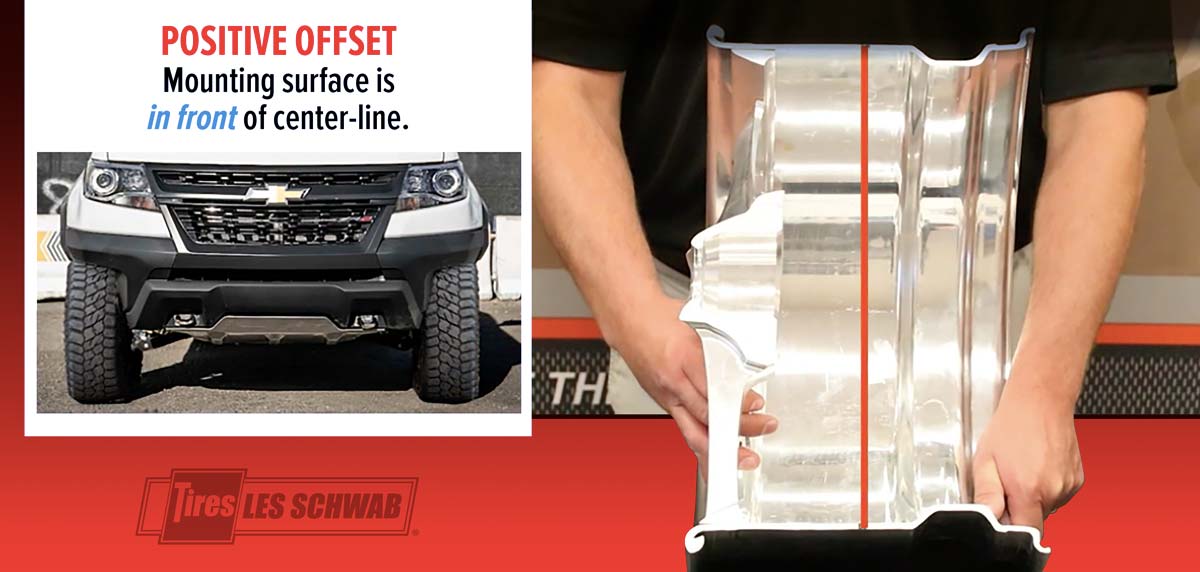
- Positive wheel offset is when the hub mounting surface is in front (more toward the street side) of the centerline of the wheel. Most wheels on front-wheel drive cars and newer rear-drive vehicles have positive offset.
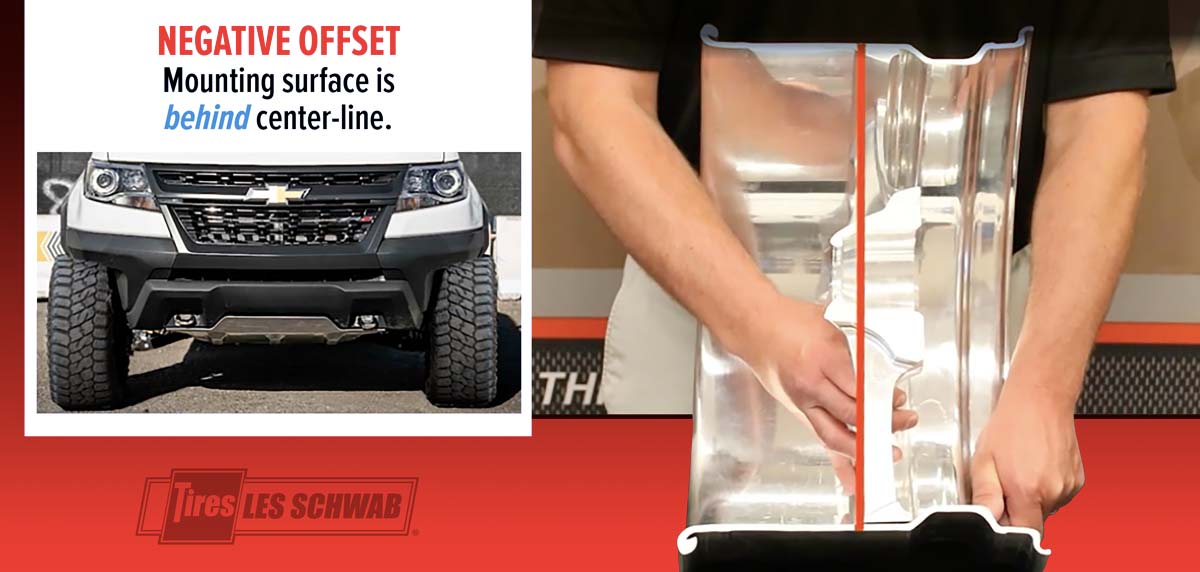
- Negative offset is when the hub mounting surface is behind the wheel centerline. “Deep dish” wheels are typically a negative offset.
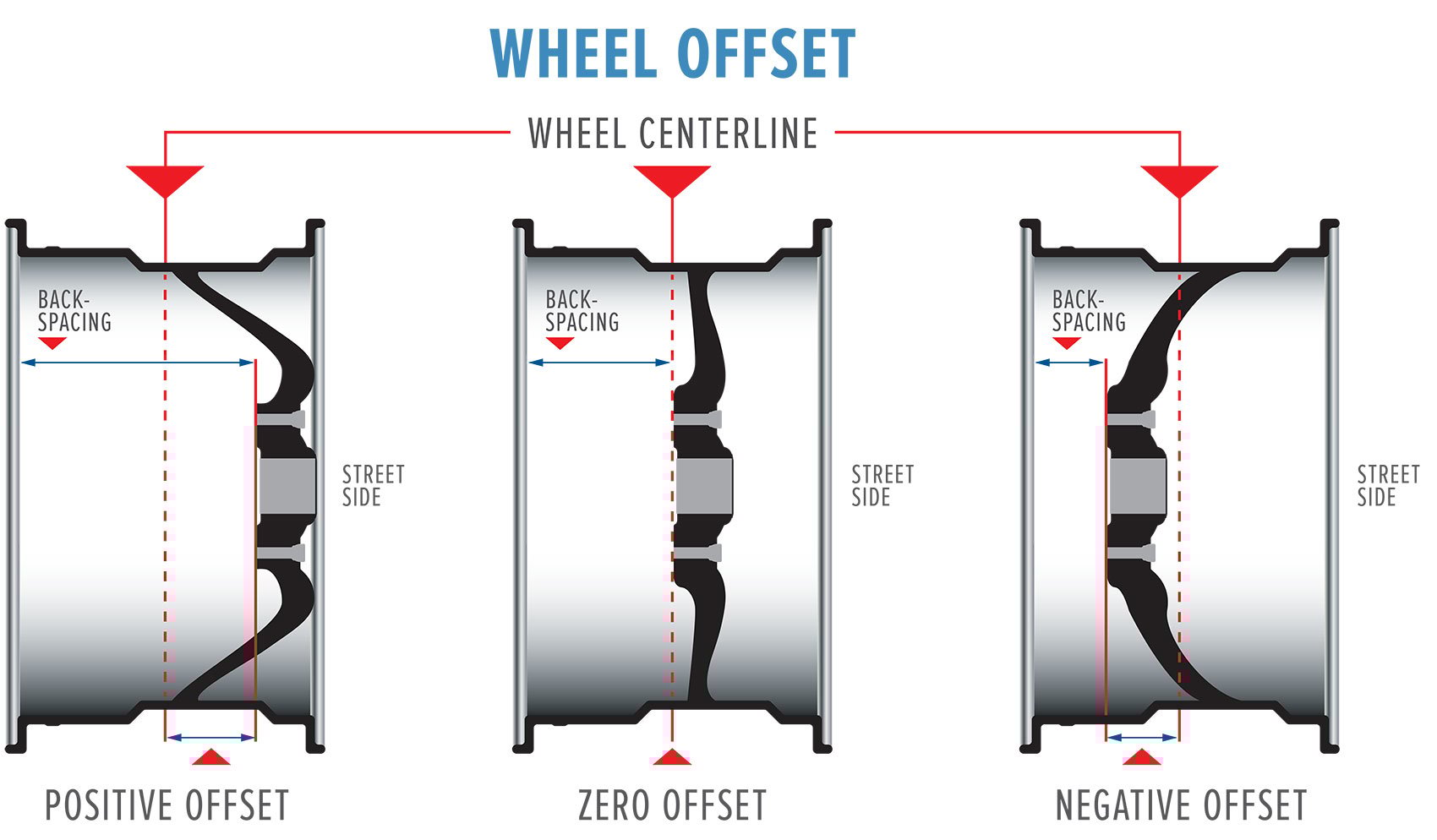
Backspacing is the distance your wheels and tires need to accommodate both offset and wheel width. It’s especially important to factor in when the new package you want is wider than what came on your vehicle.
Getting offset and backspacing measurements right means you’ll get a wheel and tire package that offers the looks, handling and performance you’re after.
Getting them wrong can mean big problems.
Common Problems From Too Much Positive Offset
- Expensive damage from the inner edge of the wheel and tire rubbing against the bodywork or suspension
- Interference with brake parts
- Risk of tire failure
- Poor handling
- Making your car unstable
Problems From Too Much Negative Offset
- Increased steering wheel kick-back
- Additional stress on the entire suspension
- Poor handling
Remember This About Wheel Offset
- New wheels and tires can make your everyday ride look and handle a whole lot better.
- Offset measurements can be tricky. Even if the tire and wheel have enough clearance, the wrong offset can decrease vehicle stability. Generally, with new wheels, you don’t want the new offset to be more than 5 millimeters different from the old offset.
- Especially when your new wheels are wider than the originals, backspacing has to be factored in along with offset.
- To make sure your tire and wheel package fit right, stay within load capacity and give you the handling and stability you need, ask a tire professional for advice.
Want to see some options that will fit your vehicle? Browse wheels suited for your make and model.
Important Notice: The information provided above is of a general nature gathered from a variety of resources deemed reasonably reliable. The operation of your vehicle, or the repair or replacement of your vehicle’s equipment, may be different than for a typical vehicle. Please consult your owner's manual for specific warnings, notices, and other advice relative to the subjects addressed herein.
Learn More
What’s the Difference Between Aluminum and Steel Wheels?
Wheels and rims are made with several types of alloys, or blends of metals, with different handling characteristics, maintenance needs and upsides. Here’s a short guide to the two main types of automotive wheel materials and how they differ, for those shopping for aftermarket wheels.
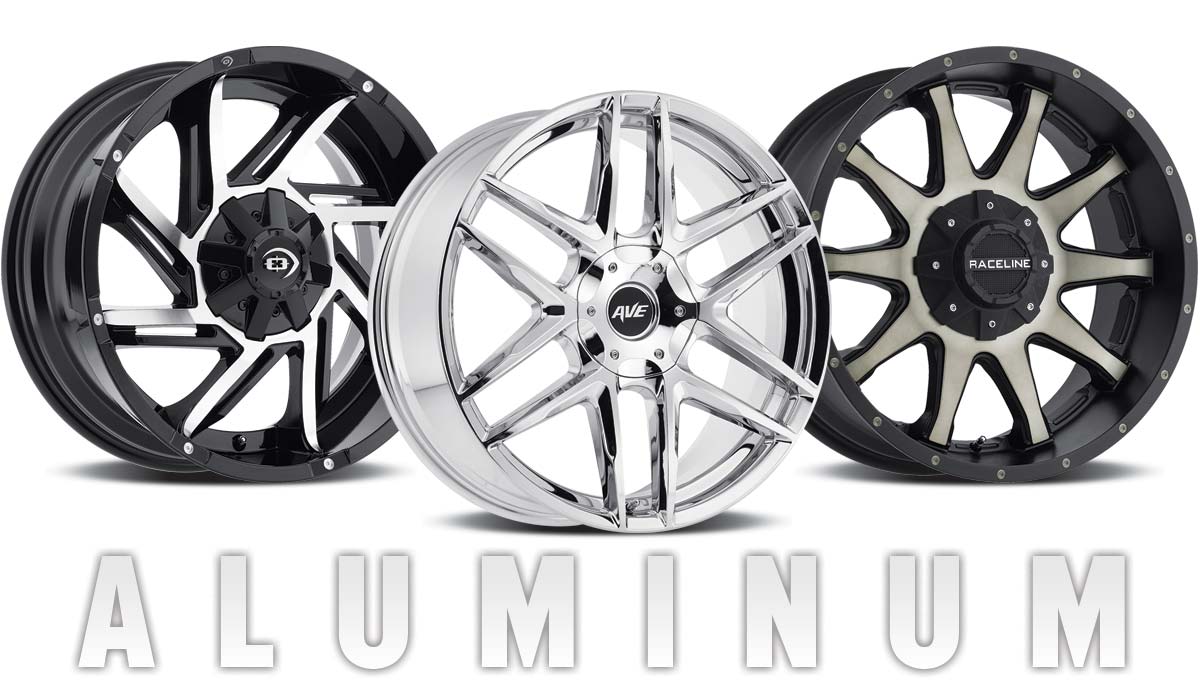
Aluminum Alloy Wheels
Aluminum wheels (sometimes called alloy wheels) are built with a blend of aluminum and nickel. The majority of wheels today are cast aluminum alloy, meaning they’re made by pouring molten aluminum into a mold. They are lightweight but strong, withstand heat well and are generally more attractive than steel wheels. They come in a very wide variety of finishes and sizes. Aluminum wheels are a good choice for a balance of performance, cost, aesthetics, and gas mileage.
Steel Wheels
Steel wheels are made with an alloy of iron and carbon. They are heavier but they’re more durable and can be easier to repair and refinish. Because of the way they’re made — cut out on a press and welded together — they don’t offer all the aesthetic spoke choices of other wheel types.
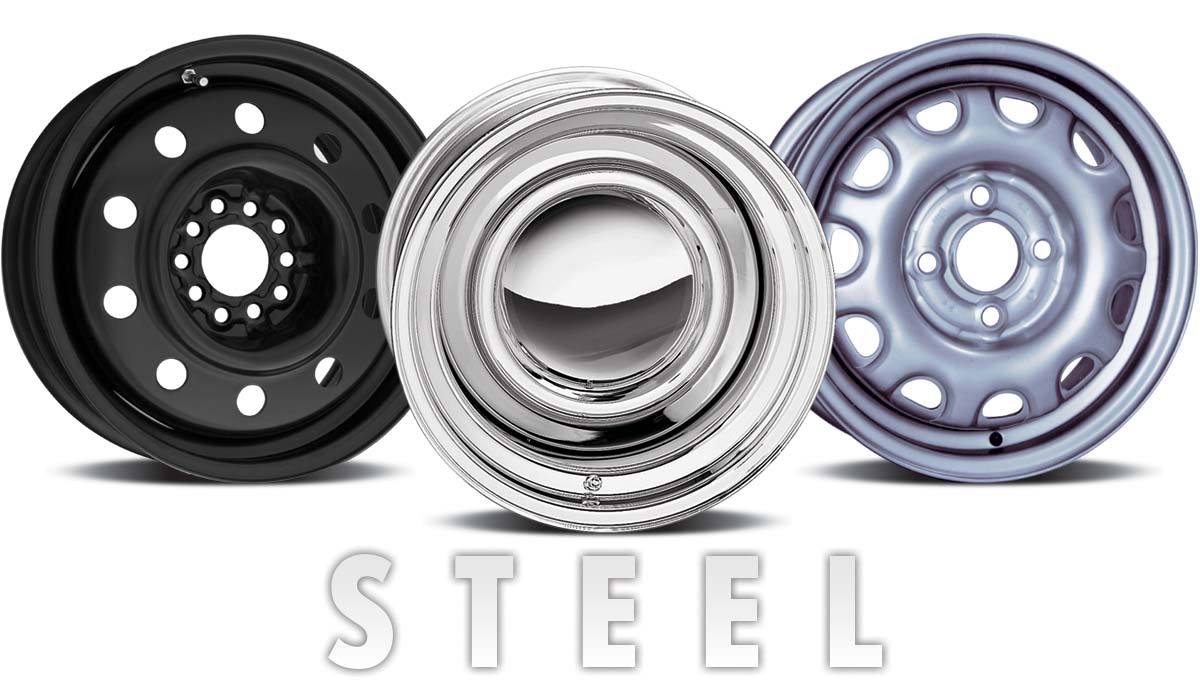
Though their heavier weight may dampen acceleration, agility and fuel efficiency, steel wheels can offer more resistance to impact cracks. They can also be more resistant to damage from deicers, gravel and brake dust, making them more popular for winter driving. Steel wheels are generally less expensive than aluminum wheels.
Here’s a breakdown comparing the characteristics of the two wheel material choices.
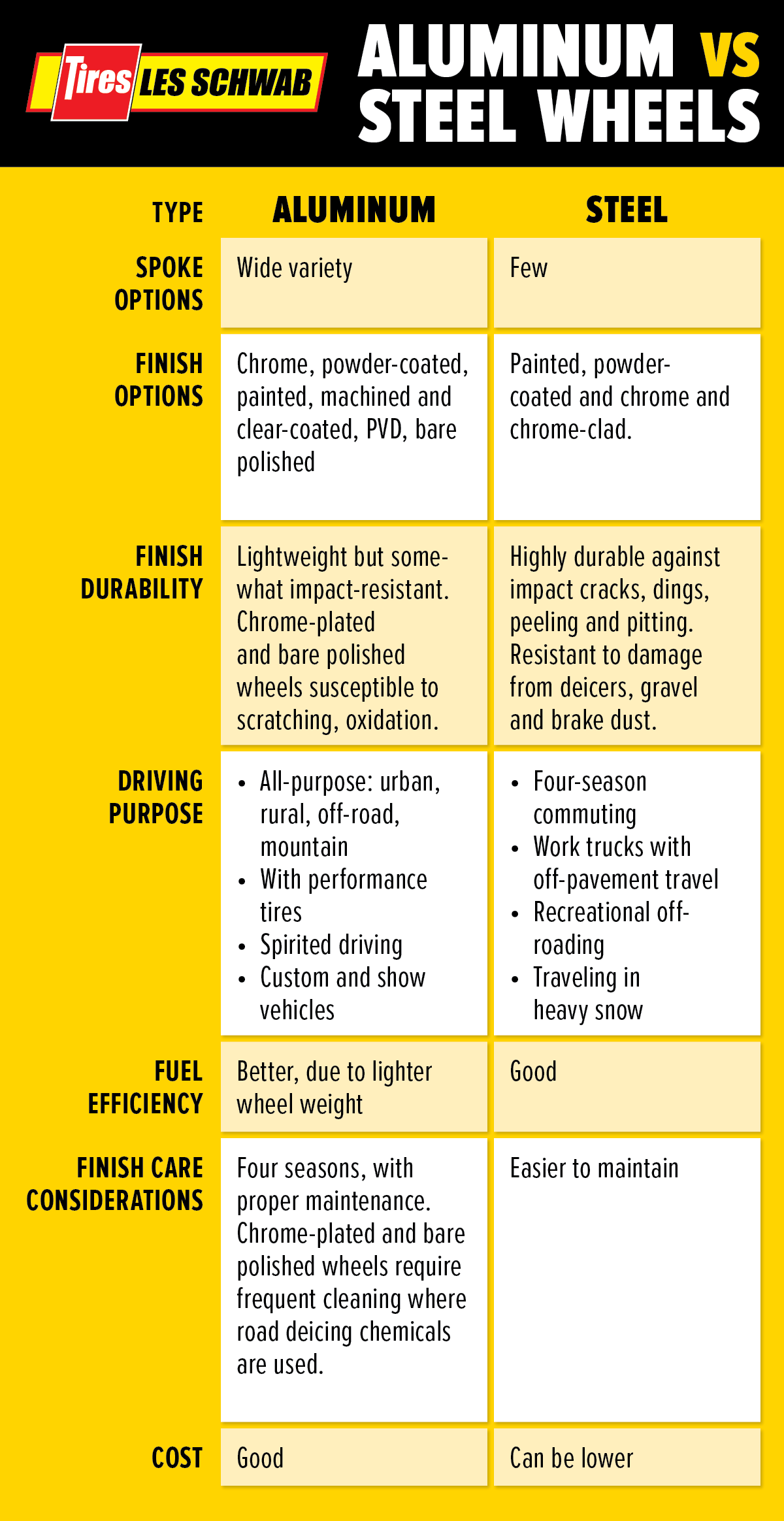
Wheel material is only one factor of many in selecting custom wheels and rims. Learn about wheel finishes and other tips on shopping for wheels in our Learning Center.
Or just stop by any Les Schwab to talk to an expert.
A Simple Guide to Wheel Finishes
Custom wheels and rims come in a dizzying number of designs to suit just about any style or performance you’re jonesing for. There are thousands of combinations of metal finishes, spokes, colors, polishes and sizes.
A good start to narrowing down your choices is to understand the types of wheel finishes, how the wheel surface is treated to achieve the color and polish type that suits your style. Each has its own attributes and different degrees of maintenance. Here are the six most common types.
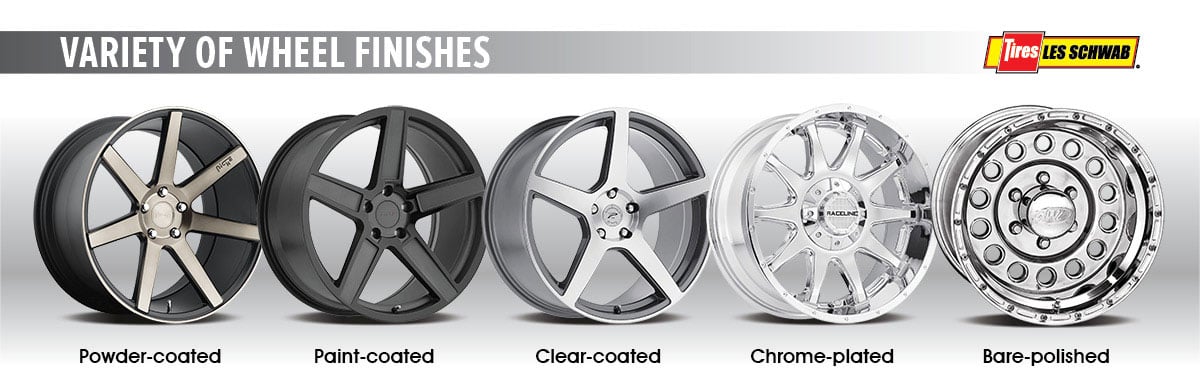
Chrome-plated Finish
This is the classic, mirror-reflective wheel style. Chrome plating has been the traditional method for creating that bling look many drivers want for their ride. Wheels are coated with several layers of copper, nickel and chromium for a highly reflective appearance. This provides the brightest, showiest look of all finishes, nearly as reflective as a mirror.
This finish doesn’t need a protective topcoat to prevent rust. Chrome wheels can also be treated with translucent paints for a variety of color choices.
Care: Chrome wheels require regular cleaning with mild soap and water and soft rags (never an abrasive like steel wool, which will scratch the finish). Maintain the finish with Mothers® Chrome Polish or Instant Detailer. If you are running chrome wheels in wintery locations where deicers like salt and magnesium chloride are used, you should clean them frequently. This will head off finish problems like pitting and corrosion. Clean brake dust off regularly to prevent damage to the finish.
Powder-coated Finish
A dry paint and heat technique is used for a durable, attractive wheel that resists rust, heat, chips and scratches. Fine ground particles of color and resin are electrically charged and sprayed onto the surface. Then the wheel is heated in a curing oven which bakes on the finish.
There are loads of color choices for powder-coated wheels. However, this finish is “one and done.” Recoating in a new color later isn’t recommended.
Care: Use soap and water or a mild, non-acidic wheel cleaner and a microfiber or terry cloth. Never use tarnish or rust removal products or bleach. Clean brake dust off regularly to prevent damage to the finish.
Machined, Clear-coated Finish
Clear coating is used as an additional touch for many wheel finishes. It can be used on raw aluminum wheels or painted wheels.
Some bare metal wheels are machined and then clear coated: A thin layer of metal is shaved off the wheel face for a bright shine, leaving small lines like what you see on a CD. Then the wheel is coated with a clear sealant for protection from corrosion. The clear-coated finish can be appealing for those who like a combination of a machined look with painted accents while providing a protective topcoat. It also assures the wheel paintwork will stay as good as new for years, as long as it’s not nicked or scraped.
Care: Use only mild soap and water or water-based wheel cleaners, not metal polish or any acidic wheel cleaner. Clean brake dust off regularly to prevent damage to the finish. Use Mothers® Foaming Wheel and Tire Cleaner.
PVD Finish
PVD (physical vapor deposition) wheels come with a shine that rivals conventional chrome plating. First, the wheel is coated with primer. Then a very thin metallic coating is applied to the wheel in a vacuum chamber using an advanced electrical bonding method. Last, a clear acrylic powder coating is sprayed on to seal and protect the finish.
There are some benefits to a PVD finish. These wheels are much lighter than chrome-plated wheels, which may get you more nimble driving responsiveness and better fuel economy. They’re available in lots of color tones. The clear coat helps to seal out winter deicing road chemicals, so with proper maintenance, these wheels are a good year-round choice.
And they offer meaningful environmental benefits. The process doesn’t use hexavalent chromium, contains 100 percent of emissions and consumes less energy.
Care: Drive-through car washes, high-pressure washing and chrome cleaners, which contain very harsh acids, could damage the topcoat — and void your wheel warranty. Wash with mild soap and water only and a soft cloth, sponge or microfiber towel. Follow with Mothers® All-Chrome Quick Polish Detailer and Protectant. Clean brake dust off regularly to prevent damage to the finish.
Bare-polished Finish, With or Without Top Coating
Raw aluminum wheels can be hand-polished with a buffer so the surface is completely smooth, then clear coated for a rich shine. Wheels can also be machine-polished to a near-mirror shine with no top coat applied. These are popular finishes for street rod and car enthusiasts who like to show off their ride.
These finishes offer some advantages over chrome-plated wheels since they don’t add weight to the wheel, which could improve fuel efficiency and handling. Polished wheels can also easily be repolished to restore their like-new condition if they lose their luster over time.
Care: If they have no protective top coating, these wheels require regular cleaning, polishing and waxing to keep them from oxidation and pitting. Wash with Mothers® Wheel and Tire Cleaner and polish with Mothers® Polish. Clean brake dust off regularly to prevent damage to the finish.
Painted Finish
Wet paint is used for this finish, followed by a clear topcoat to protect the paintwork. The color tones and polishes available in painted wheels are pretty much endless, from silver tints to matte black to hot pink, or matched to your vehicle’s body paint color.
Care: Use mild soap and water and a microfiber or terry cloth. Follow up with Mothers® Foaming Wheel and Tire Cleaner. Clean brake dust off regularly to prevent damage to the finish.
Wheel Shine Options
Finally, in case these aren’t enough options for you, you can customize the type of shine you like. Wheels can be made with matte (a flatter shine), gloss (high shine), satin (in between matte and gloss) and mirror (reflective) options. You can mix and match these on different parts of the wheel face.
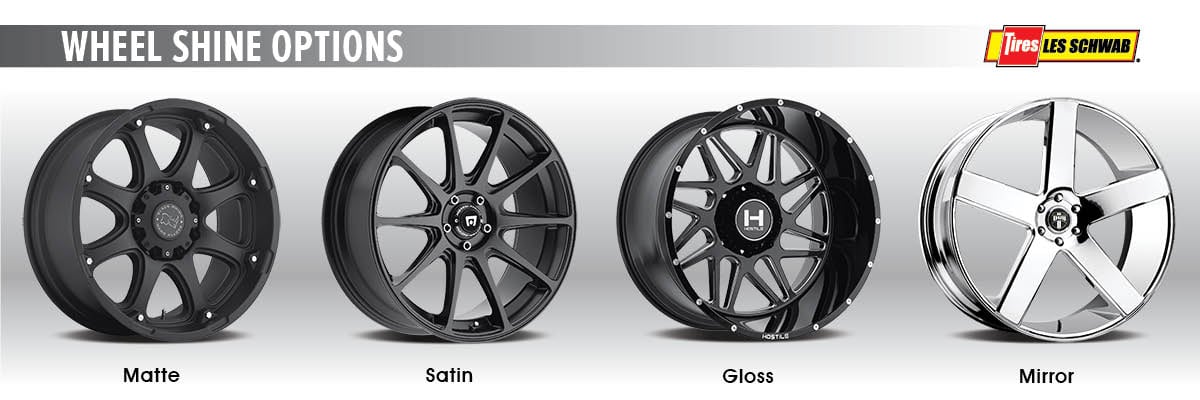
Excited by all these wheel options? Overwhelmed? Learn more about how to shop for custom wheels in our Blog, or just come on in with your questions.
How to Choose a New Set of Custom Wheels
Adding a set of custom wheels can add a lot of visual appeal to just about any vehicle. We’ve put together some recommendations to help you choose the right wheels for your car or truck, including aesthetics, safety, size, fit, and tech compatibility.
Looking Good
The style and finish on a set of custom rims can dramatically change the look of your car or truck. Start shopping right now or visit your local Les Schwab where you’ll find Wheel Discovery Centers. There, you can see specific sets of custom wheels on the make, model, year, and color of your vehicle. This is a great way to sift through the many options and narrow your choices before making a commitment.
Think Safety
Proper fit is crucial when choosing custom wheels. The pros at Les Schwab will help you look at three vital areas before choosing your set of wheels.
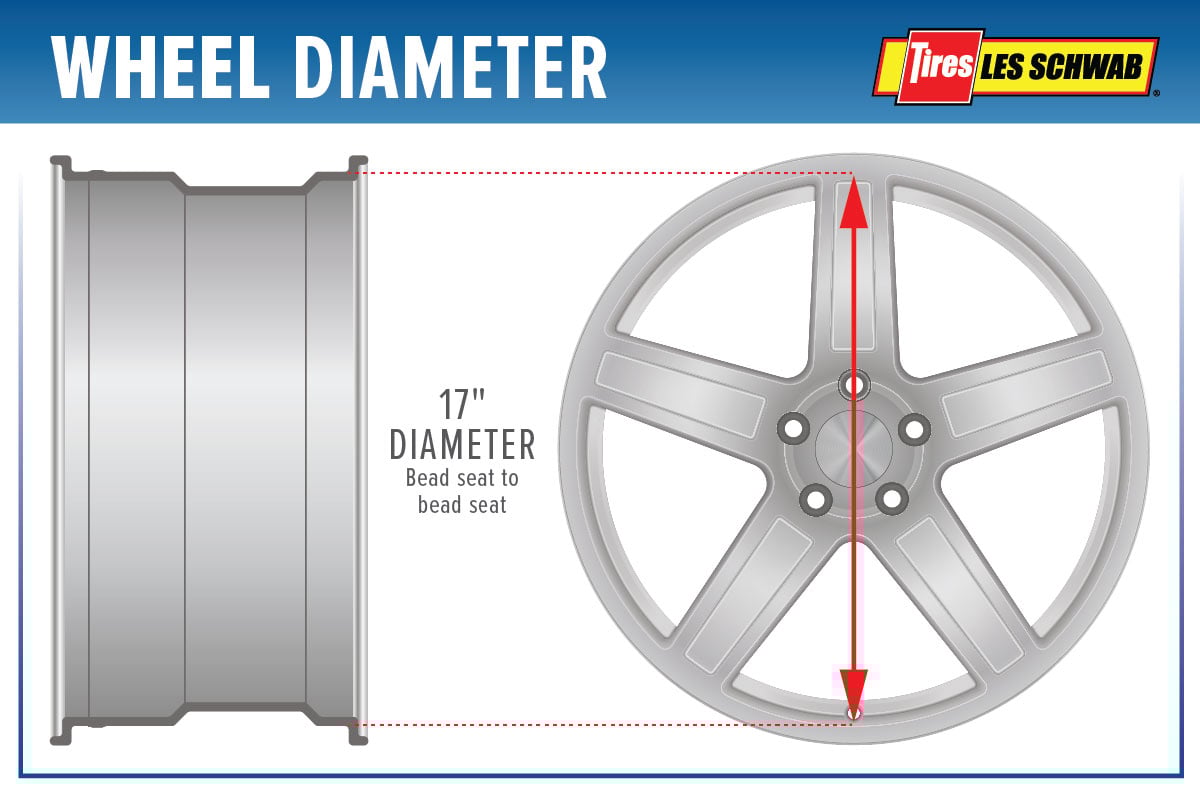
Overall Diameter: The wheel and tire combination should always clear the braking components, suspension parts, and the body of the vehicle. This is important whether you want to increase the diameter of your wheels for a street-worthy look, or decrease the wheel diameter for more tire sidewall and better off-road performance.
Offset and Backspace: To ensure proper clearance, it’s critical to know how far inside and outside the entire wheel and tire package will sit in the wheel well. Improper backspace or offset can cause interference with things like the body and steering components, and possibly decrease your turning radius.
Proper Mounting: Many of today’s vehicles come from the factory with wheels that fit precisely around the hub. This is referred to as hub-centric fitment, which helps provide a consistent centering of the wheel and tire assembly when mounted to the vehicle. This reduces the chance of an imbalance that may result in a vibration in the steering wheel or seat while driving. Our team understands the importance of maintaining a hub-centric fit whenever aftermarket wheels are being considered.
How to Pick the Right Size
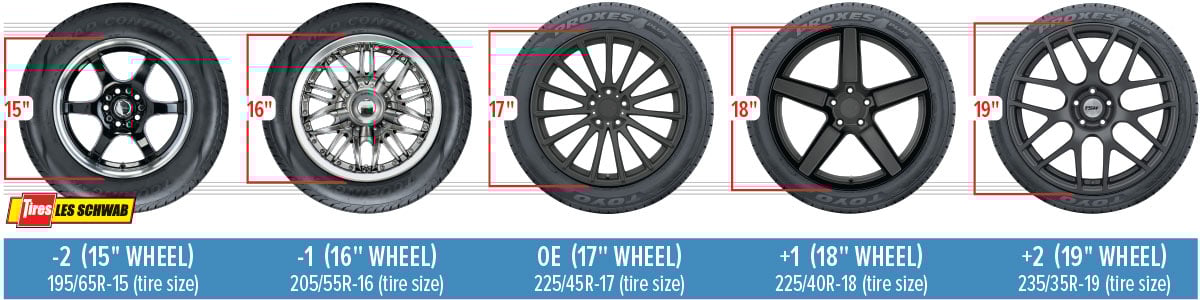
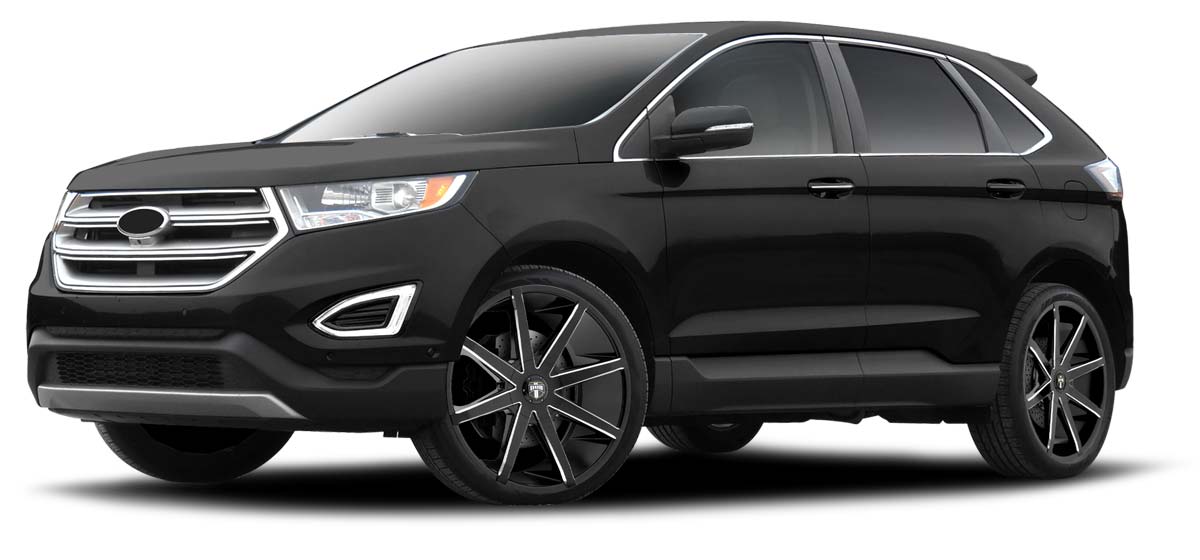
There are many sizes to consider when purchasing new wheels. The image below is an example of how plus and minus sizing works. Plus sizing boosts the diameter of your wheels while decreasing the profile of the tire sidewall to match the overall tire diameter suggested by the manufacturer. Minus sizing works in the opposite way to allow for a taller sidewall.
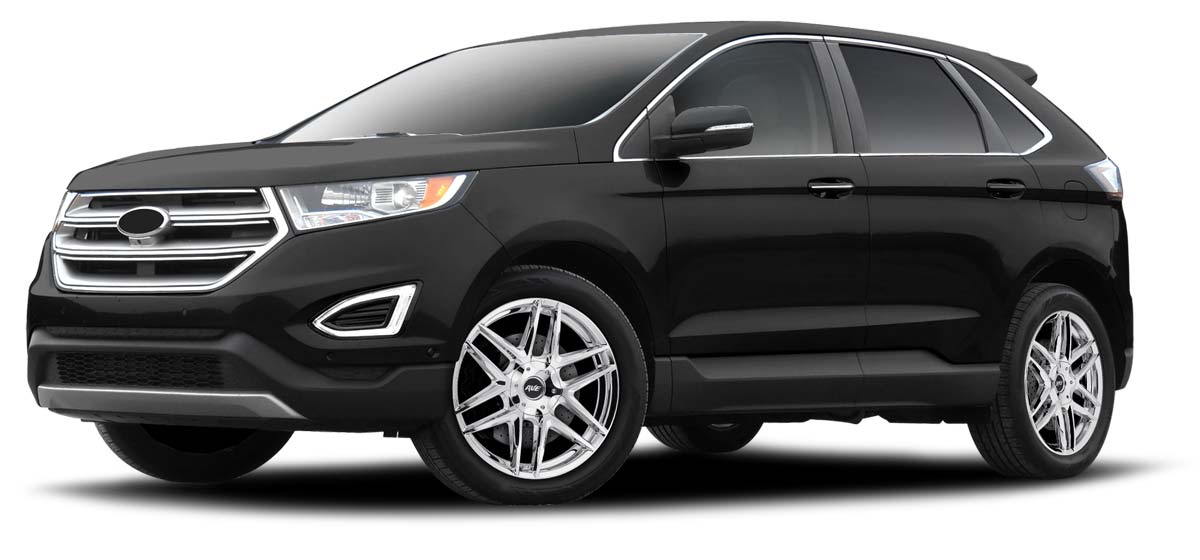
Here’s a comparison of how two wheel-tire packages of different sizes look on the same vehicle.
Bolt-Pattern Matters
There are a variety of bolt patterns and your new custom wheels must match in order to fit your vehicle properly. Even if your vehicle has five lugs, there’s no guarantee that every five-hole wheel will fit. At Les Schwab, we stock thousands of custom wheels and can help you find the right bolt pattern and fit for your vehicle.
Check the Tech
TPMS (Tire Pressure Monitoring System) compatibility is also important. Equipped in most new vehicles, the TPMS in your vehicle should be reset after installing new wheels. At Les Schwab, we take care of that for you.
Les Schwab Knows Custom Wheels
Keep in mind, that your options will be specific to the make and model of what you drive. Our team of pros understands what wheel and tire sizes will fit your vehicle and meet your performance expectations. Stop by today and to check out your options. With every custom wheel sale, Les Schwab will give you a free, written warranty good at any of our locations. This gives you peace of mind as you roll away on your new custom wheels.
Wheel Size Explained
The wheels that came installed on your vehicle are designed to perfectly fit your vehicle’s suspension, gearing, and bodywork which can affect ride quality and vehicle performance. But that doesn’t mean you can’t have different wheels or rims installed on your car or truck. To understand what wheels will work for your vehicle, we’ll take a look at rim sizes and some basic measurements.
Why Change Your Wheels
There are many reasons you might want to switch out your rims. Maybe you want an extra set of wheels and tires for easy installation every winter, or you’re looking for added performance and handling. You might even be going for a specific look, including sleek and stylish or rugged and cool. Whatever your reason, it’s important to note that getting the wrong wheel setup could cause a vibration, or some rubbing on suspension components or vehicle body parts.
Les Schwab Tip: Before you change the tire sidewall height, tread width, or rim size on your vehicle, talk to the experts first. We’ll help translate the difference in RPM, tire speed, load index, and speed rating and how it will or will not fit with your vehicle’s suspension, gearing, and bodywork.
How to Read Your Tire and Find Your Rim Size
First, start with the wheel size for your vehicle. You can find that on the sidewall of the tires on your original wheels or the inside frame of the driver’s door. Check out Tire Size Explained (Reading the Sidewall) for more.
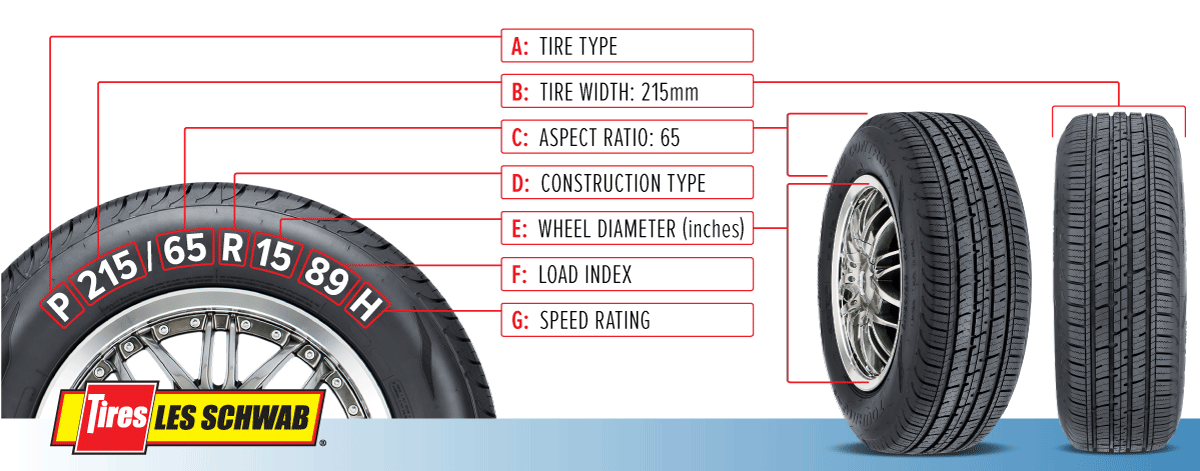
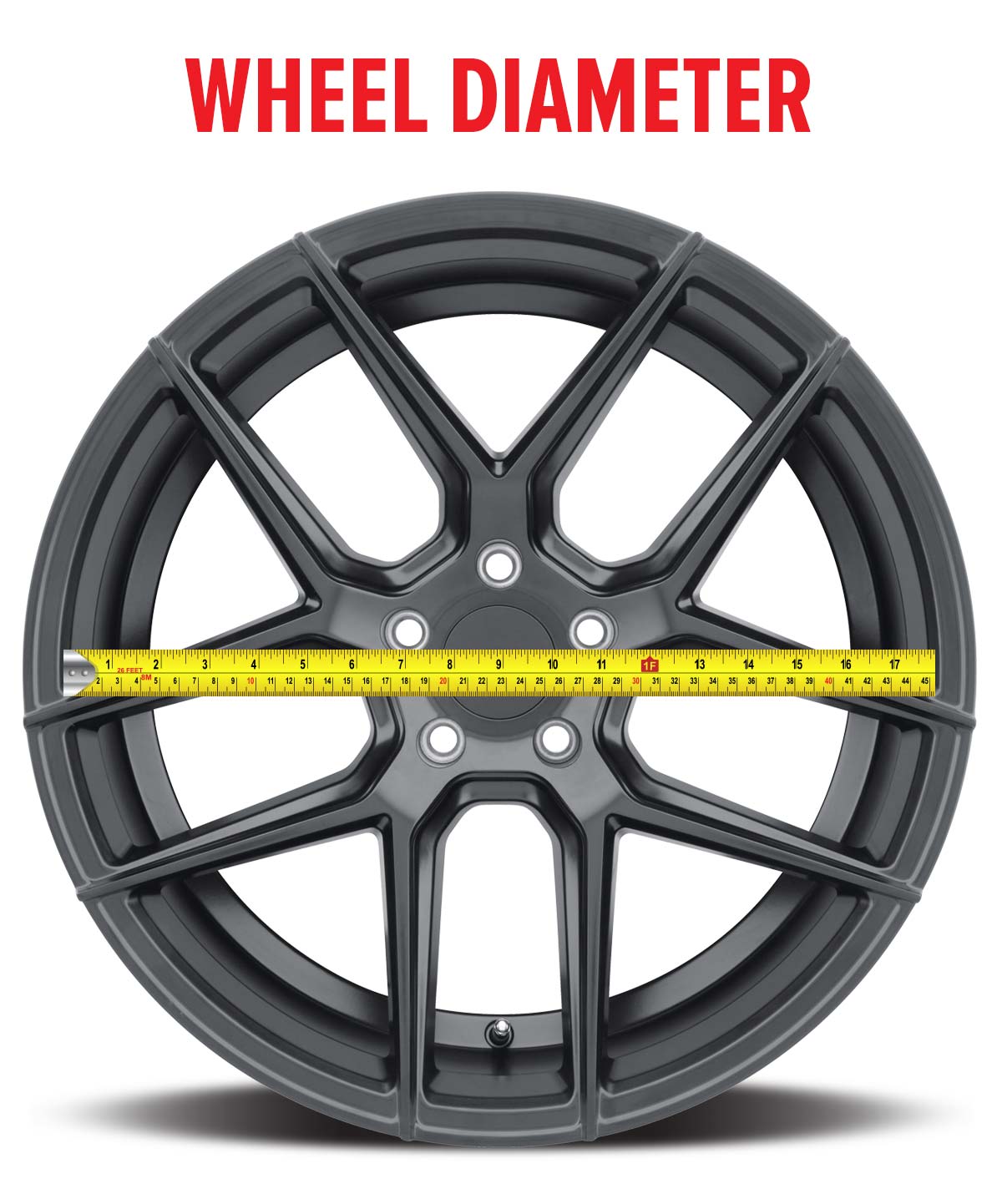
The wheel diameter (in inches or millimeters) is the fifth set of numbers and letters. What do rim size numbers mean? This number represents the distance between the two bead seat areas where the tire is sealed onto the wheel.
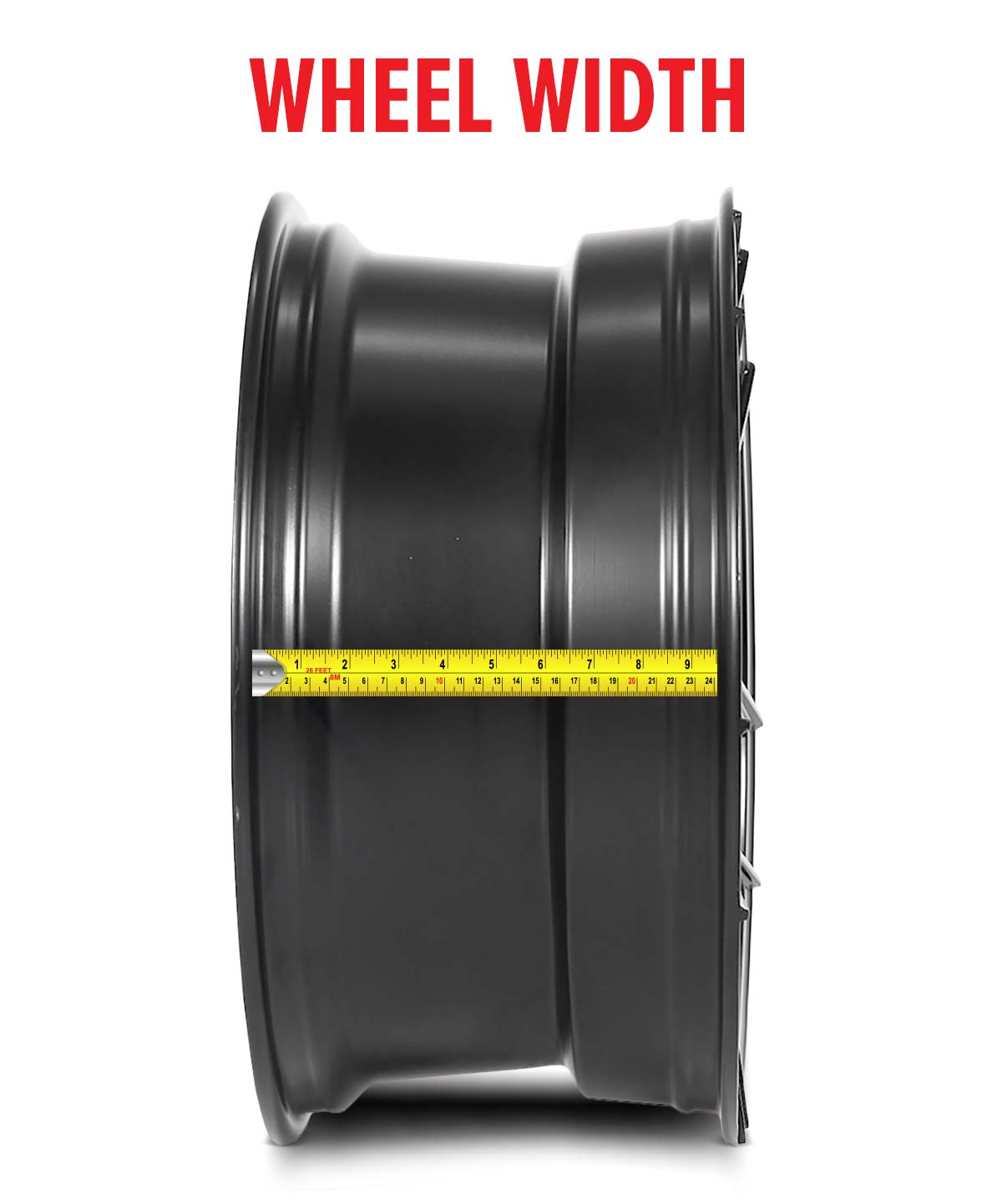
The wheel size also includes its width and offset. The width is the distance from each bead seat (from inside to the outside). The offset determines how the wheel and tire set aligns with the wheel well.
Offset and Backspace Explained
The offset is how far inward or outward the mounting surface is in reference to the center-line of the wheel. The center-line is calculated by simply dividing the wheel into two equal halves. Les Schwab has the tools to accurately measure your center-line.
The offset is how far inward or outward the mounting surface is in reference to the center-line of the wheel.
Here's how offset determines the look of your rims. If the hub mounting surface is in front of the center-line, your rims and tire will be pulled inward. This is called positive offset.
If they are behind the centerline, your rims and tire will stick out from the body of the vehicle. This is negative offset.
Les Schwab Tip: Measuring the offset on your vehicle is difficult without removing the tire and wheel. Consult the pros to get the right fit.
Fitment is Fundamental
To ensure a set of rims fit properly on your vehicle, you’ll need the hub size on your car or truck as well as the wheel center bore measurement and number of wheel studs (as well as the distance between those studs). Les Schwab has those measurements for your vehicle, including bolt patterns.
Understanding Bolt Patterns On Your Wheels
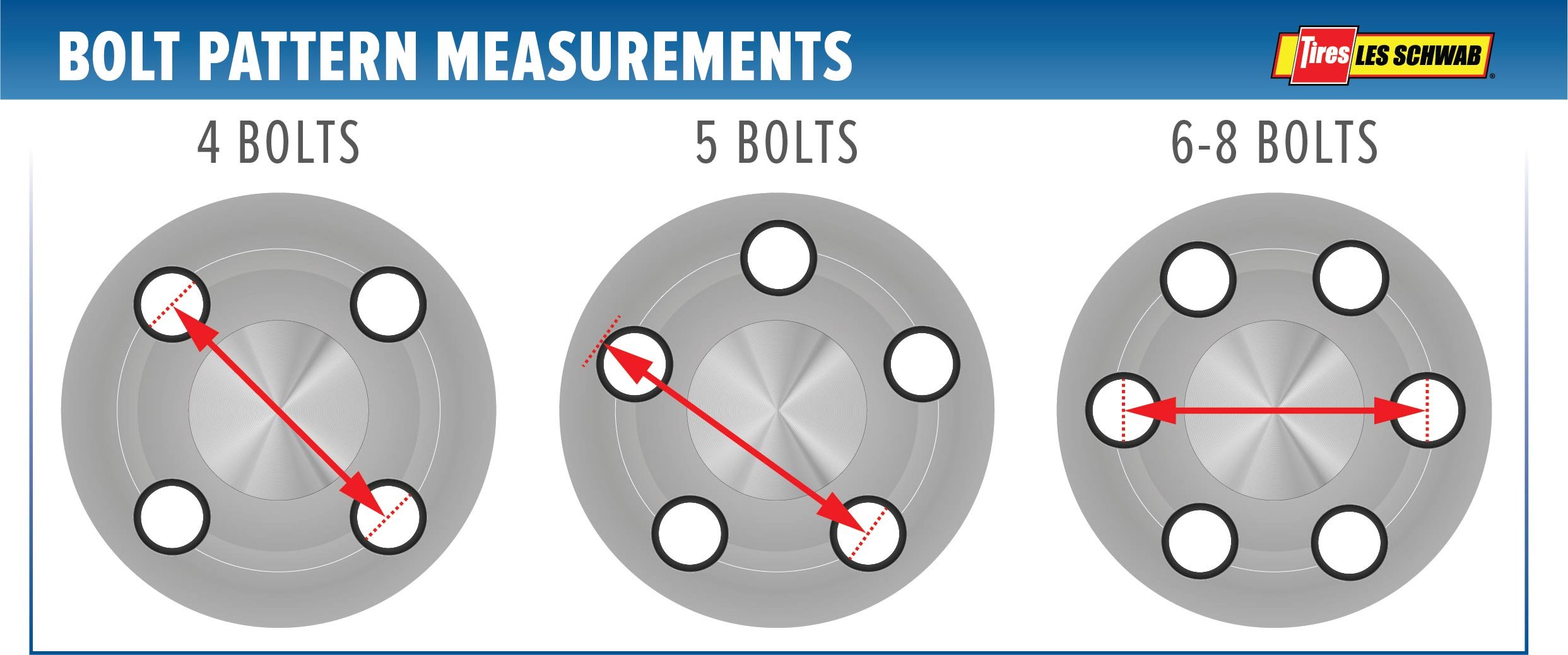
Most vehicles come with a 4-, 5-, 6-, or 8-lug pattern. These bolt patterns, which are specifically spaced, help narrow your wheel or rim choices. While counting the number of bolts on your vehicle is important before buying a set of rims, it’s vital the wheels you choose match the spacing between the wheel studs on your vehicle.
To measure a 4-lug pattern on a set of rims, measure from the center of two holes across from each other. For a 5-lug pattern, measure from the outside of one wheel stud hole and the center of the opposite. And for 6- and 8-lug patterns, measure from the center of one hole to the center of the opposite wheel stud hole. You’ll either need this measurement in inches or millimeters, depending on the wheel manufacturer.
Remember, there’s no need to take these measurements on your own. The pros at Les Schwab do it every day and can ensure you get the right rims for your vehicle.
Les Schwab Carries Custom Wheels
At Les Schwab, we take pride in our custom wheel expertise. Stop by and ask about new wheels for your vehicle. We’ll show you all of your options, whether you’re going for a new look, a boost in performance, a new set of wheels for your winter tires, or simply as a replacement of your current set.