
-
The Real Reasons Your Car Battery Keeps Dying
Modern car batteries are designed to start your car or truck, run all of the electronics, and maintain the vehicle’s computer memory. But over time, batteries do eventually run out of juice — sometimes way before their time. Here are the real reasons your car battery dies, or keeps dying, and what you can do to get the most out of it.
Les Schwab Tip: If your battery seems to die while you’re driving, it could be an issue with your vehicle’s electrical components or charging system. You might need to visit your mechanic or stop by Les Schwab so we can double-check your battery and connections.
Why Your Car Battery Keeps Dying
While car batteries slowly die over time, high heat, brutal cold, excessive use of vehicle accessories (after-market equipment), and other mechanical issues can shorten the life of even the toughest battery. Read How Your Battery Works to understand why batteries die over time. The top six reasons batteries die include:
Lights left on. That can be your car headlights, dome light, light in the glove box, or trunk light. Even vanity mirror lights can drain a battery if left on overnight.
Parasitic draw. Your car battery can drain over time from stereo components (subwoofers), phone chargers, and anything you leave plugged into vehicle outlets that continue to draw power from the battery after the car is turned off. Other power drains include interior and below-vehicle LED lights.
Loose or corroded connections. A loose connection can damage the battery and/or drain it. Check your battery cables often for corrosion. If you find any, clean it off to ensure a tight connection.
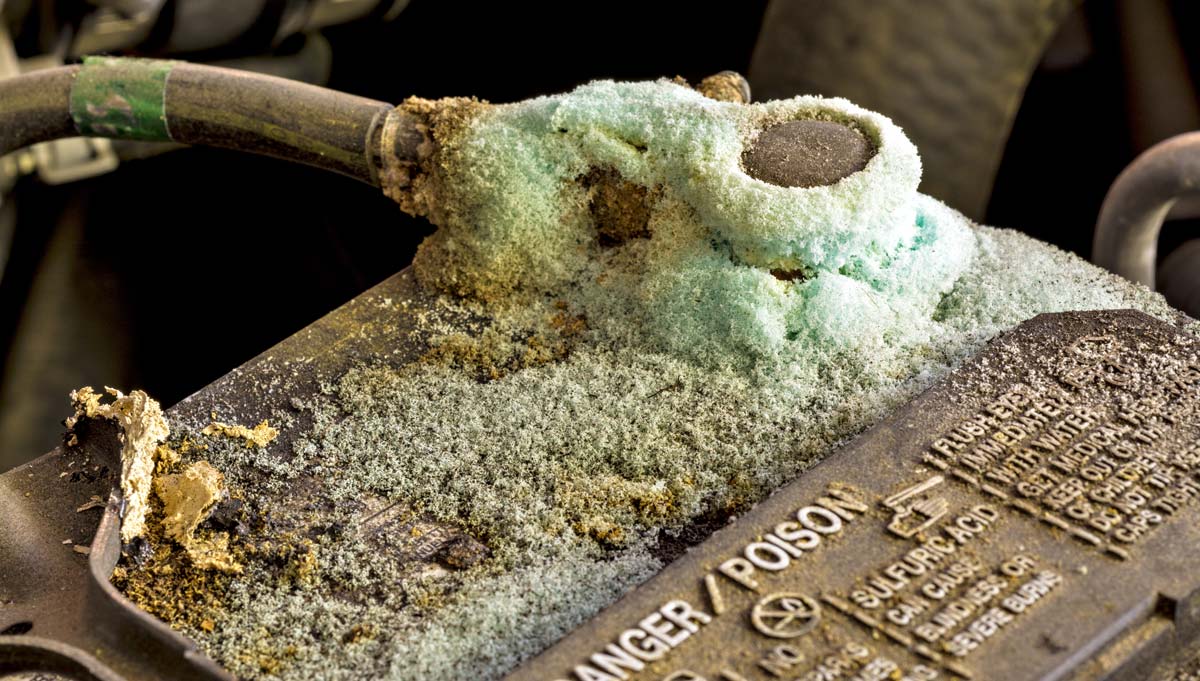
Excessive heat and cold. It seems like batteries die most often in the winter. You go to start your car, and the battery just cannot turn the engine over. But it’s not the cold that kills most batteries. Hot summer months can deteriorate your battery. Then, you notice that lack of power in the winter. To help avoid damage to your battery from heat, park your vehicle in a garage or under a shelter on hot summer days.
The alternator has issues. Once your car is started, the alternator helps it stay charged. But if the alternator is going bad or the alternator belt is slipping, it might not recharge your battery.
Quick trips or leaving your car parked too long. Too many quick trips (less than 15 minutes in length) can degrade a battery. Additionally, letting a car sit for too long without being started (weeks or months) can cause issues.
Age. Batteries don’t last forever. How often you start your vehicle, how far you drive, the health of your alternator, the hot and cold conditions in your region, and more can affect the lifespan of your battery.
How to Prevent Your Battery From Draining, and What Causes It
The life of your car battery depends on where you live, how much you drive, and more. If your car needs a new battery, Les Schwab is here to help with batteries for everything you drive. Here are a few tips to help keep your battery from draining.
Unplug Extra Accessories: Known as parasitic draw, your car battery can drain from stereo components and phone chargers that continue to work when the car is turned off. Also, be on the lookout for glove-box lights, trunk lights, and interior lights that remain illuminated.
Take a 15-minute drive: At least once per week, take your car for a short drive. As long as your alternator is working correctly, this will help maintain the battery state of charge.
Don’t leave your headlights on: Turn the switch to the “off” position, even if your lights go off automatically.
Avoid deep discharging: Don’t leave the lights on or the stereo going while the car is turned off. This can result in a dead battery.
Tighten and Clean Battery Connections: If your battery terminals are loose or corroded, they can drain or damage the battery. It could also cause your car to stall. If you do find corrosion, it’s easy to clean with a stiff-bristle brush (an old toothbrush works great), and a mixture of one part baking soda to three parts water. With a little elbow grease, the corrosion will vanish. Just be careful not to get any of the baking soda/water mixture in your battery or on other parts of your engine or vehicle.
What to Do When Your Battery Dies
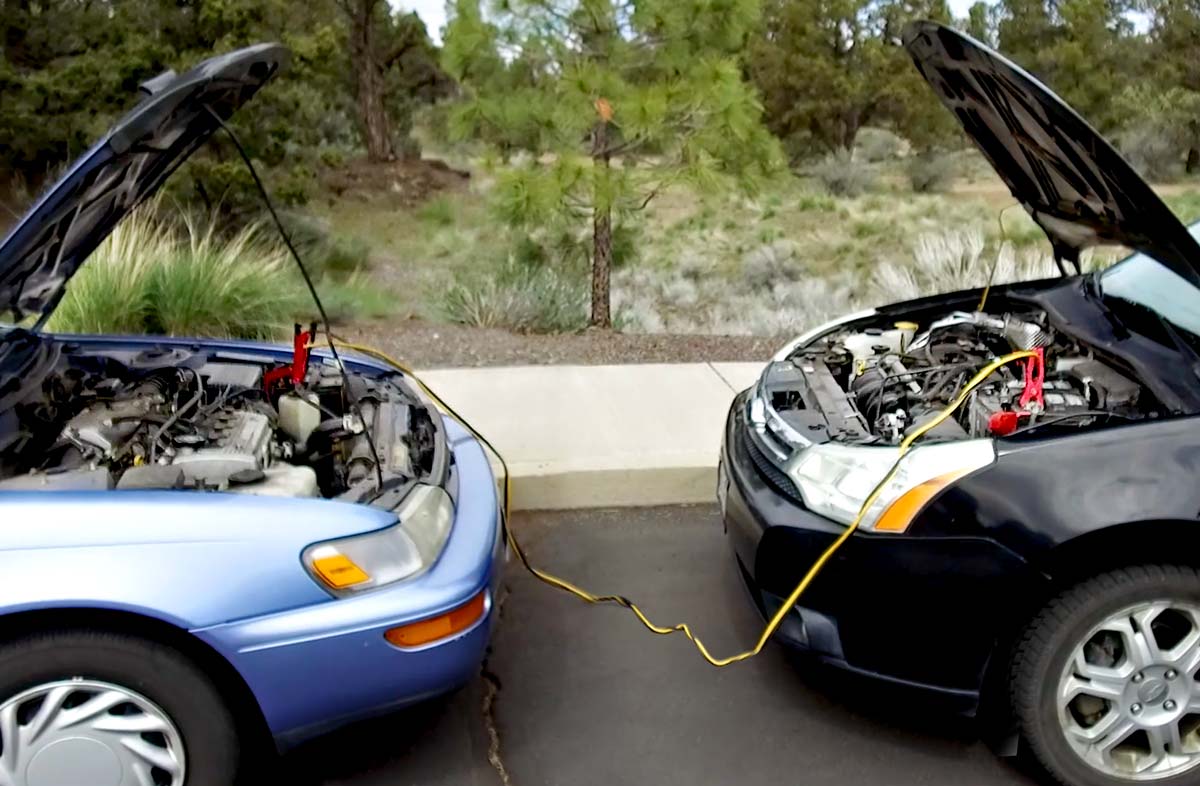
Dead batteries happen to everyone. It can be frustrating, especially when you’re late for work. Having a set of jumper cables or a jump starter can get you going again. We’ve put together a jump-start how-to video to help get your car or truck started.
When you’re a Les Schwab customer, you’re welcome to call us during regular business hours. If we’re available, we may be able to drive to your location and give you a jump start.
Need More Help? Give Us a Visit!
Les Schwab gets a charge out of checking your battery. Come on by and we’ll perform a free inspection. Whether it just needs to be recharged or if you need a new battery, we can help, including new batteries for most vehicles.
-
Need a New Battery? Start Here.
If you’re wondering how often you should change your car battery, how long it takes to change a battery, or why your battery died suddenly without warning, the answer might not be what you’re expecting.
Leaving Battery Installation to the Professionals
At one time, removing your vehicle’s old, dead battery and installing a new one was an easy bit of car maintenance. Today’s vehicles are more complex. And, so are today’s automotive batteries. Vehicles from the mid-90s may require special equipment and care when changing a new battery. In fact, don’t be surprised if you’re not sure how to even unhook your car battery.
The reason for that complexity? Most of today’s cars and trucks are packed with computers and other special electronic equipment that rely on a continuous power supply. Incorrectly changing out a battery can affect your radio presets, security system, power windows, as well as your air conditioning and heating controls.
More importantly, a loss of power during battery installation can also cause unseen issues to your vehicle’s operating systems. Because today’s automotive computers adapt while you drive, a loss of power can negatively affect systems that regulate your transmission, engine efficiency, and battery charging.
Batteries aren’t always under the hood of today’s vehicles. They may be located on the inside of your vehicle, which require a specific battery that needs ventilation to keep harmful gasses out of your vehicle’s interior.
Start at Les Schwab
If you think you have a drained battery, head over to a Les Schwab near you. Our battery installation teams use the latest equipment to maintain power to those sensitive systems during the battery installation process. We also use the latest in diagnostics and testing equipment to check the overall health of your battery, charging and starting systems.
Know the Nearly Dead Battery Warning Signs
It doesn’t take a lot of power to start today’s vehicles, which means you might not get the telltale slow-start associated with a dying battery. You might not even notice your battery is going dead until it’s too late.
Things that can contribute to a drained battery include extreme hot and cold weather, how often and far you drive each day, how long your vehicle is parked in one location without being started, and if you have any aftermarket equipment installed such as a stereo or auxiliary electronics and lighting. See our article How Your Auto Battery Works to understand why batteries die over time and how a car battery recharges.
LesSchwab Tip: Because the signs of a weak battery might not be as noticeable and batteries rarely die at a convenient time, the professionals at your local Les Schwab can check your battery condition for free — even if it isn’t dead.
While it’s common to experience a dead battery in the winter, it’s actually the hot, summer months that cause most battery wear and tear. This is due to an increase in the chemical reactions inside the battery during hot days. When the weather gets cold, that damage is more likely to cause battery failure.
Enjoy up to a Seven Year Battery Warranty
Get a jump on your next battery at your local Les Schwab. We carry automotive batteries for cars, pickup trucks, SUVs, crossovers, RVs, and more. We’ll help you find the best battery for your vehicle and get you quickly back on the road. Our professional installation takes the guesswork and worry out of buying a new battery. Learn more at Les Schwab Tire Centers.
-
8 Signs You Could Have Brake Problems
Car brake repair and brake servicing are important parts of proper vehicle maintenance. When you take care of your brakes, they’ll take care of you when you need them most. However, even with regular maintenance, the brakes on your vehicle may require a professional inspection and servicing if you encounter one or more of these eight brake problem warning signs and symptoms.
1. Brake Light On
If a brake light indicator appears on your dashboard, it’s either time for your regular maintenance or it’s an alert to a potential problem. These are some of the more common dashboard alerts that appear in today’s vehicles. Note: Consult your vehicle owner’s manual for possible causes for these and other indicators.
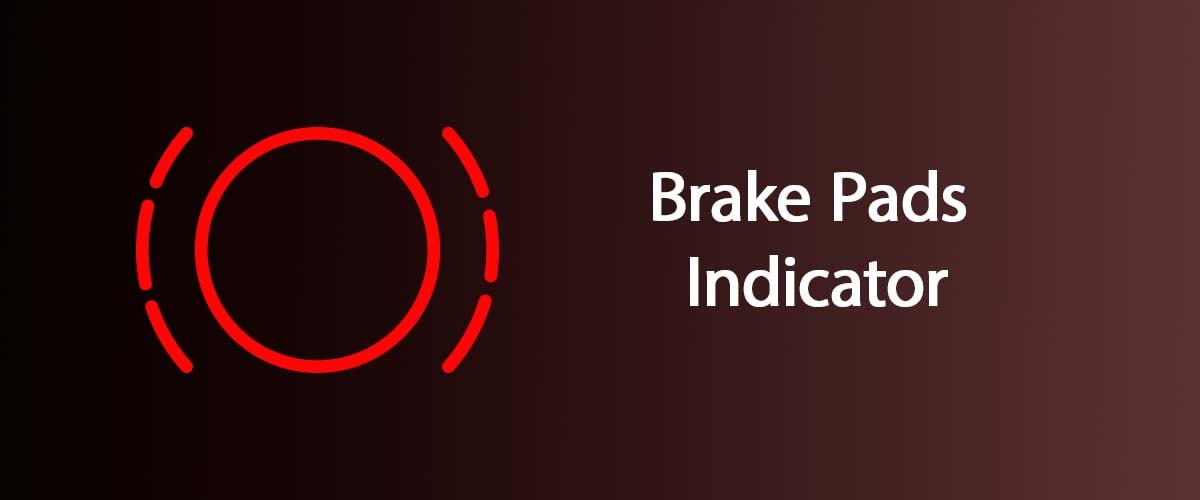
Brake Pad Indicator
This light lets you know your brake pads may be wearing out, along with other non-visible reasons. Either way, get them inspected at Les Schwab.
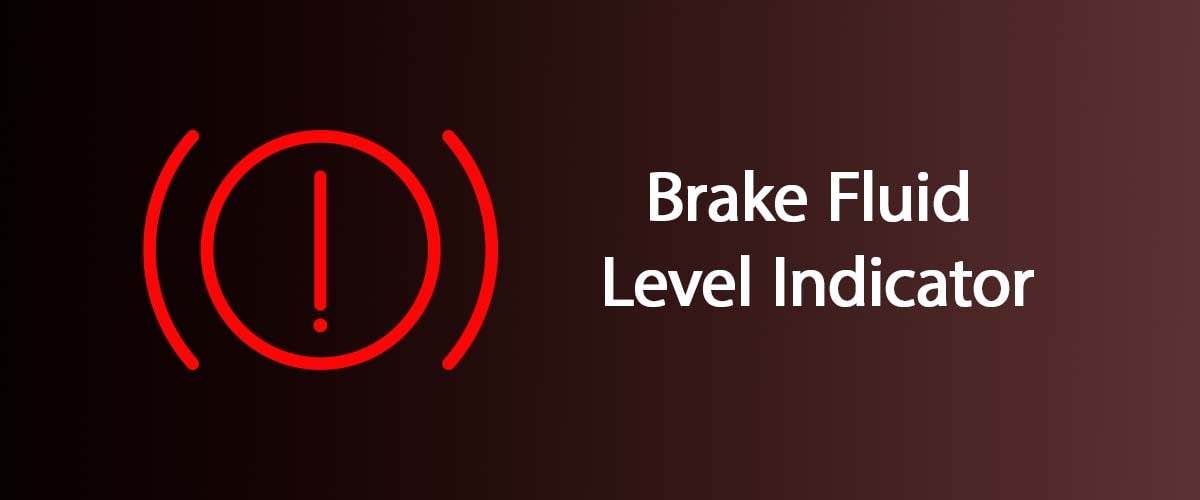
Brake Fluid Level Indicator
This light will flash when your brake fluid levels are low. You may be able to top off the fluid to keep your brakes functioning properly, or stop by your local Les Schwab and we’ll give you a hand.
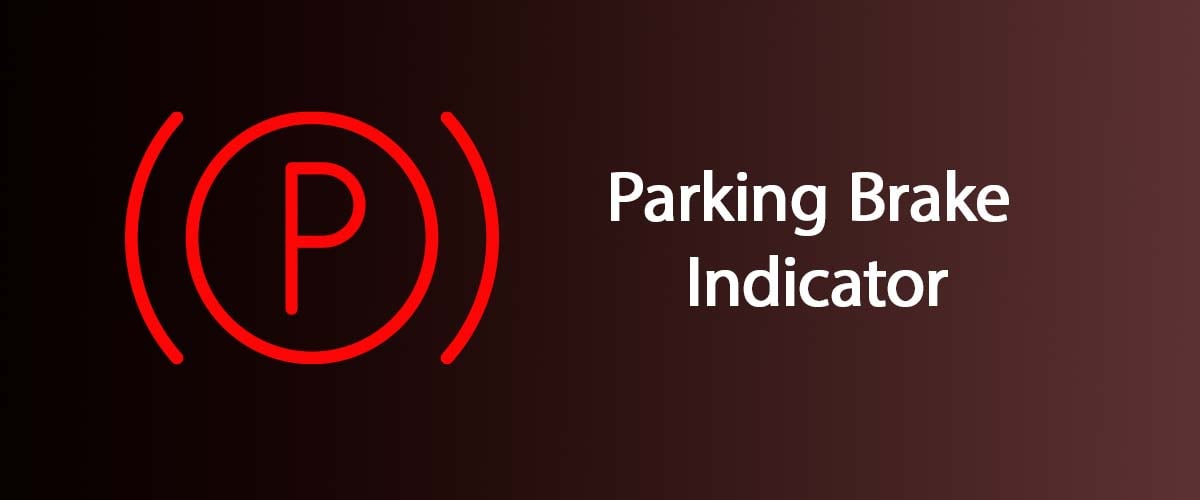
Parking Brake Indicator
When this light appears, your parking brake is either engaged or there is a problem with it. To diagnose the possible issue, engage and disengage your parking brake. If the indicator goes away, there are no issues. If it still won’t go away, come to Les Schwab.
Les Schwab Tip: see our post about dashboard lights to understand the most common vehicle alerts.
2. Squealing or Squeaking Noises
Odd or unusual noises coming from your brakes aren’t always a sign of problems. It could just be a foreign object lodged in your brakes (a pebble or debris). It could also be your brake-pad wear indicators. These bits of metal in your brake pad come in contact with the rotor to emit a high-pitched noise when you apply the brakes. This lets you know it’s time to get your brake pads replaced.
3. Grinding Noises
Grinding noises, whether you have disc or drum brakes, could mean your brakes need servicing right away. In some cases, the sounds may be the brake pad or shoe scraping on metal contact points. A trip to Les Schwab is recommended when you hear or feel any form of brake grinding.
4. Wobbling, Vibrating, or Pulsing When Braking
If your steering wheel or vehicle shakes, vibrates, or pulses when you apply the brakes, it could be an uneven rotor. Brake rotors, which are a vital part of your disc brakes, are large metal discs attached to both ends of your vehicle’s axle. When you hit the brakes, the brake pads push against the rotors, which stops your wheels from spinning.
Wobbling, vibrating, or pulsing can occur if the rotor surface area is not flat (has uneven areas). Over time, it’s normal for the rotor surface to wear down and possibly become uneven. Braking friction, when you apply the brakes, results in the transfer of pad material to the rotor surface. If the pad material transfers unevenly, you may experience vibration when braking. Left uneven, the material will continue to accumulate, worsening over time. During brake servicing, the face of the rotor should be smoothed or evened out to correct flaws and keep you from feeling a wobble when you brake. If the rotors are too far worn to be serviced, they will need to be replaced.
5. Leaking Fluid
When you apply your brakes, a lot of things happen all at once. An important part of the process involves brake fluid. This is used to create hydraulic pressure, which pushes the brake pad against the rotor (the large metal disc attached to the end of your axle). If your vehicle has no brake fluid, you won’t be able to stop safely. Check your vehicle’s brake fluid often. Not sure how? Stop by Les Schwab and we’ll be glad to help.
6. Spongy or Soft Brakes
When you press on the brakes, you want to feel some resistance. If they feel soft or the pedal goes all the way to the floorboard, it could indicate air or moisture in the braking system. It could also be a problem with the master cylinder, which is often located in the engine compartment near the brake pedal. This cylinder is where the whole braking system starts. If the master cylinder is malfunctioning, the pressure you apply to the brakes won’t activate the calipers to then press the pads against the rotors. In other words, you might not stop when needed. If you notice spongy or soft brakes, get to Les Schwab.
7. Car Pulling to One Side When Braking
While this could be caused by any number of vehicle issues, it could be your brakes. When this happens on the front brakes, one brake may be working while another is not. This causes pull in the direction of the side that is creating braking force (still working). If only one rear caliper is not working properly, it can go unnoticed. Get your brakes inspected regularly at Les Schwab to spot these issues before they become a problem.
8. Burning Smells
A sharp, chemical odor could be a sign of overheated brakes. To avoid brake failure, pull over to a safe place and allow the brakes to cool. Double-check that the parking brake is off. If there’s any smoke coming from a wheel, it may be that the brake caliper is malfunctioning and locked in place. In this case, it may be unsafe to continue driving without immediate repairs.
What Happens If You Drive With Bad Brakes?
Driving with bad or worn brakes can be dangerous for you and your family — especially if those brakes fail to stop your vehicle when necessary. If you experience any of these 8 brake problems or warning signs, get them inspected and serviced immediately. Don’t wait. Your safety is riding on them. Stop by Les Schwab for a free visual brake inspection and recommendations to get your brakes in tip-top shape.
How Do I Know If I Really Need New Brakes?
There are a lot of moving parts and special fluids to consider when diagnosing your brakes. When dust and small rocks get into your braking system, you’ll hear some concerning squealing. Thankfully, that issue is easy to fix. Other problems require immediate repairs. We have some tips to help you decide if you really need brake servicing. If you’re still not sure, stop by Les Schwab and our pros will take a look.
How To Extend The Life Of Your Brakes?
Getting the most out of your brakes can add safety to every outing and save you money. Tips include carefully watching traffic to avoid stomping hard on the brakes, planning ahead when driving in the snow and rain so you’re not constantly applying brake pressure, as well as other smart driving tips to prolong the life of your pads and rotors. Check out these three essential tips.
Les Schwab Knows Brakes and Safety
The more you drive, the quicker your brake parts will wear out. Delaying needed services could put you at risk. Anytime you experience braking problems or want to have your brakes professionally checked, get to your local Les Schwab. Our pros understand how every part of your braking system works together for your safety. Schedule your appointment, or just stop by and we’ll help you get safely back on the road.
Opens warranty information dialog with language options