
-
Understanding Camber, Caster, and Toe
Proper alignment goes a long way, whether you’re getting behind the wheel of a family sedan or a 4x4. When the camber, caster, and toe are properly aligned to your vehicle’s specifications, your vehicle’s tires meet the road exactly as intended. But when any of the three are out of alignment, it can affect your driving safety, including gas mileage and tire wear. Let’s take a look at camber, caster, and toe and what each of these alignment settings means for your trips across town and overall safety.
Camber Affects Tire Wear
The Camber is the inward and outward tilt of the tire and wheel assembly (viewed from the front of the vehicle). Each manufacturer sets a specific camber alignment for every vehicle it produces, which might be either positive, negative, or zero (0º).
When the camber is at the correct angle, the tire and wheel will roll straight. However, the camber can go out of alignment over time. When the top of the tire is leaning inward (toward the vehicle), it is a negative camber. Positive camber has the top of the tire tilting outward (away from the vehicle).
What does it mean when the camber is out of alignment?
Cornering performance is directly related to your vehicle's camber angle. However, the optimal camber angle varies depending on the vehicle you drive as well as manufacturer specifications for handling and tire wear. When the camber angle falls out of the intended range, your vehicle may not handle as the automaker intended. This can cause potential safety issues. It can also cause excessive tire wear, costing you money.
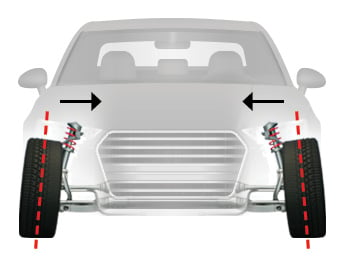
NEGATIVE CAMBER
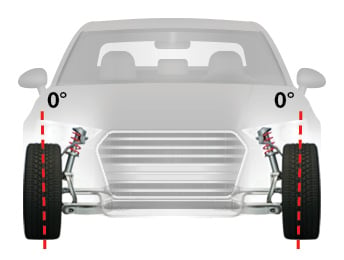
ZERO DEGREES = WHEEL IS VERTICAL
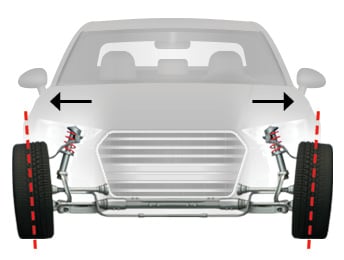
POSITIVE CAMBER
Toe is the Most Important Angle for Tire Life
When the toe is properly calibrated, all four tire/wheel assemblies will be pointing in the same, forward direction. The goal is to achieve a zero toe. A slightly positive or negative toe may be okay, depending on manufacturer specifications. A properly aligned toe leads to less friction between your tires and the road, and a smoother, safer ride.
What does it mean when the toe is out of alignment?
A toe that is out of alignment can cause excessive tire wear, stress on other parts of your vehicle, and less fuel efficiency. It can also reduce your safety on the road. Why? Because tires and wheel assemblies that are facing away from each other (toe-out) or toward each other (toe-in), are slightly skidding on the road surface.
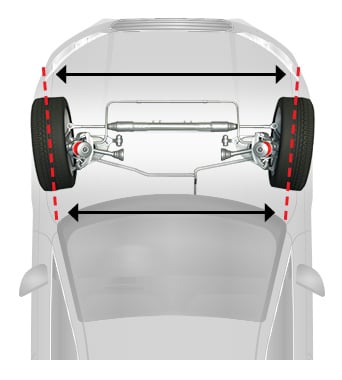
NEGATIVE = TOE OUT
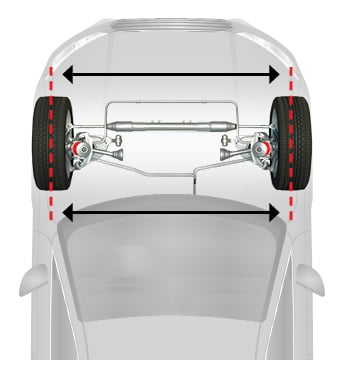
ZERO TOE
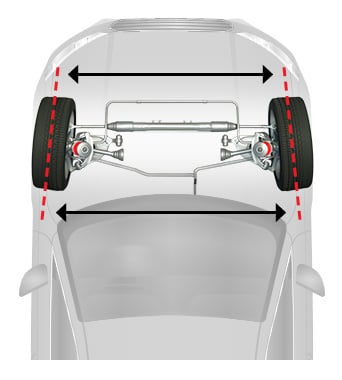
POSITIVE = TOE IN
Caster Affects Steering and Handling
After looking at your vehicle’s camber and toe, we also inspect the caster. When you come to Les Schwab, we’ll check the caster angle in your vehicle alignment, and adjust it to match manufacturer specifications on vehicles that require it. Additionally, we’ll take a look at your vehicle’s thrust angle (a measurement to ensure the frame or subframe of the vehicle are in line with the wheels).
What does it mean when the caster is out of alignment?
Most modern vehicles run a certain amount of positive caster with the steering axis tilted rearward toward the driver. The steering axis is the imaginary vertical line that runs through the center of the tire and wheel assembly from the ground toward the steering wheel or away from it. (A Negative caster has an axis tilted toward the front of the vehicle. A zero or neutral caster has a steering axis line that is straight up and down. And if the axis is tilted toward the driver, it is a positive caster.) While caster doesn’t affect tire wear like camber, it does have an impact on steering and handling.
Overall, the caster is the negative, neutral, or positive slope of your steering axis. To give you the best handling, rarely will vehicle specifications call for a negative or zero caster. Specific caster angles for the year, make, and model of your vehicle have been established to ensure your safety. Les Schwab has the expertise to get yours done right the first time.
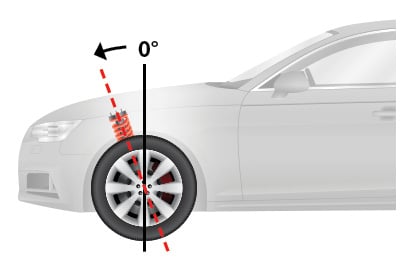
NEGATIVE CASTER = STEERING AXIS TILTED FORWARD
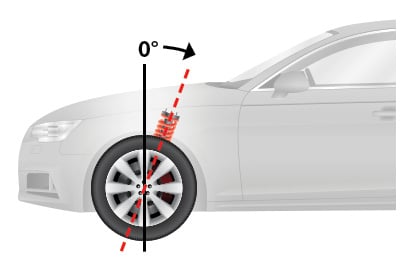
POSITIVE CASTER = STEERING AXIS TILTED REARWARD
Les Schwab Does Alignments
At Les Schwab, we’re here to help you get the most out of your tires. If you haven’t had your alignment checked in a while, or you suspect an issue, stop by any of our stores for a free visual inspection. If you do need a full alignment service, we’ll show you what it will cost to get your camber, caster, and toe back within your manufacturer’s specifications for prolonged tire life, improved safety and handling, and increased fuel economy.
Schedule An Alignment -
3 Ways Load Management Can Optimize Your Vehicle’s Towing Capacity
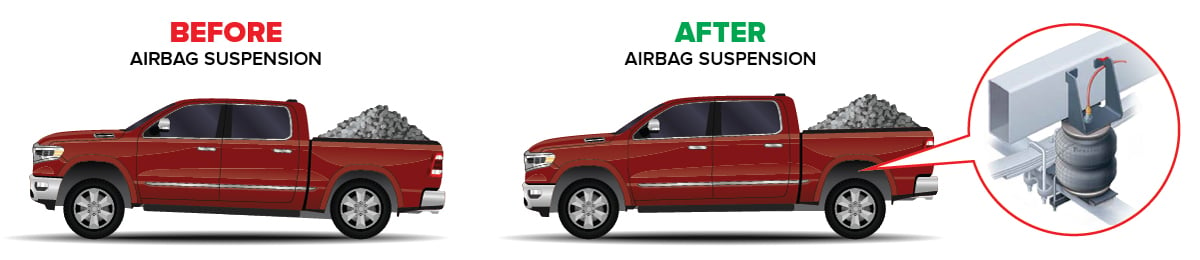
Every vehicle has a load carrying capacity recommended by the manufacturer. While you might be within that limit when you hitch up a trailer or load up the back of your truck, your handling can be affected when the back end sags. This can reduce control, cause uneven tire wear and add stress to your vehicle’s suspension and brakes. It can also cause performance issues with how your trailer tows. Load management solutions can help by supporting your leaf or coil springs to restore control and ride height.
To fix these issues, Les Schwab suggests a load management solution, including airbags or helper springs. Here are three different load management solutions that could work for you.
1. A Quick Fix for Unlevel Tow Issues
Before adding airbags or helper springs, try moving the weight in your trailer to accommodate your tow vehicle. In other words, rearrange your load so that only 10 or 15 percent of the fully-loaded trailer weight is on the tongue. If that doesn’t help, or if that isn’t feasible (for utility trailers, etc.), you may need airbags or helper springs.
2. Airbags
Airbag suspension systems offer extra support for normal and heavy hauling needs. These devices work like a heavy-duty balloon to keep your tow vehicle level when hauling something heavy. They also help manage the load to resist sway and give you more control. An on-board air compressor system, which is controlled by an analog or wireless controller, is an optional add-on to make it easier to adjust air pressure.
There’s a bonus: You can reduce or increase the air pressure according to the load. Choosing the right airbag system for your needs is important. Besides standard and heavy-duty systems, you’ll have a choice between analog and wireless controllers as well as single or dual path systems.
Analog or Wireless Controllers
The difference between analog and wireless controllers is purely about convenience. With an analog system, you’ll have a controller in the cab of your truck to activate the compressor, which then pumps air into or releases air out of your airbags. A wireless controller means you can stand outside your truck and watch as the compressor lifts and lowers the back of your tow vehicle. Some systems include an option to utilize smartphone apps to make adjustments.
Single and Dual-Path Compressors
If your trailer or loads are evenly distributed, a single path compressor is fine. But if your loads vary with more weight on one side or the other, a dual path compressor lets you adjust the air to even things out.
3. Helper Springs
Helper springs are a lower cost alternative that do nearly the same thing as airbags. They help enhance your vehicle’s original equipment suspension to keep your vehicle level or flat when it’s being used for heavy loads, including towing. However, they don’t have the ease of adjustability of airbags.
Proper Load Management Starts at Les Schwab
Whether it’s for work or weekends away, stop by or schedule an appointment online to talk about your load management options. Our pros will ask all the right questions and help add safety and proper suspension to your next trip.
Find Your Store -
A Simple Guide to Wheel Finishes
Custom wheels and rims come in a dizzying number of designs to suit just about any style or performance you’re jonesing for. There are thousands of combinations of metal finishes, spokes, colors, polishes and sizes.
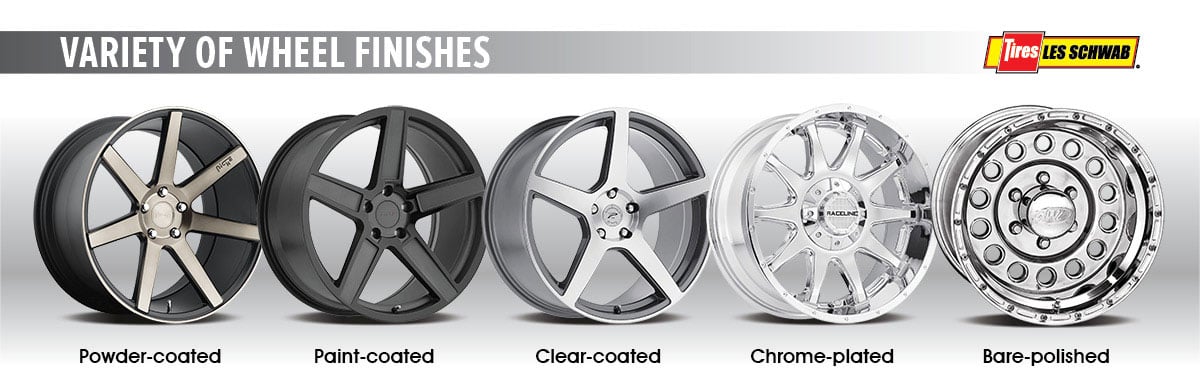
A good start to narrowing down your choices is to understand the types of wheel finishes, how the wheel surface is treated to achieve the color and polish type that suits your style. Each has its own attributes and different degrees of maintenance. Here are the six most common types.
Chrome-plated Finish
This is the classic, mirror-reflective wheel style. Chrome plating has been the traditional method for creating that bling look many drivers want for their ride. Wheels are coated with several layers of copper, nickel and chromium for a highly reflective appearance. This provides the brightest, showiest look of all finishes, nearly as reflective as a mirror.
This finish doesn’t need a protective topcoat to prevent rust. Chrome wheels can also be treated with translucent paints for a variety of color choices.
Care: Chrome wheels require regular cleaning with mild soap and water and soft rags (never an abrasive like steel wool, which will scratch the finish). Maintain the finish with Mothers® Chrome Polish or Instant Detailer. If you are running chrome wheels in wintery locations where deicers like salt and magnesium chloride are used, you should clean them frequently. This will head off finish problems like pitting and corrosion. Clean brake dust off regularly to prevent damage to the finish.
Powder-coated Finish
A dry paint and heat technique is used for a durable, attractive wheel that resists rust, heat, chips and scratches. Fine ground particles of color and resin are electrically charged and sprayed onto the surface. Then the wheel is heated in a curing oven which bakes on the finish.
There are loads of color choices for powder-coated wheels. However, this finish is “one and done.” Recoating in a new color later isn’t recommended.
Care: Use soap and water or a mild, non-acidic wheel cleaner and a microfiber or terry cloth. Never use tarnish or rust removal products or bleach. Clean brake dust off regularly to prevent damage to the finish.
Machined, Clear-coated Finish
Clear coating is used as an additional touch for many wheel finishes. It can be used on raw aluminum wheels or painted wheels.
Some bare metal wheels are machined and then clear coated: A thin layer of metal is shaved off the wheel face for a bright shine, leaving small lines like what you see on a CD. Then the wheel is coated with a clear sealant for protection from corrosion. The clear-coated finish can be appealing for those who like a combination of a machined look with painted accents while providing a protective topcoat. It also assures the wheel paintwork will stay as good as new for years, as long as it’s not nicked or scraped.
Care: Use only mild soap and water or water-based wheel cleaners, not metal polish or any acidic wheel cleaner. Clean brake dust off regularly to prevent damage to the finish. Use Mothers® Foaming Wheel and Tire Cleaner.
PVD Finish
PVD (physical vapor deposition) wheels come with a shine that rivals conventional chrome plating. First, the wheel is coated with primer. Then a very thin metallic coating is applied to the wheel in a vacuum chamber using an advanced electrical bonding method. Last, a clear acrylic powder coating is sprayed on to seal and protect the finish.
There are some benefits to a PVD finish. These wheels are much lighter than chrome-plated wheels, which may get you more nimble driving responsiveness and better fuel economy. They’re available in lots of color tones. The clear coat helps to seal out winter deicing road chemicals, so with proper maintenance, these wheels are a good year-round choice.
And they offer meaningful environmental benefits. The process doesn’t use hexavalent chromium, contains 100 percent of emissions and consumes less energy.
Care: Drive-through car washes, high-pressure washing and chrome cleaners, which contain very harsh acids, could damage the topcoat — and void your wheel warranty. Wash with mild soap and water only and a soft cloth, sponge or microfiber towel. Follow with Mothers® All-Chrome Quick Polish Detailer and Protectant. Clean brake dust off regularly to prevent damage to the finish.
Bare-polished Finish, With or Without Top Coating
Raw aluminum wheels can be hand-polished with a buffer so the surface is completely smooth, then clear coated for a rich shine. Wheels can also be machine-polished to a near-mirror shine with no top coat applied. These are popular finishes for street rod and car enthusiasts who like to show off their ride.
These finishes offer some advantages over chrome-plated wheels since they don’t add weight to the wheel, which could improve fuel efficiency and handling. Polished wheels can also easily be repolished to restore their like-new condition if they lose their luster over time.
Care: If they have no protective top coating, these wheels require regular cleaning, polishing and waxing to keep them from oxidation and pitting. Wash with Mothers® Wheel and Tire Cleaner and polish with Mothers® Polish. Clean brake dust off regularly to prevent damage to the finish.
Painted Finish
Wet paint is used for this finish, followed by a clear topcoat to protect the paintwork. The color tones and polishes available in painted wheels are pretty much endless, from silver tints to matte black to hot pink, or matched to your vehicle’s body paint color.
Care: Use mild soap and water and a microfiber or terry cloth. Follow up with Mothers® Foaming Wheel and Tire Cleaner. Clean brake dust off regularly to prevent damage to the finish.
Wheel Shine Options
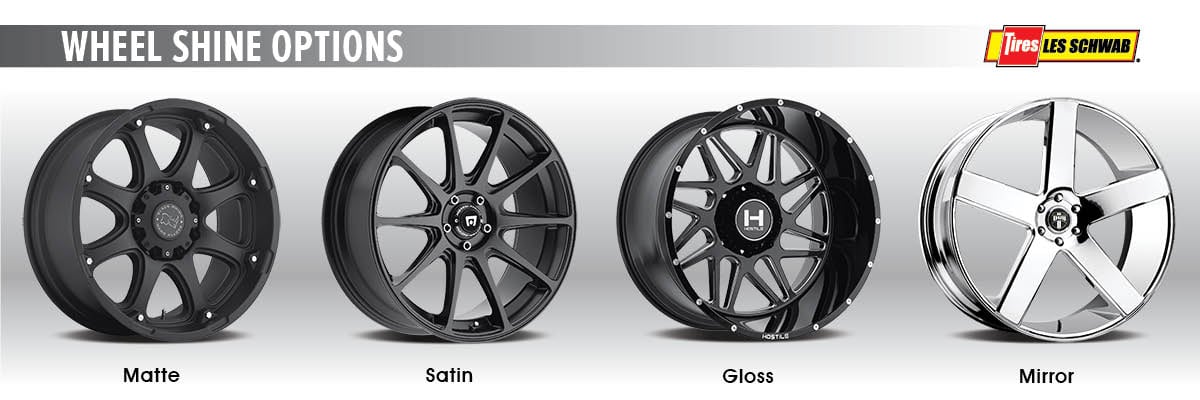
Finally, in case these aren’t enough options for you, you can customize the type of shine you like. Wheels can be made with matte (a flatter shine), gloss (high shine), satin (in between matte and gloss) and mirror (reflective) options. You can mix and match these on different parts of the wheel face.
Excited by all these wheel options? Overwhelmed? Learn more about how to shop for custom wheels in our Blog, or just come on in with your questions.
Opens warranty information dialog with language options