
-
Lowering Suspension: Pros and Cons
Lowering your car or truck so it’s closer to the ground is a popular way to customize your ride. Done right, it’s a great look that also boosts handling performance. Done wrong, it could compromise handling, drivability and traction, reduce tire tread life and even damage parts.
Pluses and Minuses of Lowering Suspension
PROS CONS More road feel Reduced ride comfort Stiffer ride Impractical for rough roads Less roll when cornering Accelerated or uneven tire wear Better handling Chance of bottoming out Improved aerodynamics Potential rubbing on parts or tires Improved traction Can’t use a standard jack Less rollover risk Cost Great looks Warranty issues
Benefits
More Road Feel
A lowered suspension helps a driver be highly attuned to how their vehicle acts on different pavement as more of the vibrations from imperfections in the road surface come through the steering wheel.Stiffer Ride
With this setup, you have to have more rigid springs so the front or back of your vehicle won’t bottom out over bumps or depressions. This is the driving experience many prefer, versus a cushier ride from, say, a luxury sedan.Less Lean in Corners
The lean of a vehicle around a sharp turn is greatly reduced because the shift of weight is less due to the lower center of gravity. The part of the vehicle on the outside of a turn stays more level with the inside. This lets a car settle more quickly into a turn and act more responsively.Better Handling
Another effect of being closer to the ground is improved responsiveness, more stability, and grip at speed. Because lowering means getting stiffer springs, there is less weight transfer when you hit the gas or brake hard. This means you’ll enjoy faster acceleration and quicker stops.Less Air Drag
Lowered vehicles are more aerodynamic. There’s less air hitting the wheels and tires (that are not streamlined shapes). This makes these cars faster. Some owners of low-stance vehicles also notice improved gas mileage. BUT, lowering a car too much will actually increase wind drag.Less Rollover Risk
Lowered vehicles have a lower center of gravity, which decreases rollover risk when cornering.Improved Traction
Lowering generally means you’ll put a plus-sized tire and wheel package on the vehicle. Such tires have shorter sidewalls, a larger contact patch (that keeps more rubber in contact with the road) and less roll around corners.Good Looks
Cars and trucks that have been lowered with custom wheels are attention-getters. It’s a more aggressive and performance-oriented look that stands out in a crowd.
Drawbacks
Less Ride Comfort
If you and your passengers are accustomed to a softer suspension that cushions impacts like bumps and potholes, you may think less of the ride comfort of a lower suspension. You may also notice increased road noise since you’re closer to the pavement.No Go on Rough Roads
The lower clearance will not be your friend on rutted, rocky, washboard and potholed roads.Uneven or Accelerated Tire Wear
Lowering changes the geometry of your wheel-tire fitment. If it’s done improperly, your car may have an alignment problem that results in premature or extreme wear patterns.Bottoming Out
Even an inch-and-a-half lower suspension can cause problems around corners, with slight potholes or on speed bumps. Traveling over the lip of a parking garage or starting up a driveway or ramp could cause the front of your vehicle to hit the pavement. Contact with the ground can cause serious damage to components underneath the car, like the exhaust system and oil pan.If you ever need a tow truck, you may require a flat bed. Otherwise, there could be a problem with the back body of the vehicle dragging on the ground.
Potential Rubbing on Parts or Tires
Poorly done or extreme lowering can cause suspension and steering parts to contact each other, the wheels or the tires. It could also cause tires to rub the body during turns or going over bumps.Can’t Use a Standard Jack
If you get a flat tire, you may find out at an inconvenient time that there’s not enough clearance to get the unit under the vehicle’s frame.Cost
Quality components and keeping correct alignment can get pricey. The lower you go, the more chance you’ll need additional parts. For example, if coilovers (meaning coil spring over shock) are part of your new setup, you’re likely looking at an outlay of $1,000 or more.Warranty Issues
You should check both your owner’s manual and any manufacturer’s or aftermarket warranty to determine if 1) the manufacturer advises against lowering your car, or 2) if lowering your car will void or adversely affect any warranty coverage you currently have.
Know This Before You Modify Your Suspension
Here’s what to know before you go low.
- If it’s higher performance you’re after, you may need to lower a lot less than you think. It’s easy to miss the mark and actually make your suspension worse. To be sure that components like struts and springs can do the work of keeping tires at the right angles, get expert help.
- Don’t cut corners when it comes to shocks, struts or other components. You’re making changes to the structure and balance of your vehicle. You don’t want to risk failing parts.
- If you modify your vehicle in ways that aren’t road legal, your insurer may not pay a claim for damage. Talk to your agent before you customize your ride and ask if your premiums will go up or policy terms change.
- Installing extreme aftermarket wheel-tire setups or suspension changes can result in steering, suspension or drivetrain problems that won’t be covered by your vehicle warranty. Check to see if the modifications you’re planning will result in denied warranty claims BEFORE installation.
- Get an alignment after you lower to ensure the best handling and tire life.
- Take care while you get accustomed to how your new setup performs. With the much stiffer suspension, your vehicle may steer a little differently and won’t absorb road shocks as well. A sudden hard brake or tight turn on a bumpy road could cause a loss of traction.
Any time you change your vehicle’s OE (original equipment) suspension, you should be sure that you’re not creating a setup that is either unsafe or is going to cause problems with other car functions. Like with many aftermarket customizations, it’s about finding the right balance of safety, performance, looks, cost, and drivability. Stop by your local Les Schwab for help.
Schedule an Appointment -
Post-Winter Car & Tire Maintenance Checklist
-
Why We Replace Calipers With Your Brake Service
Your brakes always get a workout, whether you’re picking up the kids from practice or heading out into the hills. Every time you press on that brake pedal or your vehicle’s traction control, stability control, or crash avoidance systems are activated, a host of hydraulics and mechanisms work in unison to bring your vehicle to a solid stop.
Because of this, when brakes are worn out, you want to replace more than just the worn-out brake pads. Here’s why.
Calipers Make Your Brakes Work
Yes, there are a lot of other moving parts that go into your braking system, but the calipers provide the clamping force that make it all happen. They take the pressure from your brake pedal and apply it to your brake pads. That, in turn, causes the friction to slow down your vehicle.
Les Schwab Tip: Learn more about brake types in our Complete Guide to Disc Brakes and Drum Brakes.
Sure, a new set of brake pads give you a quick fix to worn brakes. But, we’ve learned over the last 30+ years and thousands of brake repairs that replacing just the pads often leads to other braking issues, such as brake pedal pulsations, brake squeaking or squealing, or worn rubber seals. All of this can cause uneven or faster wear of your brake pads over time.
Built-up grime on your caliper pistons and slides, which become more exposed as your brake pads are wearing thin, can cause caliper malfunction if not addressed when pads are replaced. This short video demonstrates what happens when only the brake pads are replaced and the caliper pistons are forced back into the bore.
The Important Details
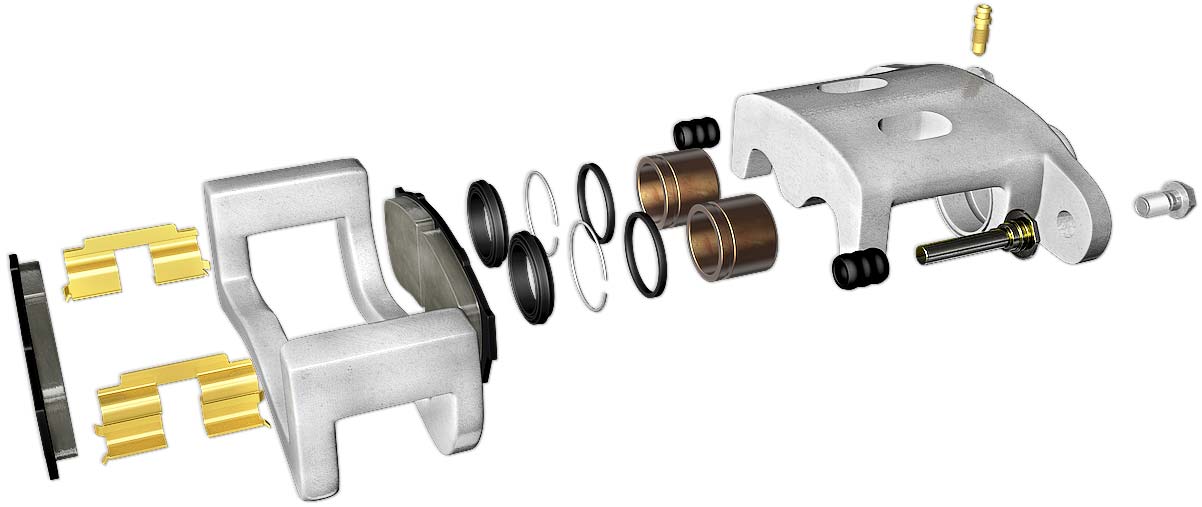
Calipers include a handful of parts, including the pistons, piston seals, caliper hardware, and dust boots. To work, all the moving parts in the caliper need to be clean and smooth. Here’s the role that each plays in stopping your vehicle.
- Piston seals flex as the piston moves out. They pull the piston back into the caliper housing. This small part can cause a lot of big issues if they’re not replaced with the brake pads.
- Dust boots protect the caliper from debris and other road grime and dirt. As they get older, dust boots will deteriorate, allowing this grime into the caliper, piston and seal.
- Caliper hardware needs to allow the caliper to float and slide. If the hardware gets rusted or corroded, the pieces can’t perform as well as they should.
Get Complete Brake Service at Les Schwab
Corners aren’t something you want to cut when you’re talking about brakes. When we replace your brakes, you get complete service. This includes premium quality brake pads and remanufactured brake calipers that are as good as the those your vehicle had when it was new.
Remanufactured calipers come with new seals and dust boots, bleeder screws, and hardware, which have been thoroughly cleaned and inspected for quality, performance, and safety.
Bottom line, your car will stop when you hit the brakes. And that’s something we can all appreciate.
Les Schwab Tip: Understand the ins and outs of brake repairs with our Brake Servicing 101: Advice on Making Sure It Gets Done Right.
Schedule an Appointment
Opens warranty information dialog with language options