
-
Be a Hero with a Summer Road Trip Safety Kit
Picture yourself as the only one with jumper cables at the boat launch when someone has a dead battery. Or looking like a genius when you bring out a deck of cards to keep restless kids busy while you change a flat tire.
Being road-trip ready means more than just carrying a charged cell phone with your roadside assistance number handy.
Keeping a simple summer road trip safety kit in your vehicle during the warm months will make your travel more carefree — and you just might save the day. Here’s what to have.
21 Items to Have in Your Summer Road Trip Safety Kit
- A clear, plastic storage bin to keep everything together and spot items more easily
- First-aid kit
- Fire extinguisher, rated for Class B and Class C fires
- Spare tire, properly inflated, along with the jack, lug wrench and some work gloves

- A ground mat or towel to use on hot pavement if you have to change a tire
- Tire pressure gauge
- Extra windshield wiper fluid in case you go through a “bug storm”
- Rags for keeping your windshield clean, or in case you need to get under the hood and get at hot or oily areas
- Three road flares, orange safety triangles or battery-operated warning lights. If you have to change a flat tire, place them 50 feet apart to warn oncoming traffic. Available at auto parts stores.
- A fluorescent safety vest with reflective strips to improve your visibility if you’re stranded on the side of a busy highway. Sold at most big-box home improvement stores.
- A baseball cap or visor to provide some sun protection if you get stuck in a place with no shade
- A reflective emergency blanket to use for shade. You can buy one at most sporting goods or variety stores.
- Sunscreen, especially if you have small kids along
- Speaking of children, stow a travel board game or some playing cards, an extra diaper if needed, and long shelf-life snacks, like nuts, dried fruit, granola bars and protein bars. Such small things will help keep them occupied and more comfortable in case you’re waiting for roadside assistance.
- Wet wipes
- Pet items. A collapsible water bowl, spare leash and treats may come in handy.
- In addition to a water bottle for every person in your car, carry a gallon of drinking water. Bring even more if you have the dog along.
- Jumper cables
- Multitool or a mini toolkit with Phillips and flathead screwdrivers, adjustable wrench and pliers. These could be useful if you’re hauling a trailer or have gear racks.
- Headlamp with fresh batteries, because flat tires can happen after dark, and you’ll need your hands free
- Duct tape, for temporary repair of a hose leak
When you’re unprepared, an auto breakdown during hot months can be just as hairy as getting stranded in winter. Your summer road trip safety kit will make getting through it a whole lot easier.
A winter road trip safety kit is also a good idea. See what belongs in yours.
Get More Safety Tips -
How Do I Drive Safely in Fog?
Thick fog is a driving hazard in many areas of the Western U.S. In the Pacific Northwest, it comes up mostly in winter. In California’s Central Valley — where some roads have been called among the most dangerous in the world because of fog — the fog season starts with the first heavy rain in fall and goes until March.
How to Drive in Fog
Just like there are different types of snow, there are many types of fog. Oregon has freezing fog that can coat the road like black ice. California’s “tule fog” usually forms in low-lying areas that typically have bulrushes (tule, pronounced “too-lee”) growing in them. Tule fog can reduce visibility on a stretch of highway to only a few feet, while other areas are nearly clear.
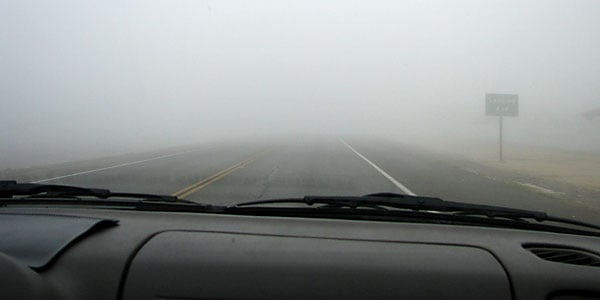
Photo by https://www.flickr.com/photos/emdot, under Creative Commons license https://creativecommons.org/licenses/by/2.0/legalcodeThis is true of fog anywhere: You can be driving along with enough visibility and then suddenly go through a patch where you can barely see the road.
When fog’s an issue, here are tips to keep you safer on your drive.
- Slow down and turn off your cruise control. Most crashes happen because the driver’s going too fast for weather conditions.
- Drive with enough stopping space so you can stop in the distance you can see.
- Don’t use high-beam headlights. They won't shine through the fog but just reflect the light back in your eyes, making it worse for you and other drivers. Use low-beams.
- In really dense fog, use front fog lights in addition to your low-beams if you have them. NEVER drive using only your parking or fog lights. It’s illegal and unsafe. Use rear fog lights if you have them when visibility is less than around 300 feet.
- Fog lights should be turned off when visibility is normal. They can be distracting for oncoming drivers.
- Oregon law says fog lights must be turned off when within 500 feet of an oncoming vehicle and within 350 feet when following another vehicle.
- Minimize distractions. Turn off music and don’t talk on your cellphone, so you can listen for traffic you might not be able to see.
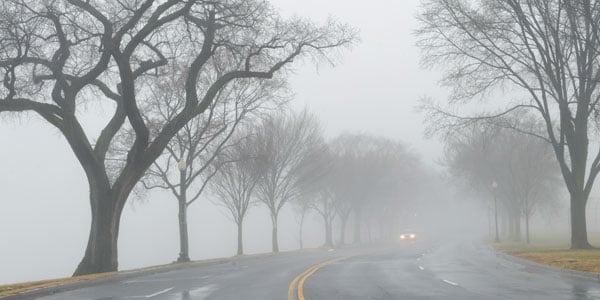
- Keep your headlights clean. Get in the habit of wiping them off whenever you fill your gas tank.
- Keep the windshield clear and use the defroster to avoid fogged windows.
- Keep on the alert for slow-moving or stopped vehicles. Slow down more when you see red taillights ahead.
- Avoid using your hazard lights while moving — other drivers may think you’ve stopped.
- Use the right edge of the road, white fog line or roadside reflectors as a guide to stay in your lane.
- In Oregon, a Dense Fog Advisory is issued when visibility is reduced to less than one-quarter mile. Check www.TripCheck.com.
- Be patient. Don’t change lanes or pass other vehicles unless you really have to, and NEVER try to pass long lines of traffic in fog.
- Don’t creep along; somebody else may crash into you. If visibility is extremely poor, exit the freeway or find a safe place to pull over. Some highways in California have signs that estimate road visibility and a 3-2-1 countdown pattern of reflective pavement markers to help motorists take exit ramps in heavy fog.
- If you need to stop and there’s no nearby exit, pull off the pavement as far as safely possible. Turn off your lights, set the emergency brake and take your foot off the brake to be sure your taillights aren’t lit up. Turn on your emergency flashers. Wait it out until conditions improve.
- Never stop in the travel lanes. If you can’t pull over, go slow and sound the horn occasionally.
What You Should Know about Fog Lights
Fog lights are designed to be used at low speed in fog, heavy mist, snow and other poor-visibility situations. They’re different from daytime running lights. They are an extra pair of lights mounted low on the vehicle, with the thinking that fog doesn’t settle on the road surface but hovers 12 to 18 inches above it. They aim light into this layer of fog-free air. They also point to the right enough that the driver can see the solid, white “fog line” at the road edge as a guide.
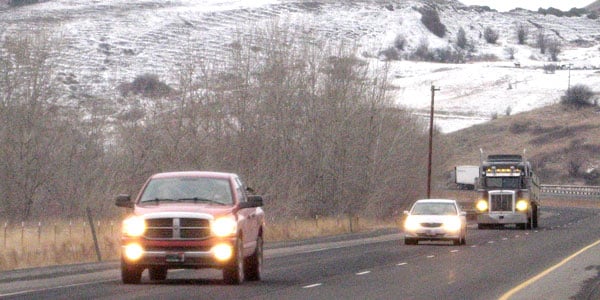
Photo: Oregon Department of Transportation https://commons.wikimedia.org/wikiThe rules on using auto fog lights — also known as fog lamps — vary by state. The main thing to know: you can’t use fog lights in a way that creates glare for other drivers. They have to be pointed and used so they won’t interfere with visibility for another driver within 25 feet. Here are specifics.
Basic Fog Light Rules for Western States
Each year, over 38,700 vehicle crashes occur in fog. Over 600 people are killed and more than 16,300 people are injured in these crashes annually. Treat low visibility driving with respect.
Get more winter driving how-tos in our ebook 19 Winter Driving Resources You Can’t Do Without. See real-time road conditions for Western states here.
Get More Driving Tips -
17 Must-Know Tips That Will Make You a Better Defensive Driver
Even the most-skilled driver, with a solid safety record, is still at risk for a car accident. Anticipating potential road hazards is the key to defensive driving. In addition to protecting life and limb, it can potentially lower your insurance bill and help you avoid tickets.
You can’t control bad road conditions, distracted drivers, people under the influence or other unexpected situations. You can, though, increase your odds of staying clear of such hazards with this list of 17 defensive driving tips. They key takeaways are:
- Assume other drivers will do the unexpected.
- Keep your full attention on the road.
- Make sure your brakes and tires are in good working order.
Defensive Driving Safety Tips
- Expect other drivers to do the unpredictable, for example, running a red light, backing out without looking or veering into your lane.
- Ignore the constant distractions in your own car, for instance, text message pings, crying babies, eating and drinking, smoking, turning to look at passengers, adjusting the stereo and putting on makeup. Leave your cellphone in your pocket, your purse, your backpack or the glove compartment, and save the snacks and makeup for home or your destination.
- Plan your route before you put the car into gear. Load your destination into your navigation system or check the map before you start.
- Obey traffic laws, including seat belts, stop signs and speed limits. Give yourself enough time to get where you’re going so you don’t feel pressured into unsafe driving.
- Look ahead and keep your eyes moving. Watch the road for potholes and debris, scan the shoulder, check your rearview and side mirrors and be alert to brake lights ahead.
- Adjust your speed and following distance when the weather calls for it. A heat wave means there will be overheating vehicles, more tire failures, and more people out and about. Winter weather will create slick conditions that increase your stopping distance. Be extra vigilant and follow these guidelines for driving in rain, snow, ice and fog.
- Plan for unexpected changes in traffic speed in construction zones.
- Don’t rubberneck. Instead, focus on keeping clear of all those who are gawking around you.
- If someone is tailgating you, slow down enough to give them room to pass.
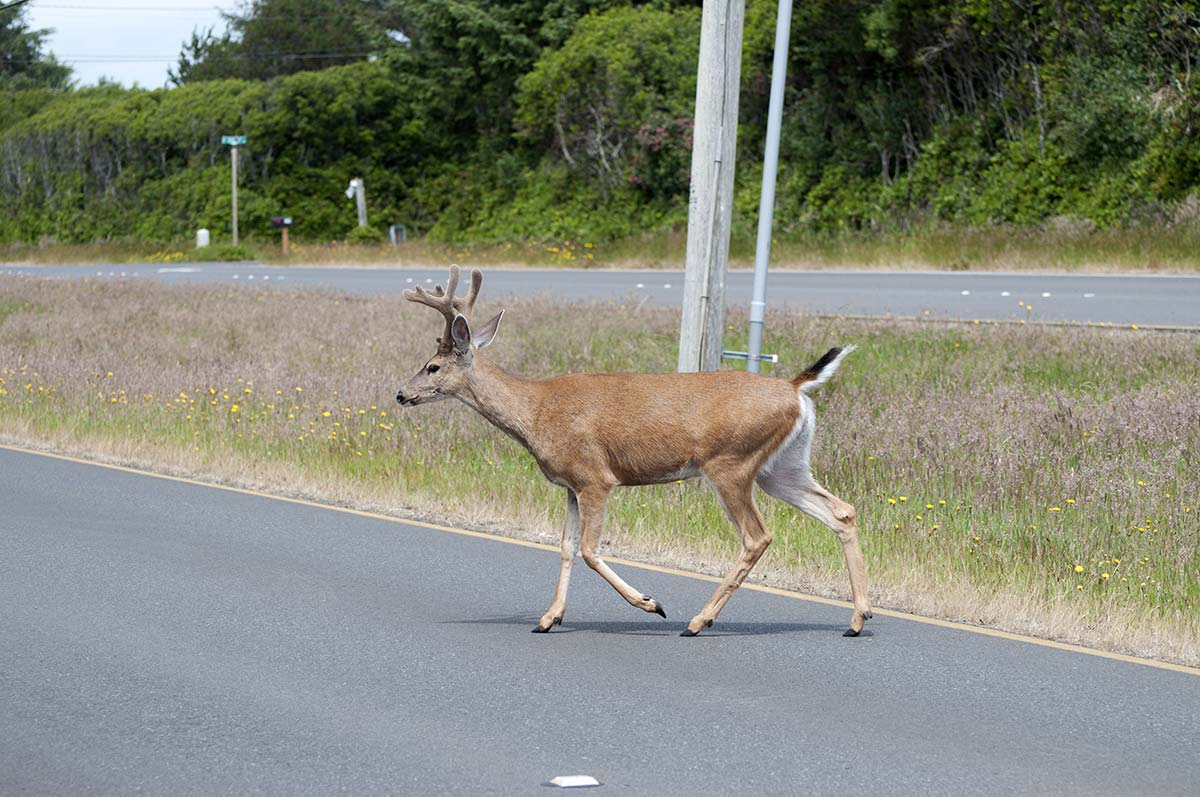
- 10. Keep an eye out for animals. Certain times of the day and year are more dangerous due to wildlife. The deer rutting season can start in September and usually peaks in mid-November, though it can stretch into the winter months. During this time, bucks aren’t as aware of traffic. Baby animals and juvenile raptors, who aren’t savvy about highways, are a factor in spring and summer. Go slower at night to watch for animals that get caught in the headlights in the road.
- Give cyclists plenty of room and don’t pass them when there is oncoming traffic or on blind corners. Cyclists may swerve into your lane due to a wind gust or to avoid debris.
- Be the one who lets the other driver go first. If you arrive at an intersection at the same time, wait a few seconds before moving through. Even though it may be your turn to go, other drivers may not properly yield.
- Make it easy for other drivers to know your intentions. Stay in your lane rather than trying to gain a few seconds or minutes by passing. Always use turn signals. Tap the brakes when you see traffic slowing ahead to alert drivers behind you that there’s a slowdown.
- Be extra alert during nights and weekends. Driving under the influence is most prevalent when the workweek is done.
- Talk to your teen about driving under the influence. Car accidents are the leading cause of death for teens. Drivers ages 16 to 19 are three times more likely than drivers 20 and older to be in a fatal crash.
- Take a course. It will not only improve your driving, it might reduce your auto insurance cost. If you’ve gotten a traffic citation, completing defensive driving training can sometimes get it dismissed, reduce points on your license and keep your insurance rate from going up. The National Safety Council offers online training. Many insurance companies offer educational programs for new drivers in exchange for discounts. Check with your insurer to see what will qualify you for reduced premiums or your local court to confirm approved coursework.
- Maintain your vehicle’s most important safety gear: your brakes and tires. If you do need to stop suddenly, you don’t want to find out the hard way that your brake pads are worn or your tire tread is too thin to provide traction. (Les Schwab Tires does free visual inspections of both without an appointment.)
Defensive driving is a series of hundreds of choices you make about your own driving behavior every time you get behind the wheel. Be the one who watches out for the other driver. Spotting risks ahead of time requires your full attention. With practice, it soon becomes second nature.
Opens warranty information dialog with language options