-
How to Drive Safely in High Winds
The times to be cautious during high or gusting wind are when you’re driving a pickup, SUV, RV, van or bus; you’re towing or hauling; or you’re traveling on a multilane road with lots of large vehicles. The taller and broader the vehicle, the more surface area for wind to shove against. A big gust can force a truck or trailer suddenly into another lane or cause a rollover.
Also, if you have new tires or tall-tread-block tires like MTs, be aware that side-to-side movement from strong crosswinds may feel exaggerated.
To drive safely in high winds:
- Make sure your tires are properly inflated for best traction.
- Leave more time and slow down.
- If blowing dust or driving rain are factors, turn on your headlights to improve visibility.
- Keep a firm grip on the steering wheel.
- Compensate by steering slightly against a consistent side wind.
- Don’t overcorrect if you get blown off course by a short gust.
- Make steering corrections when driving from areas protected from wind to open areas. Be extra vigilant on bridges, overpasses and open straightaways where wind can spike.
- Be prepared for unpredictable gusts when driving through underpasses, road cuts between hills and tunnels.
- Watch for debris in the road.
- Give other high-profile vehicles, like semis, a lot of room.
- Pull over someplace safe if conditions become dangerous.
- Once you’re at your destination, park away from trees and power lines.
Tire Performance in Strong Wind
High wind causes a vehicle to lift a bit, which reduces the necessary friction between your tires and the pavement. A really large surface, like the side of a fifth wheel, can act like a sail on a sailboat. A wind gust can suddenly pick up such a trailer and force it into another lane or off the road, especially if the blacktop is wet, which also reduces traction.
This effect is exaggerated when tires aren’t fully inflated or when you’re carrying a load. There’s more roll in the tire sidewall and your handling won’t be as responsive.
Be extra vigilant when you have new tires or tires with high lug-to-tread ratio and tall tread blocks, like all-terrain or mud tires. Such tires have more squirm in wind gusts, much like a skyscraper will sway more in high wind than a short building.
Driving in High Winds
If you’re towing a trailer or fifth wheel, driving a lifted truck or RV or hauling a heavy load, consider waiting out the conditions. Before you leave, check your state’s travel advisories. Travel may be not recommended or even be prohibited depending on vehicle type.
The National Weather Service also puts out alerts, including wind advisories. Weather warnings are available by county and zone (scroll down) and updated every few minutes.
The most important thing to remember is to slow down. You’ll have more time to react if you get blown sideways or another driver does.
Get More Driving Tips -
How to Drive Safely on Ice: Top Tips for Keeping Your Car on the Road
When icy roadways are involved, the most important thing you can do to avoid an auto accident is not drive at all. Even if you have to reschedule that key meeting at work or delay that trip you’ve had planned for so long, think about staying home when conditions are bad or forecast to get worse.
If you’re caught trying to get somewhere when freezing rain starts and the highway becomes better for hockey than driving, here are 17 general tips for driving safely on black ice and snow. Of course, you should always carefully review your owner’s manual for any warnings, notices, or other advice specific to your vehicle.
17 Tips for Driving on Black Ice or Snow
- Have the right winter tires, properly inflated. Winter tires are worth it, especially if you might be encountering ice. See why in this video that shows stopping ability of winter tires compared to all-season tires.
- Carry chains and if the road gets slick, use them.
- Don’t be overconfident about traction just because you have a four-wheel or all-wheel drive. These vehicles don’t stop or steer better on ice than regular old two-wheel drives. Even snow tires may not give you full traction on ice.
Ease up on the Gas
- Slow way down. If you do go into a skid you’re less likely to do your vehicle or yourself damage.
- Accelerate and apply brakes slowly.
- Increase your following distance. You’ll need ten times the stopping distance compared to what you’re used to on dry pavement.
- Don’t even think about passing other vehicles. And if someone tries to pass you, gently steer to the shoulder as far as you safely can to give more room.
How to Tell If the Road’s Icing Up
- Don’t use your car thermometer as the only judge of how slippery the road is. Air temperature warms quicker than pavement. So even when your thermometer says it’s above freezing the roadway may still be frozen. Look for ice on your wipers, side view mirrors, road signs or trees as other signs that extra caution is needed.
- Avoid driving at night or very early in the morning when it’s coldest.
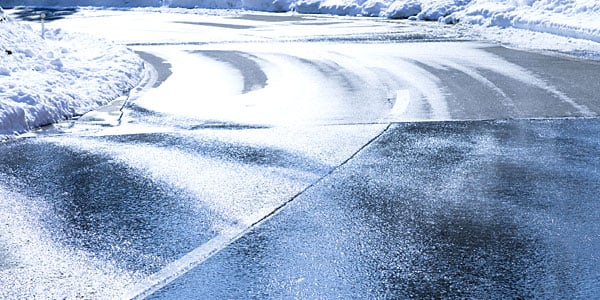
- You can’t always see ice coming. Black ice is thin ice that actually looks like water on the road. Again, watch for signs of icing up elsewhere and keep these tips in mind when you’re driving on black ice..
- Be extra vigilant on bridges, overpasses and ramps. They’re the first to freeze and the last to thaw. They get colder than asphalt because they’re concrete and there’s no insulation provided by the ground.
- Also be alert when you’re changing elevation. On mountain passes, the worst patches of road are often the icy spots in shaded corners.
- If you notice rain or snow turning to freezing rain while you’re driving, crank the defroster on high. Don’t let ice stick on your windshield. It’s unsafe to try to see through a small part of the windshield and just keep going. Pull over someplace safe and scrape it off. If you’ve purchased a tire from us, you’ll have the advantage of the Les Schwab Tire Warranty, including our no-hassle road hazard protection, a 60-day satisfaction guarantee, and free tire maintenance including flat repairs, rotations, rebalancing, air checks, and our free pre-trip safety check. Find a store near you to take advantage of these safety offerings before you head out on a winter trip.

Avoiding Skidding on Black Ice
- How to drive downhill in slick conditions: if you have anti-lock brakes (ABS) start at the top of the hill as slowly as possible, leaving your vehicle in normal drive gear. Use light, steady pressure on the brake pedal to maintain the right speed. This allows your braking system to maintain traction. If you don’t have ABS, start slowly and keep it slow by lightly pumping the brakes.
- Never use cruise control in icy conditions. It can cause your wheels to spin at different speeds and may make you lose steering control.
- If your vehicle suddenly feels like it’s floating, take your foot off the gas but don’t slam on your brakes, which can cause you to skid.
- The best way to be safe while driving in icy conditions is to be patient. Let vehicles that tailgate you go by and take your time.
Read more in the full series on all you need to know to drive safely on winter roads, including how to avoid hydroplaning, how to drive in snow, and real-time Western winter road conditions by state.
-
How to Drive Safely on Mountain Roads
Driving in the mountains is different from city and highway driving. There are the added rise and decline in elevation, narrowing and winding roadways, and the ever-present possibility of snow and ice. We’ve put together some tips to help you safely navigate your way over the mountains, regardless of the time of year.
Watch the Weather Forecast
If the passes seem too treacherous for you, wait it out. Weather conditions can change overnight. In addition, county and state road crews often grade and add materials (rocks and chemicals) to roadways to melt ice and add grip.
Always be Prepared
Fill up your gas tank before you leave. Driving up and down mountain passes at slower speeds can burn a lot more fuel than regular driving. In addition, check your defroster, wiper blades, and headlights and top-off all your fluids, including wiper fluid and antifreeze. Finally, come by Les Schwab and we’ll check your tire pressure and tire condition, battery, and brakes as part of our free, pre-trip safety check. We’ve put together some additional tips to get you ready to drive in the mountains and in winter conditions.
Slow Down (a lot)
It’s not how you drive, but how you arrive that matters. Slowing down on snow and ice-covered mountain roads is the best way to reach your destination without getting in an accident or losing control. Check out our article, Winter Driving Tips: How to Drive in the Snow. In addition, we have some more advice to safely navigate mountain roads:
- Leave early and give yourself plenty of time. There’s enough stress with driving in winter conditions, you don’t need to add to it by feeling rushed.
- Avoid using cruise control. Your tires could spin too fast on snow and ice, reducing your control.
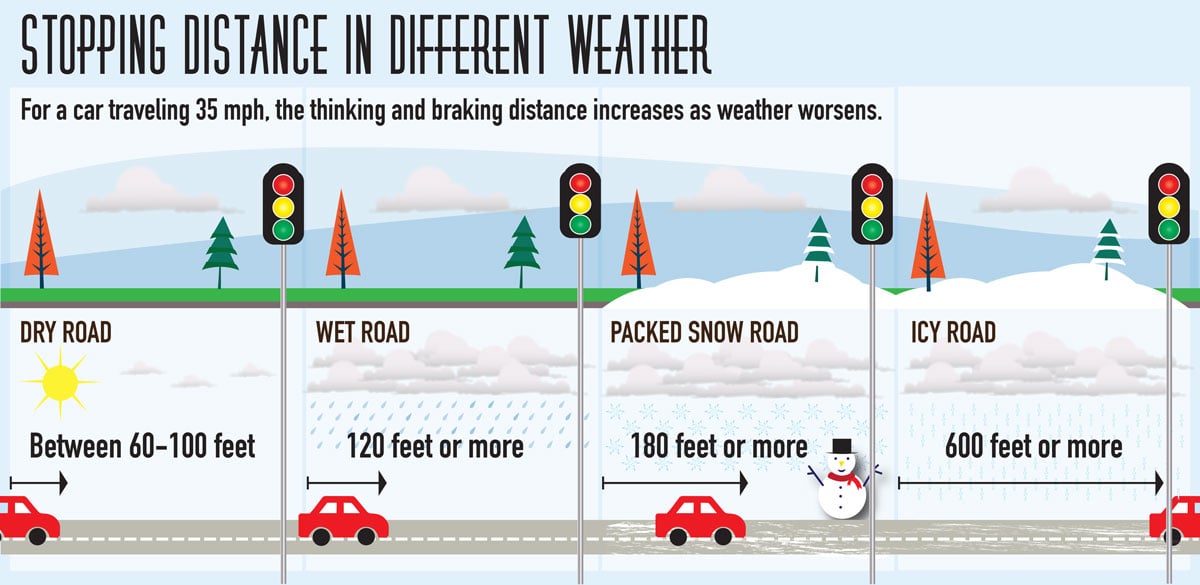
- Maintain a safe distance. It takes a lot longer to stop on ice and snow. On snow, it can take upwards of 180 feet. That’s the length of two semi-trucks. And on ice, it could take up to 600 feet to come to a complete stop. That’s the length of two football fields.
- Ease up on the gas. Slow acceleration and easing off the gas can help keep you in control.
- Shift down instead of constantly braking. If you drive an automatic, use your vehicle’s lower gear settings. Keeping your vehicle in a single gear can help improve traction. Plus it ensures you maintain a slow speed.
- Don’t pass unless it’s absolutely necessary. Again, the best way to get there without incident is to slow down.
- Don’t hug the centerline. If you skid or lose control, you don’t want to drift into oncoming traffic.
- Use snow chains. When you do, stay below 25 miles per hour and avoid sudden starts and stops.
- Invest in a set of winter tires. They are made from a special compound that stays flexible in temperatures below 40-degrees (40º F), giving them more grip in winter conditions.
Get Unstuck
If you get stuck in the snow, don’t spin your wheels. Instead, turn off traction control and put your vehicle into its lowest gear. Then give your tires something to grip. Floor mats or cardboard work great. Don’t forget to turn the traction control back on after you’re on the road.
Don’t Rely on Electronics
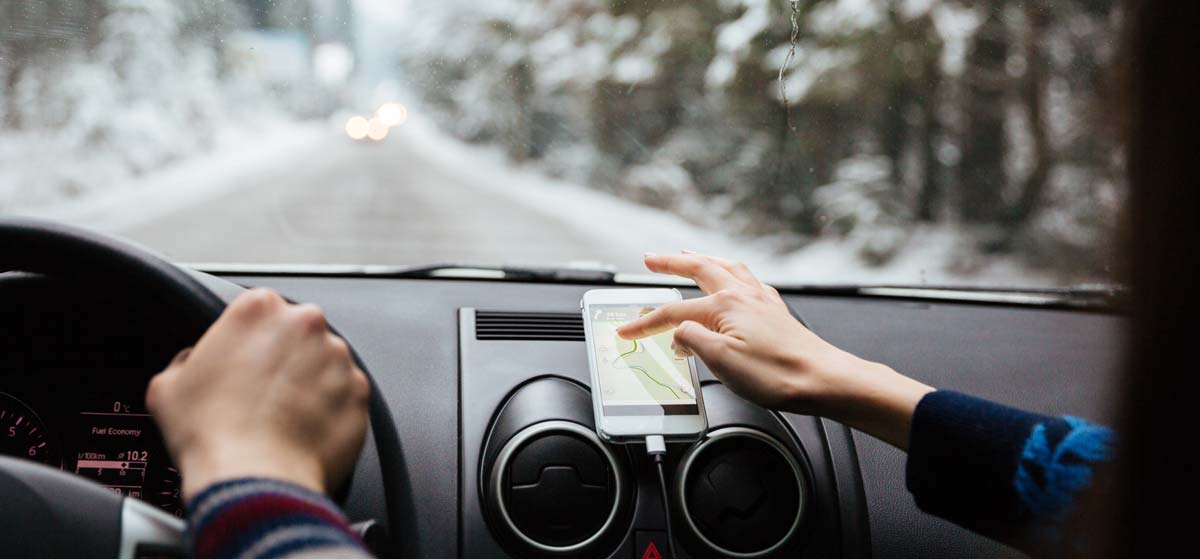
Map apps and your car’s navigation might work great in the city, but up in the mountains it pays to have a paper map as a backup. Print out your directions, including alternate routes in case of road closures, before going over the pass.
Watch for Springtime Ice on the Roads
Icy roads can catch even the best drivers off guard. Watch for ice in the shade where temperatures can fall below freezing. To avoid skids and losing control, watch your speed going into shaded corners. Also, watch for ice on bridges and overpasses.
Get Ready for Mountain Driving at Les Schwab
The weather can shift and worsen quickly in the West. Especially at higher elevations. Your local Les Schwab can help you decide if you need a set of winter tires. We can also check your vehicle’s most important safety components before you travel. Stop by today or schedule your free, pre-trip safety check now.
Opens warranty information dialog with language options