
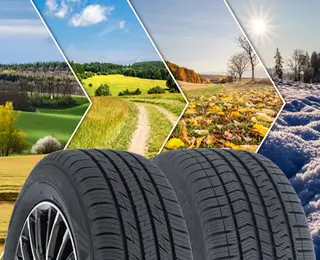
When to Choose All-Season or All-Weather Tires
Having the right set of tires on your vehicle is essential for safe driving in any season and weather. Depending on where you live and the storms you face, all-weather or all-season tires with specialized rubber compounds and tread patterns could be just what you need for year-round traction and control. We have some tips to help you choose between all-season tires and all-weather tires and what to look for when evaluating durability, traction, comfort, and fuel efficiency or range.
Can All-Season or All-Weather Tires Be Used in the Snow?
Yes. But neither all-season nor all-weather tires are designed for treacherous winter-driving conditions.
If you often face harsh winter weather, including heavy snow and icy roads, winter tires (also called snow tires) may offer the best traction. That’s because winter tires are made especially for optimal performance on winter roads with special rubber that stays flexible under 40º F. Why is that important? When tires get rigid, they cannot grip the road as well, making steering and stopping more difficult. Plus, the deep, wide, and jagged tread on snow tires helps improve traction while the channels move water, slush, and snow away from the contact patch.
Looking for even more traction? Many winter tires have studded options, giving you more grip on ice. See our article How to Choose Snow Tires for more. While they do perform well in the snow and ice, winter tires are not recommended for year-round use. That’s where all-season and all-weather tires excel.
Defining All-Season and All-Weather Tires
Both all-season and all-weather tires are designed for year-round use. That means you can put a set of all-season or all-weather tires on your car or truck and use them every day, in almost any weather. However, there are some distinct differences between the two. Additionally, some all-season and all-weather tires have earned a regulatory designation for added traction in the mud and snow. You can find these symbols on a tire’s sidewall.

The tread compound found in most all-season tires is designed to stay flexible and grip the road in warmer temperatures. As the temperatures drop, so does the control offered by all-season tires, which makes them less than ideal for severe snow and icy conditions. When the temperatures plummet, the rubber in all-season tires hardens, increasing stopping distance and reducing control. Read about all-season tires and overall control in the snow. In contrast, all-weather tires are built for the cold and snow but not for all road conditions (they can experience more wear on dirt and gravel roads). Additionally, they are sometimes quieter than all-season tires, thanks to a specialized tread pattern that grips the road in any season.
All-season tires are ideal for:
- Mild climates that occasionally get light snow or dip into freezing temperatures
- Good driving performance in spring, summer, fall, and some light winter conditions
- Dry and wet roads
All-season tires are not ideal for:
- Extreme winter driving
- Ice-covered roads
- Temperatures far below freezing or freezing temperatures for days at a time
All-weather tires are ideal for:
- Colder climates and some snow
- Excellent driving performance all year long
- Good traction on wet roads thanks to deep tread grooves and specialized sipes
All-weather tires are not ideal for:
- Severe winter driving conditions
- Consistently traveling on gravel or dirt roads
- Giving your vehicle a rugged look

What Does the Three-Peak Mountain Snowflake Symbol Mean?
Because they carry the three-peak mountain snowflake (3PMSF) rating, all-weather tires qualify as winter traction tires for harsher winter conditions. That symbol or icon, which appears as a snowflake inside a three-peaked mountain, indicates that the tires have been made with a special rubber compound that stays pliable in colder conditions and offers some grip on snow and icy roads. Learn more about the 3PMSF designation and the level of winter traction they can provide.

Evaluating All-Season and All-Weather Tire Performance
The tires you choose for your car or truck have a direct impact on performance, safety, fuel or range efficiency, and road noise inside the cab. Here’s a quick look at traction and handling, comfort and noise, miles per gallon or charge, and expected tread life for both all-season and all-weather tires.
Traction and Handling
- Both excel at cornering, braking, and acceleration on dry and wet roads. However, the rubber compound in all-season tires is specially designed for higher temperatures, making it ideal for warm climates.
- Both offer traction in snow and some ice. But all-weather tires are severe-weather rated, featuring the 3PMSF logo on the sidewall.
Comfort and Noise
- All-season and all-weather tires are built for comfort and a quiet ride. However, all-weather tire tread patterns, which are not as deep, often provide a quieter and more comfortable ride.
Fuel or Range Efficiency
- Depending on the rolling resistance, both all-season and all-weather tires can help maximize your overall miles per gallon or distance per charge.
Tread Life
- The life expectancy of any tire depends on how it was built, the types of terrain it’s designed to handle, and the overall tread, siping, and rubber compound. Additionally, how you drive, how often you get those tires rotated, how well you keep them properly inflated, and the roads you face can have a huge impact on how long your tires last, whether they are designed for year-round or specific season driving conditions.
Are All-Season or All-Weather Tires Best for Where You Live?
What are the overall, year-round weather conditions where you live? Those conditions should indicate whether you need all-season, all-weather, and/or a dedicated set of winter tires.
Mild Climates
- If your region enjoys a mild climate, including rain, sunshine, and the occasional snowstorm, all-season tires could be the right choice — especially if you like added control on hot summer roads.
Rainy Regions
- Coastal regions and areas that get a lot of rain require specialized tires that resist hydroplaning. Learn how to choose the right tires for rainy and wet conditions.
Mountain Driving
- All-weather tires are designed to handle more severe winter storms or travel over mountain passes. Learn how to drive safely on mountain roads.
Occasional Snow
- All-season tires can handle the occasional light snowstorm. However, they cannot compete with all-weather tires that have earned the 3PMSF severe weather rating.
Harsh Winters
- For extreme winter conditions, snow tires offer the best traction over both all-season and all-weather tires. Learn more about safe winter driving and some resources you may want to consider.

Which Tire is Right for You?
Les Schwab can help you decide between a set of all-season, all-weather, or a seasonal change-out to winter tires. That includes showing you the differences in tread compounds and patterns for traction on dry, wet, and snow-covered roads, as well as year-round performance and comfort. Stop by or schedule an appointment to get the answers, tires, and other safety services you need at a Les Schwab near you.
Book An AppointmentAll-Season vs. All-Weather Tire FAQs

Les Schwab Tire Team
Published: October 8, 2026
Find more content from our expert tire team on YouTube.
What you need to know

Summer Tires vs All-Season Tires: Which Are Best for You?
Let us help you understand the differences between summer, all-season, and performance tires and decide which gets you better traction and performance.
Are All-Season or All-Weather Tires Okay in the Snow?
Understand the differences between all-season, all-weather, and winter tires and match the best tire to your winter driving needs.

When to Choose All-Terrain Tires or All-Weather Tires
Wondering what the difference between all-terrain and all-weather tires is? Read this article to find out the key differences, and which tire suits you best.