
Boat Trailer Inspection Checklist
How To Choose the Best Tires for Your Trailer
Having the right set of tires on your vehicle is essential for any road trip, but so are the tires on your trailer, whether you’re pulling a camper, fifth wheel, boat, or utility trailer. To help you avoid issues and pick the right tires for your needs, we’ve compiled some quick trailer tire tips.
Need New Tires for your Trailer? Come to Les Schwab
Anytime you buy a new or used trailer, bring it to your local Les Schwab. We’ll check the tire air pressure, the torque on the lug nuts, double-check your spare, and give the wheel bearings an inspection. The pros will also show you what you need in your vehicle to change a flat tire on an RV or trailer when you’re on the road. If you’re interested in a set of custom wheels or specialized tires for your trailer, we can show you plenty of options.
Some trailers, new or used, don’t always come with a spare and/or may require specialty tools for installation. For free advice, stop by your local Les Schwab.
You Have Choices
Depending on the trailer, you may be able to find LT (Light Truck) tires that work. This can help with aesthetics if you want your trailer tires to match the ones on your tow vehicle. Or you can simply stick with ST (Special Trailer) tires, which include radial and bias construction options.
Choose the Right Trailer Tires for Your Needs
Whether you’re hauling a boat, camper, or livestock, it’s important the tires you choose match the weight capacity of your trailer, provide heat distribution to avoid tire failure, hold up to highway speeds, and provide stability.
Boat Trailer Tires
The tires on your boat trailer matter. Similar to travel trailer tires, you can choose between ST (Special Trailer) tires and LT (Light Truck) tires. In most cases, ST tires, which are designed to carry heavy loads, reduce swaying, and improve stability, are the best choice.Travel and Fifth-Wheel Trailer Tires
At Les Schwab, we carry tires for fifth-wheel trailers, bumper-pull trailers, pop-up campers and more. The professionals at Les Schwab can help you decide between ST (Special Trailer) tires and LT (Light Truck) tires, depending on your needs, what you drive, and what you’re towing. While LT tires can be used to match what is on your tow vehicle, ST tires offer improved fuel economy with shallower grooves, improved stability and reduced swaying at highway speeds.
Utility/Livestock Trailer Tires
Whether you’re taking your favorite critter, UTV, ATV, snowmobile, or dirt bike out for the weekend, or you use your utility trailer for work, Les Schwab can help you decide on the right trailer tires.
The Difference Between Radial and Bias Construction Types
Trailer tires come in many sizes. These include radial and bias. Each of these perform differently. Radial tires are constructed with belts running at a 90 degree angle of the tread centerline.
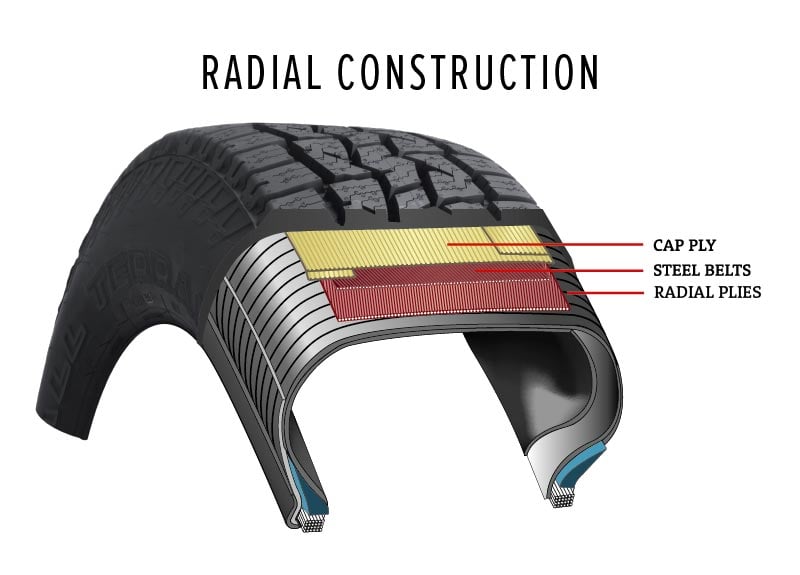
Radial tires tend to last longer overall and are less likely to develop flat spots when parked for extended periods of time (some trailers are parked over the winter). Radial tires perform well at highway speeds, dissipate heat better, and offer lower rolling resistance for a smoother ride.
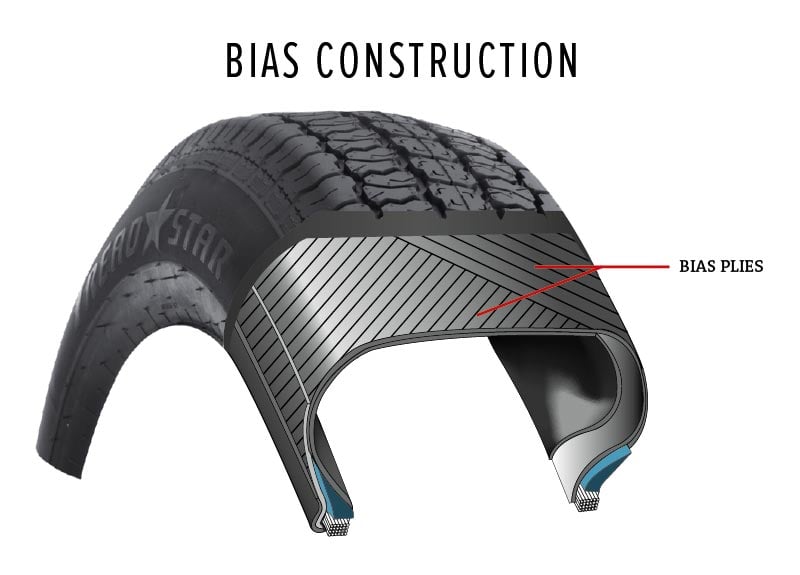
Bias ply tires are constructed with belts running at a 30-45 degree angle of the tread centerline. While bias sidewalls can offer stiffness to reduce trailer sway and increase stability for specific needs, bias ply tires may be limited in availability. Today’s standard trailers often perform better overall with radial tires.
Les Schwab Tip: Whether you choose radial or bias tires, stick with the same type, size, and load range on all wheel positions on your trailer.
Know Your Trailer and Tire Limitations
Check your trailer for its weight capacity. This number will be based on its axle rating. Increasing your tire load-carrying capacity does not increase the weight-carrying capacity of your trailer. If you stay within its load capacity, you’ll reduce your chances of an issue – especially if you are using the proper tires. See the example below.
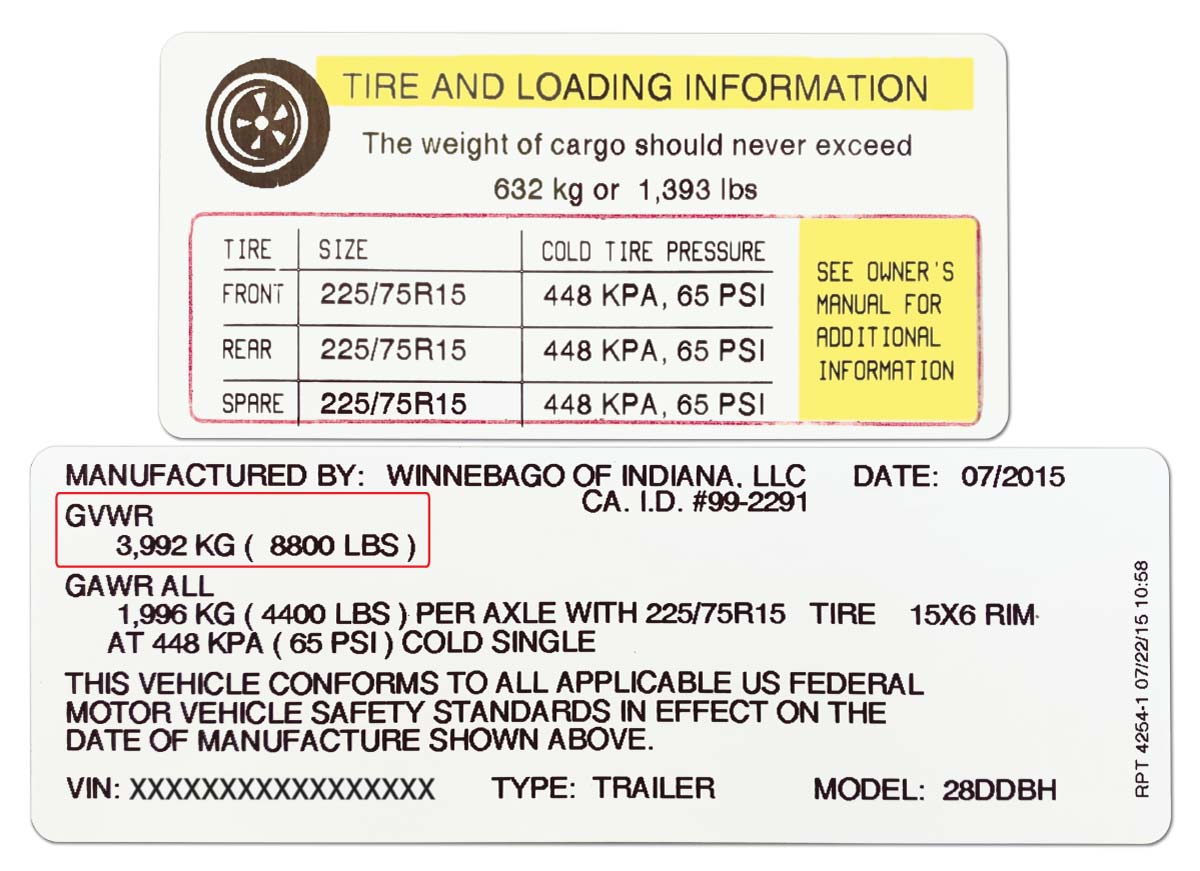
Be sure the tires on your trailer meet or exceed the trailer’s GVWR (Gross Vehicle Weight Rating, which is the trailer’s maximum operating weight, including cargo) shown above.
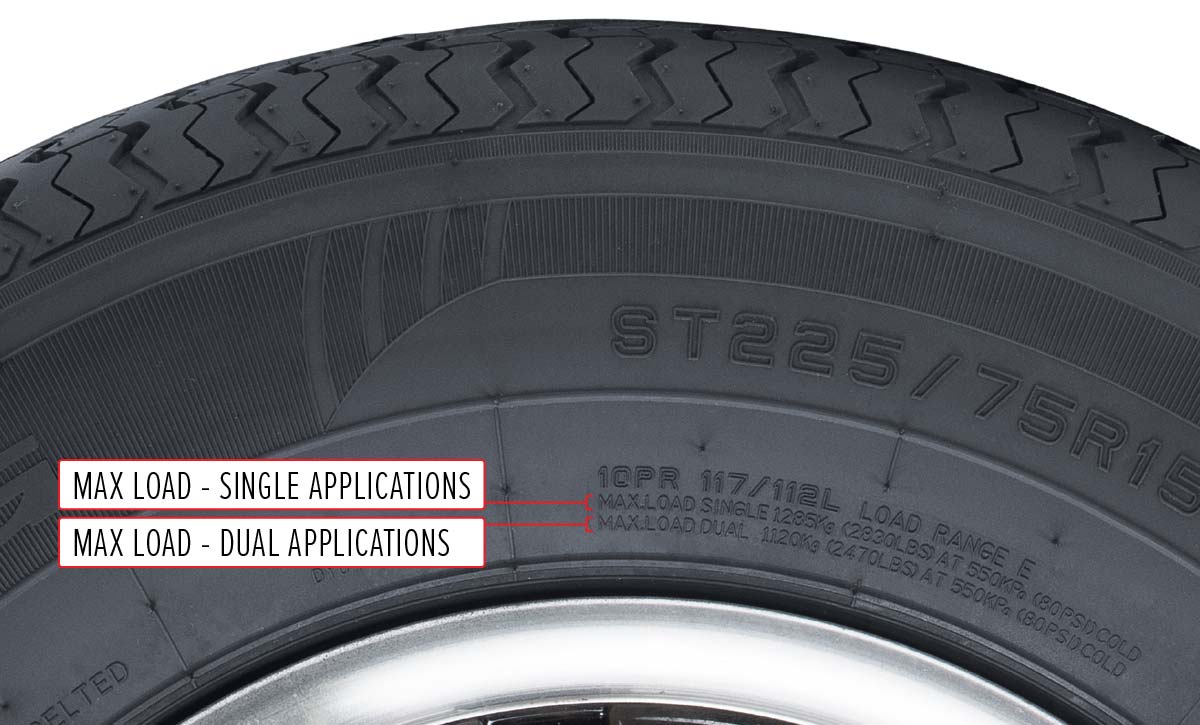
The maximum load (carrying capacity) is only met when trailer tires are inflated to their maximum pressure. When tires are underinflated, it will decrease the load-carrying capacity and the speed they can travel. Never exceed a tire’s maximum air pressure.
Les Schwab Knows Trailer Tires
Stop by your local Les Schwab. Our team will help you choose the best tires for your trailer. They’ll also take a look at the overall condition of your current trailer tires, check for cracks around the valve stems, top-off your tire pressure, and show you how much life is left in those tires before you head out on your next outdoor adventure.
3 Ways Load Management Can Optimize Your Vehicle’s Towing Capacity
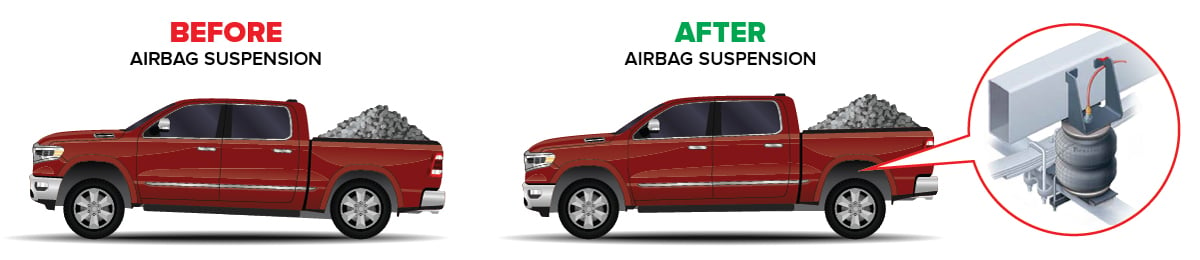
Every vehicle has a load carrying capacity recommended by the manufacturer. While you might be within that limit when you hitch up a trailer or load up the back of your truck, your handling can be affected when the back end sags. This can reduce control, cause uneven tire wear and add stress to your vehicle’s suspension and brakes. It can also cause performance issues with how your trailer tows. Load management solutions can help by supporting your leaf or coil springs to restore control and ride height.
To fix these issues, Les Schwab suggests a load management solution, including airbags or helper springs. Here are three different load management solutions that could work for you.
1. A Quick Fix for Unlevel Tow Issues
Before adding airbags or helper springs, try moving the weight in your trailer to accommodate your tow vehicle. In other words, rearrange your load so that only 10 or 15 percent of the fully-loaded trailer weight is on the tongue. If that doesn’t help, or if that isn’t feasible (for utility trailers, etc.), you may need airbags or helper springs.
2. Airbags
Airbag suspension systems offer extra support for normal and heavy hauling needs. These devices work like a heavy-duty balloon to keep your tow vehicle level when hauling something heavy. They also help manage the load to resist sway and give you more control. An on-board air compressor system, which is controlled by an analog or wireless controller, is an optional add-on to make it easier to adjust air pressure.
There’s a bonus: You can reduce or increase the air pressure according to the load. Choosing the right airbag system for your needs is important. Besides standard and heavy-duty systems, you’ll have a choice between analog and wireless controllers as well as single or dual path systems.
Analog or Wireless Controllers
The difference between analog and wireless controllers is purely about convenience. With an analog system, you’ll have a controller in the cab of your truck to activate the compressor, which then pumps air into or releases air out of your airbags. A wireless controller means you can stand outside your truck and watch as the compressor lifts and lowers the back of your tow vehicle. Some systems include an option to utilize smartphone apps to make adjustments.
Single and Dual-Path Compressors
If your trailer or loads are evenly distributed, a single path compressor is fine. But if your loads vary with more weight on one side or the other, a dual path compressor lets you adjust the air to even things out.
3. Helper Springs
Helper springs are a lower cost alternative that do nearly the same thing as airbags. They help enhance your vehicle’s original equipment suspension to keep your vehicle level or flat when it’s being used for heavy loads, including towing. However, they don’t have the ease of adjustability of airbags.
Proper Load Management Starts at Les Schwab
Whether it’s for work or weekends away, stop by or schedule an appointment online to talk about your load management options. Our pros will ask all the right questions and help add safety and proper suspension to your next trip.
Find Your Store