
-
Why Worn Tires Are Less Safe
When it comes to safety on the road, your tires are one of the most important parts of your vehicle. And the tire tread on those tires is where the rubber literally meets the road! However, as you drive, more of that tire tread disappears. Over time, that can add up to less stopping power and maneuverability in different weather conditions. It can also mean more punctures resulting in air loss. We’ve compiled some of the reasons why worn tires are less safe and when you should replace them.
Tires Equal Performance
According to the National Highway Traffic Safety Administration, nearly half of all vehicles on the road have at least one half-worn tire. That means the depth of the tire tread is half of what it was when the tire was new.
Tire tread depth on a new car tire is usually around 10/32 to 11/32 inches. Light trucks are between 11/32 and 19/32 inches. For a car, half-worn would mean the tire tread depth was around 6/32 inches. Due to safety concerns, many states require tires be replaced when they reach 2/32 inches, which is considered bald.
Measuring Your Tread
Loosely measuring the tire tread depth on your tires is easy. All you need is a shiny penny. Check out Tire Tread and the Useful Penny Test to learn how to measure yours. Or get yourself a tread-depth gauge, which is far more precise. To help you spot bald tires, manufacturers have added horizontal rubber bars at the base of tire tread grooves. If those molded horizontal bars are flush with the surrounding tread, then your tires are more-than ready to be replaced.
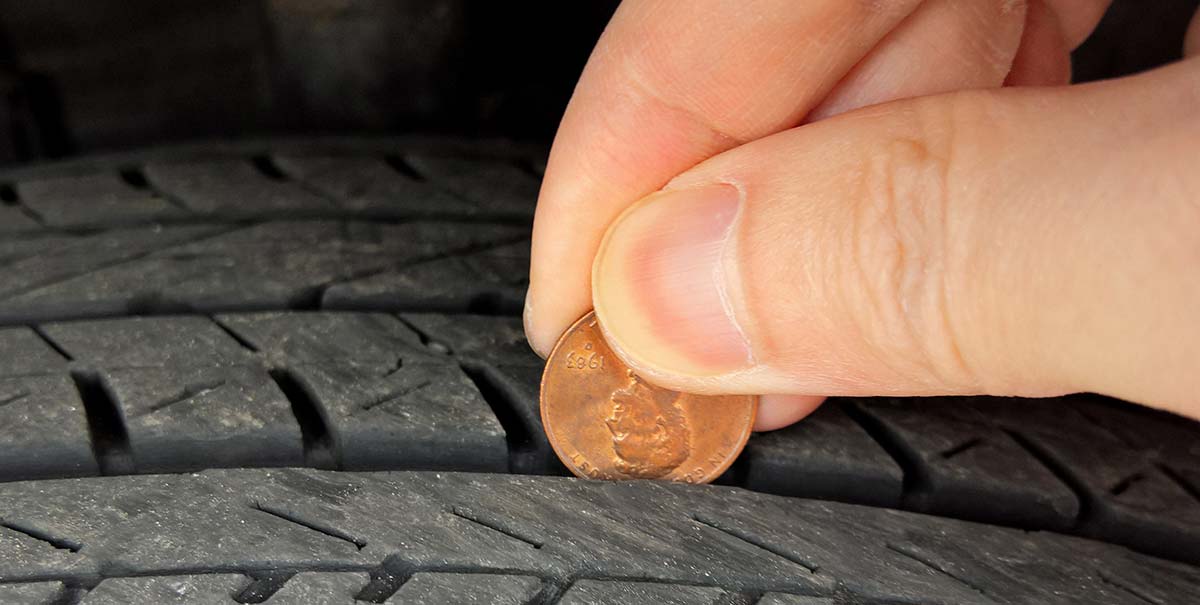
At Les Schwab, we recommend you get new tires before they reach 2/32 inches. Here’s why.
Tire Tread Keeps You in Control
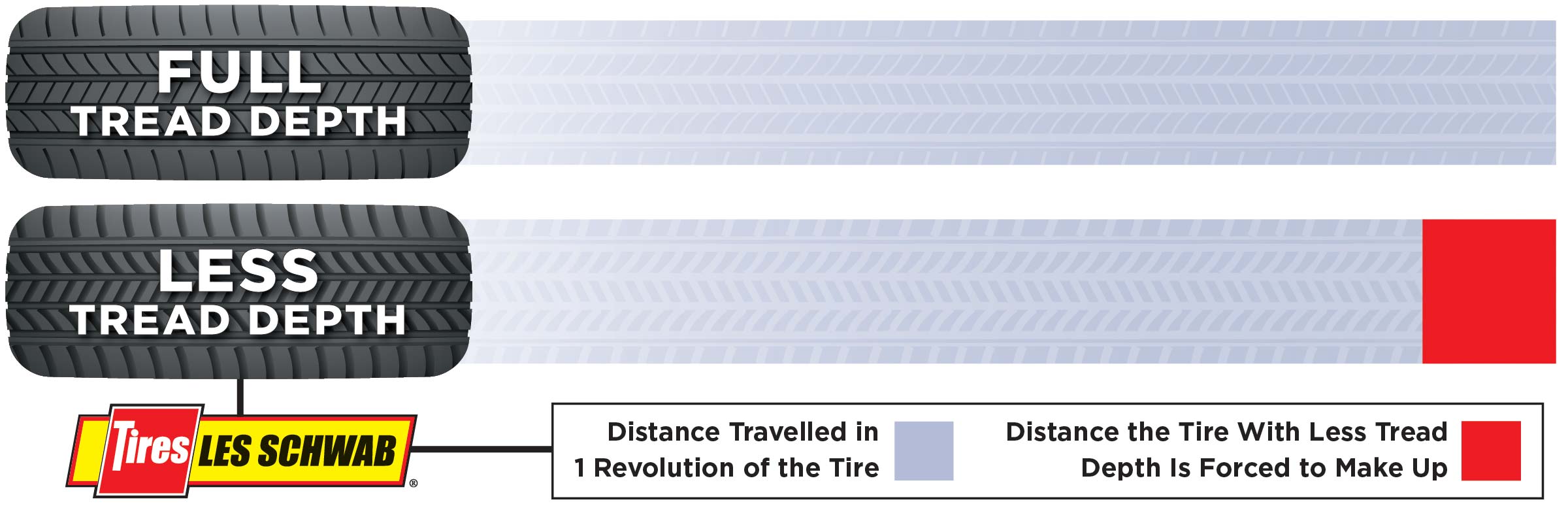
As tires lose tread, the sipes or channels in between the tire tread disappear. This means you have less grip on snowy and icy roads. It can take far longer to accelerate with half-worn tires, and can dramatically reduce your stopping distance.
In the rain, you have a greater chance of hydroplaning at higher speeds. Plus, half-worn tires don’t deliver the stopping power of new tires in the rain and standing water.
Tire Tread Repels Objects Better
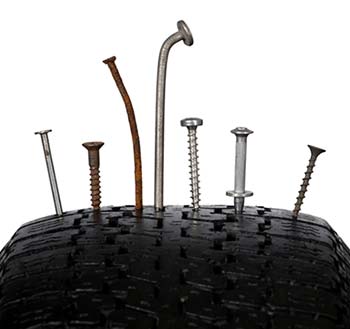
The lower your tire tread gets, the easier it is for nails, screws, and other tire-piercing items to ruin your day with a flat tire.
Pro Tip: Check Your Tire Tread Every Other Month
Measure and look for reduced tire tread every time you add air to your tires. For most folks, that’s every other month or so. Or you can just swing by your local Les Schwab and we’ll check the air pressure and your tire tread depth for free. That includes looking for cracks, cuts, or bulges in the sidewall, and uneven wear. Schedule your appointment now or stop by before your next road trip down the highway or into the mountains.
Schedule an Appointment -
Three Easy Ways to Stay on Top of Tire Care
Tire maintenance. Like dental appointments or mowing the lawn, it’s tempting to put it off.
But kicking the maintenance can down the road may mean bigger hassles or more costly problems later. Doing simple things like having your air and treadwear checked regularly can significantly extend the life of your tires, saving you money.
Keeping track of tire pressure, rotations, rebalancing and alignment doesn’t have to be a chore. Below are three simple ways to remember what to do when.
These recommended schedules are based on a driver who is logging about 12,000 miles per year. You may need tire service more often if you regularly drive off road, have specialty tires or sizes, use your vehicle for work or commercial purposes, or drive aggressively.
(Note: Don’t delay getting your tires inspected if your TPMS warning light goes on, you notice irregular wear, you’ve had a hard impact with a pothole or road debris, or there are signs of tire imbalance. Visual tire inspections are always free at any Les Schwab Tires.)
1. Track by Miles Driven
- Check tire pressure and treadwear every 1,000 miles or monthly.
- Get tires rotated and balance checked every 5,000 miles.
2. Time Tire Care with Events or Other Auto Care
- Get air pressure and treadwear checked the first of the month.
- Get tires rotated and rebalanced when you get an oil change (at least every five months).
- Get alignment checked when Daylight Savings Time ends as part of regular maintenance. Do it sooner if you hit a big pothole or road debris, or notice poor handling, wandering, loose steering or that your steering wheel isn’t level.
3. Get Email Notices When You’re Due
If you’d like personalized notices for your vehicle, we’ll keep track for you. We’ll send you service reminders when your tires are due for inflation and treadwear checks, rotations and rebalancing. (A lot of this maintenance is done free for customers of Les Schwab Tires.)
Regular tire care means noticing small problems early so they don’t become big and expensive issues later. It protects your investment in your tires and keeps them in safe running condition.
-
How Long Will Your Spare Tire Last?
The tires on your car or truck are designed to tackle miles of pavement, gravel, dirt, and all sorts of weather conditions. But every so often, you’re going to run over an object that could cause a flat tire. When that happens and you install your spare (if your car has one), how long and how far can you drive on a spare tire until you get to Les Schwab? We have some answers to help you save money and stay safe on the road.
Can You Drive on a Flat Tire?
Unless your vehicle has run-flat tires, you should not go far on a flat. The farther you drive, the more damage you’ll do to the tire. Plus, it can be incredibly dangerous at higher speeds.
When you get a flat (unless you have run-flat tires):
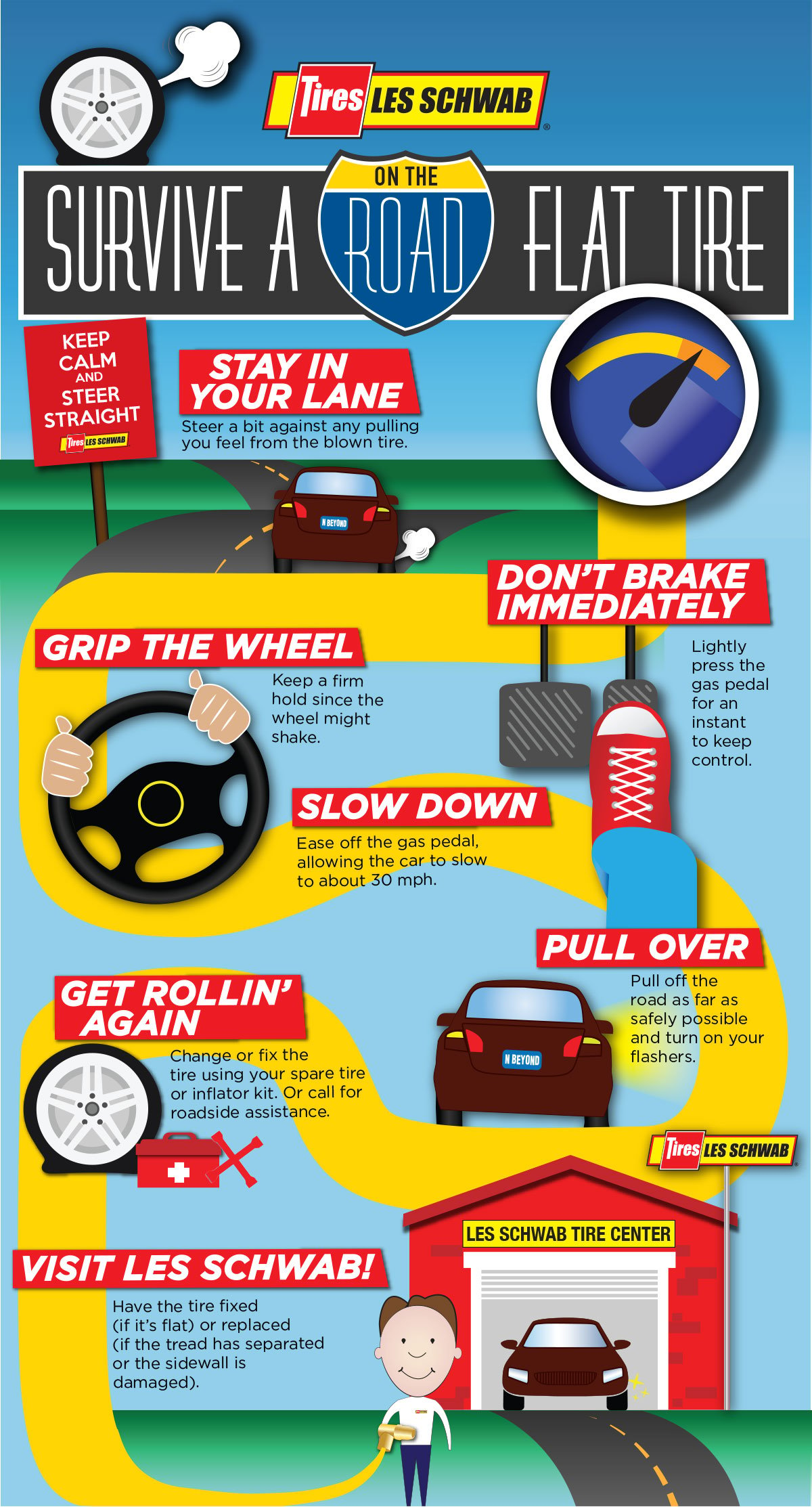
- Stay in your lane, firmly hold the steering wheel, and steer a bit against any pulling you feel from the blown tire.
- Allow the car to slow down and move over to the side of the road as soon as possible.
- Once you’ve stopped, turn on your hazard lights.
- Change to the spare tire or use an inflator kit.
- Load the flat tire into your trunk or truck bed and get to Les Schwab as soon as possible. We offer free flat tire repairs when you have Les Schwab tires on your vehicle.
Why get to Les Schwab as soon as possible? Because your temporary spare tire may be smaller than your everyday tires. This makes it spin faster than the rest of the wheels. Plus, the tread can be vastly different, or the tire may not be designed for long distances. Regardless, those differences can cause alignment issues, decrease your control, reduce stopping power, cause hydroplaning on wet roads, and possibly damage your transmission and other parts of your vehicle. See your owner’s manual or the side of your spare tire for recommended safe driving speeds and distances.
How Long Can You Drive on a Spare Tire?
According to most vehicle manufacturers, a temporary spare tire (also known as a donut spare) should only be used for a short time. Really, only from the time you change to the spare until you can get it repaired.
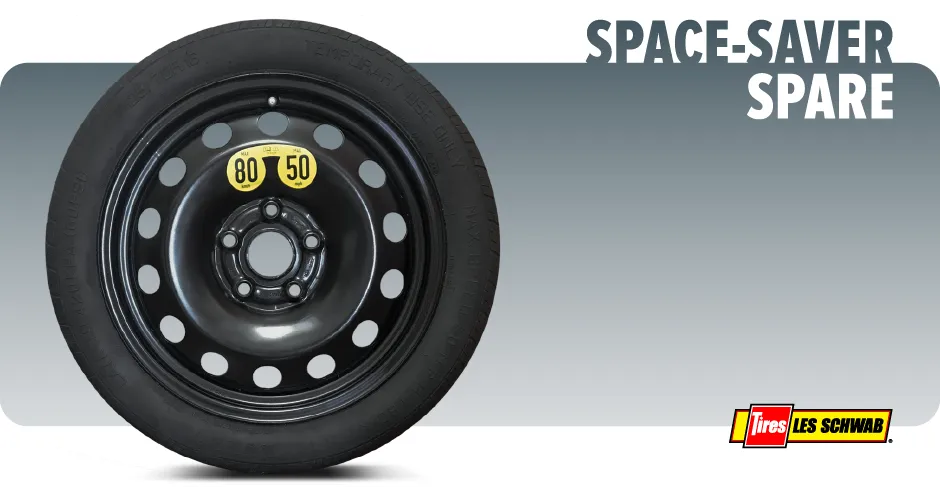
When driving on a spare tire, we suggest you keep speeds at or below 50 miles per hour and drive no more than 50 miles before getting your flat fixed. Some full-size spare tires, or spare tires that are designed to match the other four tires on the vehicle, can be installed and used for longer distances, at normal speeds. Since these spares may not be used often, just make sure the air pressure is set to the manufacturer's specification and the tire doesn't have any visible issues before hitting the road.
Your Spare Is NOT a Long Term Solution
Most spare tires are smaller and have different tread than the other tires on your vehicle. Those differences can limit stopping power, safety, and overall control. Before driving too far on a spare, stop by your local Les Schwab. Our tire professionals can fix repairable Les Schwab tires for free and get you safely back on the road.
What Is a Space-Saver Spare?
Also known as a donut spare, the space-saver spare tire was designed to save space in smaller vehicles. If you drive a compact or smaller vehicle, you may have a space-saver spare. These tires have less traction than your regular tires, are smaller, should not be driven at speeds over 50 miles per hour, and should not be used for more than 50 miles.
What Is a Full-Size Spare?
Many vehicles, including sedans, SUVs and larger trucks have a full-size spare. As the name implies, they are the same size as the other tires on your vehicle. However, the tread on the spare may be different. If there is far more tread on the spare, you may notice decreased control and comfort while driving. And if the spare has minimized tread, you could experience hydroplaning on wet roads or reduced stopping power. Either way, it’s a good idea to get to Les Schwab when you have a flat. That way you can reduce your time driving on a spare.
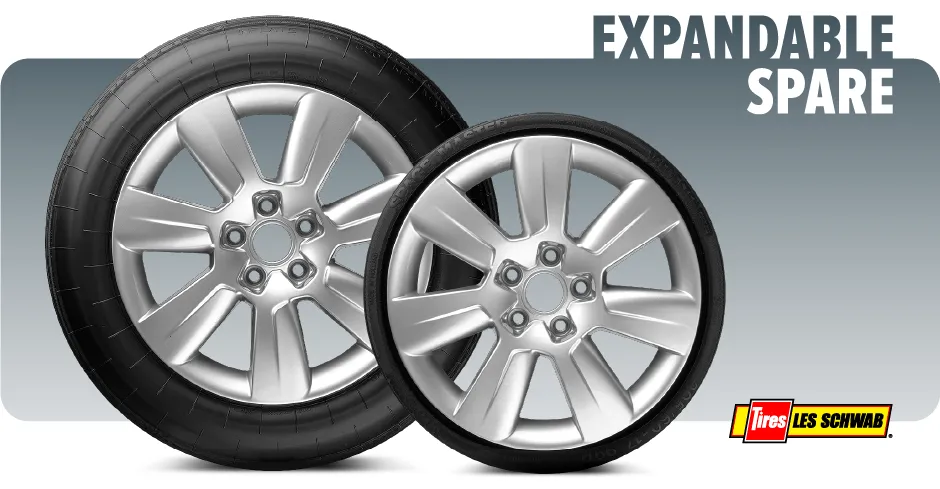
What Are Expandable/Inflatable Spare Tires?
Expandable/inflatable spare tires are available in some vehicles, including Porsche, Audi, Volkswagen, Mercedes, and Ferrari models. These spares come with a non-inflated tire mounted to a rim and come with an air compressor. Once you inflate and install the spare, you’re ready to go.
What About Run-Flat Tires?
Run-flat tires are designed to withstand punctures and remain mostly inflated. However, if you do begin to lose tire pressure, these tires need to be inspected and repaired quickly to avoid a full replacement.
Les Schwab Knows Tires (and Spares)
Spare tires, as well as run-flat tires need attention, just like your regular tires. The next time you’re checking the air pressure on your four tires, check the spare, too. Not sure what to look for? Schedule a Les Schwab free pre-trip safety check. We’ll give everything a visual inspection and show you what to do the next time you get a flat.
-
Tire Size Calculator: What Size Tires Should You Get?
If you’re considering swapping out your tires for a different size (larger, smaller, or something with a different sidewall), the Les Schwab tire calculator is here for you. Input some numbers and we’ll help you compare tire sizes. That information can help you discover how different dimensions might impact your vehicle's performance, speedometer accuracy, or other issues.
How to Figure Out Tire Size
The Les Schwab tire size calculator converts metric measurements to inches. This helps easily compare the diameter, width, sidewall, circumference, and revolutions per mile. It will also tell you the difference in tire speed between your original and comparison tires. For example, a larger tire can cause your vehicle to travel at 60 miles per hour (MPH) when the odometer reads 55 MPH, which can be a nice way to meet highway patrol officers.
Shop Tires by Size

How to Use the Tire Size Calculator
To use the calculator, you’re going to need the information on your current tire’s sidewall and the information found on your vehicle door placard. That includes the width (the first number on your tire sidewall), the aspect ratio (the second number), and the wheel “inner” diameter (the third number). Next, enter the same information for the tires you’re considering adding to your vehicle.
What a Tire Size Calculator Can Help With
Once you’ve entered the width, aspect ratio, and inner diameter, you’ll get some tire specifications you can use to make an informed decision. Those include:
- The circumference of the tire
- The revolutions per mile
- Width of the tire
If any of those numbers are vastly different from your original tires, you might reconsider your choices. Or chat with the professionals at Les Schwab about options.
Important Considerations For Tire Sizing
Some of the most important concerns when adding tires that are larger or smaller than those that came with your vehicle include the load index, speed rating, and wheel clearance.
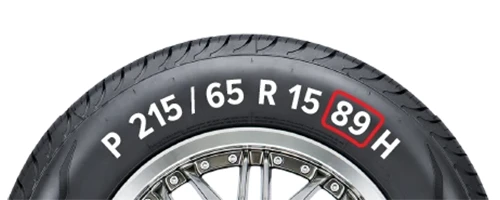
The load index is the fourth number on the sidewall of your tires. This indicates how much weight each tire can support when inflated to its maximum air pressure rating. It’s important that the load index meet or exceed the gross vehicle weight rating (GVWR) for your vehicle.
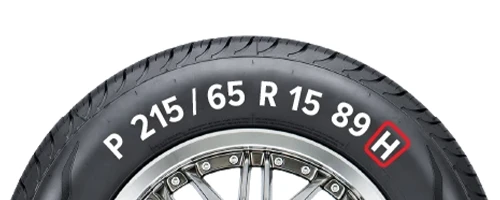
The speed rating can be found on your tire sidewall. It’s the last letter in the series of numbers and letters. Use that letter with the speed rating chart to ensure the tires you want meet or exceed the speed rating set by the vehicle manufacturer.
The wheel clearance isn’t about weight or speed, but about whether or not the tires will fit in the wheel well. If they’re too large, they could scrape on the inside of the fender every time you make a turn. As a general rule, you want replacement tires that are within 3 percent of the diameter (height) measurement of the tires originally on your vehicle.
A Note on Accuracy
The Les Schwab tire size calculator is for general comparison purposes only. We don’t recommend that you base sizing or purchase decisions on the calculator alone, as actual tire dimensions can vary slightly from manufacturer specifications. These calculations do not account for all vehicle-specific factors. Stop by Les Schwab and we’ll help you find and fit new tires for your car.
-
Tire Tread and the Useful Penny Test
Anyone who drives a car knows what tire tread is. But do you know how to tell whether it’s wearing thin?
Worn out tires affect your car’s performance and your safety. Luckily, there’s a simple way to check your tires with just your pocket change.
Measuring Tread Depth With the Penny Test
A new car tire typically has a tread depth of 10⁄32 or 11⁄32 inches while a light truck will have between 11⁄32 and 19⁄32 inches. The U.S. Department of Transportation recommends that you replace your tires once they’ve worn down to 2⁄32 inches. Many states require tires to be replaced when the tread reaches that depth.
How do you know when your tires are officially worn out? You can use a tread depth gauge or take your car in for a professional evaluation. But the easiest way is to do a penny test.
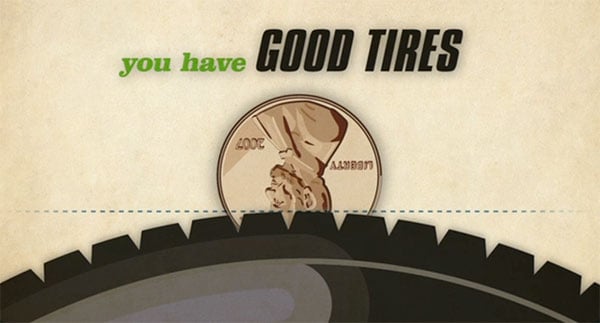
- Take a penny and place it with Lincoln’s head upside down between two ribs on your tire.
- If part of the head is covered, your tires are still in good shape.
- If you can see his entire head, your tread is worn to 2⁄32 inch or less and it’s time for new tires.
- Check various points on the tire — around the circumference and between different ribs — to look for uneven tire wear.
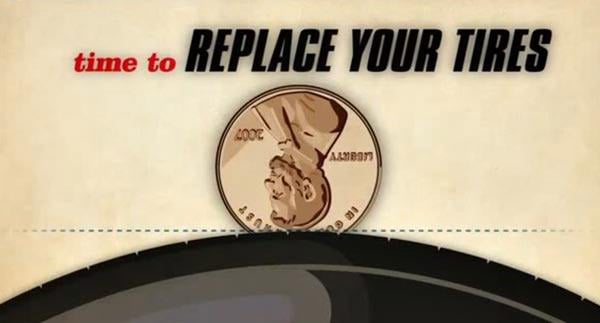
Many car and truck tires come with indicator bars at 2⁄32 inch. If these are even with your tread ribs, you’ll know your tires need to be replaced.
Now you can measure your tread, but you may not know about all its components or what different tread patterns are for. The more you know about types of tread, the easier it will be for you to choose the best tires for your vehicle. Here are some facts to beef up your tire knowledge.
What Is Tire Tread?
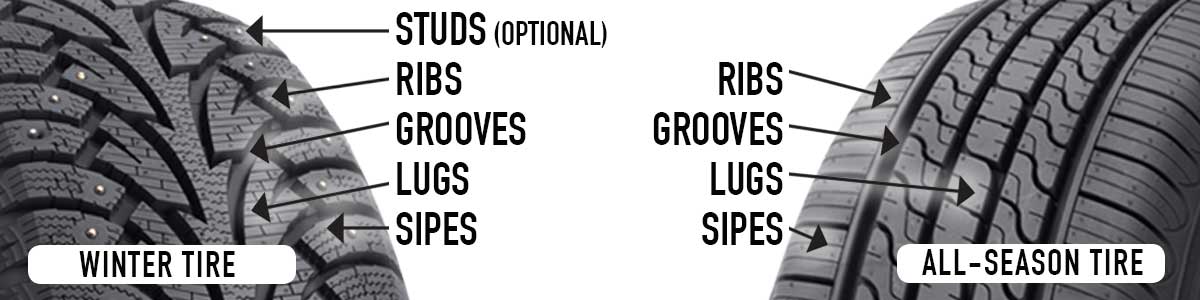
There are four (sometimes five) main components to tire tread:
- Ribs: The long, raised bands that go all the way around a tire.
- Blocks or lugs: The raised segments between ribs.
- Grooves: The space between ribs.
- Voids: The space between tread blocks.
- Sipes (sometimes): Thin slits cut across the tread blocks and ribs.

Ribs and tread blocks make contact with the pavement, while grooves and voids channel water when roads are wet and allow the blocks to flex as tires grip the road.
Siping is designed to improve tire performance during wet and winter driving conditions.
Different tire manufacturers combine these features to create signature designs and offer good performance for a range of driving conditions.
Types of Tire Tread Patterns
Though each tire manufacturer makes unique variations on tire tread, the patterns generally fall into three categories. Each pattern provides different handling and performance.
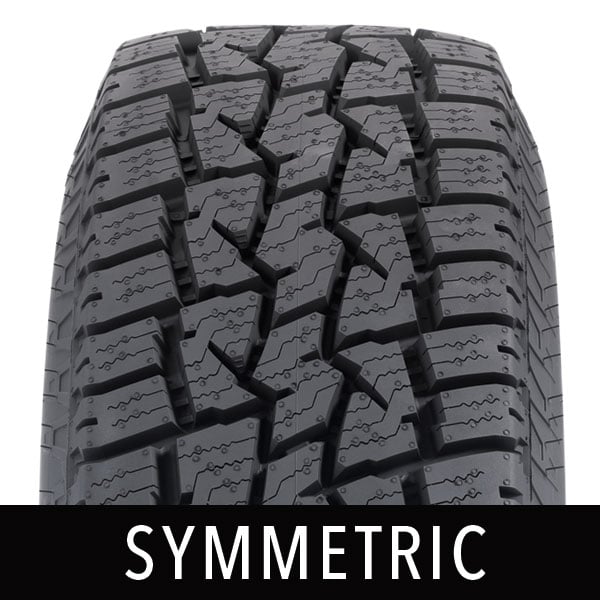
- Symmetric designs, as the name suggests, have the same pattern across the whole tire. This is the most common tread pattern for passenger cars.
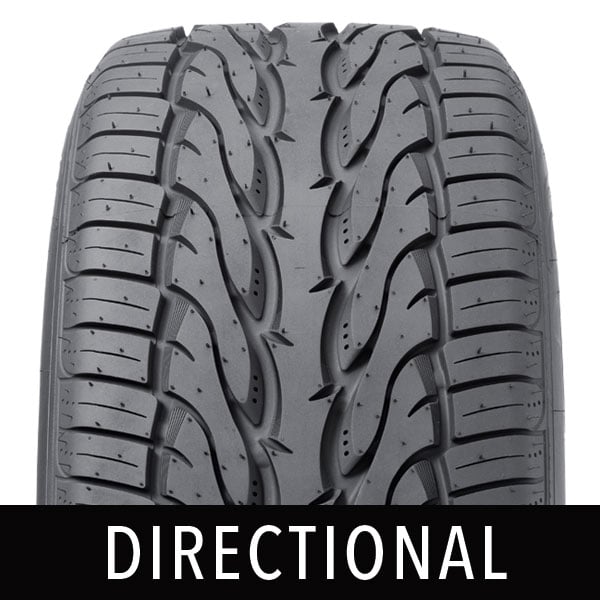
- Directional tread patterns include lateral voids pointing in only one direction, making a V design, and are used on performance cars (those designed for speed). These tires channel water in one direction for reliable handling in wet conditions and provide zippy handling on dry roads.
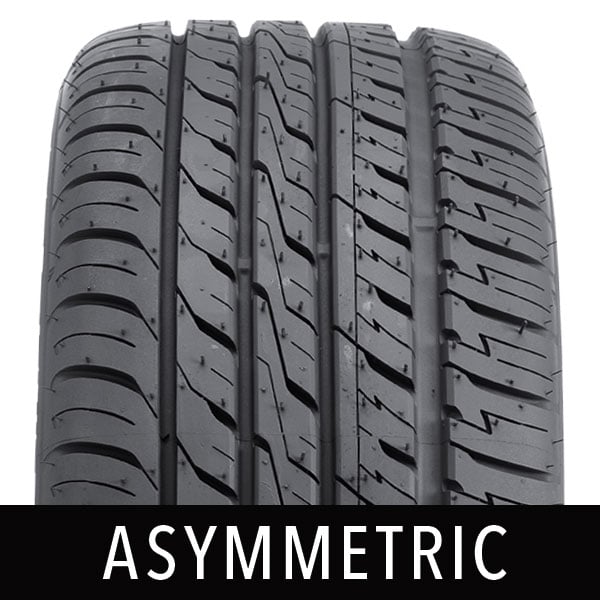
- Asymmetric designs combine the above two patterns to offer good grip on dry roads as well as traction in wet and winter conditions. The inner side of the tire often features lateral voids like those found in directional tires, while the outer side uses larger tread blocks.
Summer tires and winter tires both generally have a symmetric design, with winter tires sporting deeper tread depth and sipes. Asymmetric patterns are often a good choice for all-season tires.
Safety Risks of Worn Tires
Though tires are considered bald at 2⁄32 inch, they lose some of their performance capabilities before that.
As tire tread wears, it becomes less able to channel water and the risk of hydroplaning increases, especially at higher speeds. If you know your tires are partly worn, be sure to give yourself extra stopping distance in wet conditions.
Grip loss on snowy or icy roads is a concern. As the rubber wears, sipes disappear and tread blocks don't provide as much grip. Again, allow yourself more stopping distance and consider replacing your tires to stay safe during winter months.
Tires with partly worn tread are more likely to get punctures and lose air pressure, too. And punctures can cause tire failure, which is a particular problem at high speeds because you can lose control of your vehicle.
Drive on Safely
A penny test will tell you when your tires are bald, but if you’re headed into winter or a rainy season, a tread depth gauge is the surest way to test. Or stop by your local tire shop to have a professional evaluate your tires.
Learn More -
A Helpful Q&A Guide to Buying Tires
A lot of people choose tires based on the mileage warranty and cost. However, these are only two of many important factors to consider.
There are lots of choices between tires even at the same mileage and price point. It’s important to understand key factors to have the right tire for your driving needs. Things to ask about are: tire size, performance rating, load rating, ply rating, expected mileage and tread design, so you can depend on your tires and feel safe while traveling.
Here are answers to questions people ask the most about how to pick out tires. This info won’t make you a tire expert but will give you the basics when you visit your tire dealer.
Q: Do I Want All-season or Snow Tires?
A: It depends on whether you drive in winter conditions regularly.
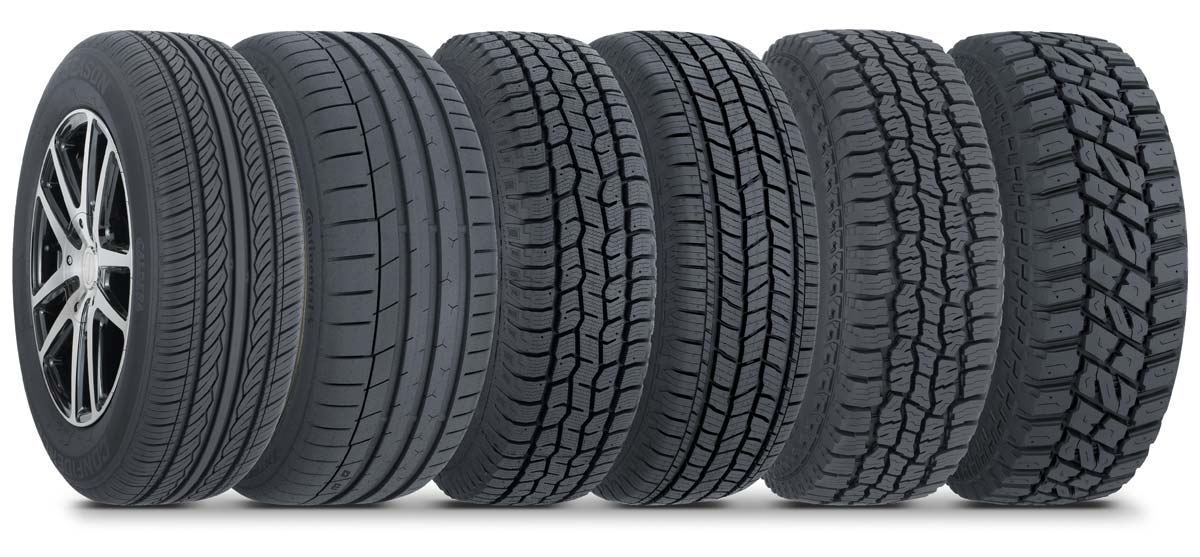
Tires are categorized as all-season, summer, mud-terrain, winter or highway (for light trucks). Buying a set of highway or all-season tires is a good choice if you live in a sunny, warm climate that gets occasional rain and you aren’t regularly traveling on snow and ice. They perform well in climates where temperatures don’t typically get below 45 degrees. All-season tires are built to handle hot pavement but don’t offer the traction needed for slick, winter roads. If your area gets snow or ice every year, or if you make regular trips over mountain passes in the winter months, you’ll likely need all-season tires for spring, summer and fall driving, and snow tires for more harsh conditions. Get the full lowdown on how they’re different and how to choose winter tires.
Q: Do I Want Performance Tires?
A: Performance tires are designed for better cornering and handling at higher speeds. If these are your priorities, talk to your tire dealer about your options.
Other specialty tires, such as mud-terrain tires for pickups and SUVs, are for off-roading, gravel and driving in mud.
Sometimes your demands are simple; you just need a quiet, smooth passenger car tire for freeway driving. All-season or all-terrain tires are made to handle year-round driving needs on and off the blacktop. A good tire dealer will ask you the right questions and know the best product for your needs and budget.
Q: Does Driving Winter Tires in Summer Damage Them?
A: Yes. With more people running studless winter tires, this is a growing issue. Winter tires are made with a special rubber compound that stays softer and more pliable in cold weather for better road grip. As seasonal tires, they aren’t designed to handle the heat. All-season tires are made with a different rubber compound suitable for hot pavement.
If you use winter tires in hot weather they are going to wear out much quicker. It’s important to factor in the long-term cost if you’re thinking about running your winter tires through the warm months. This could reduce their life by years.
Q: Is There Really a Difference Between Higher- and Lower-priced Tires?
A: Definitely.
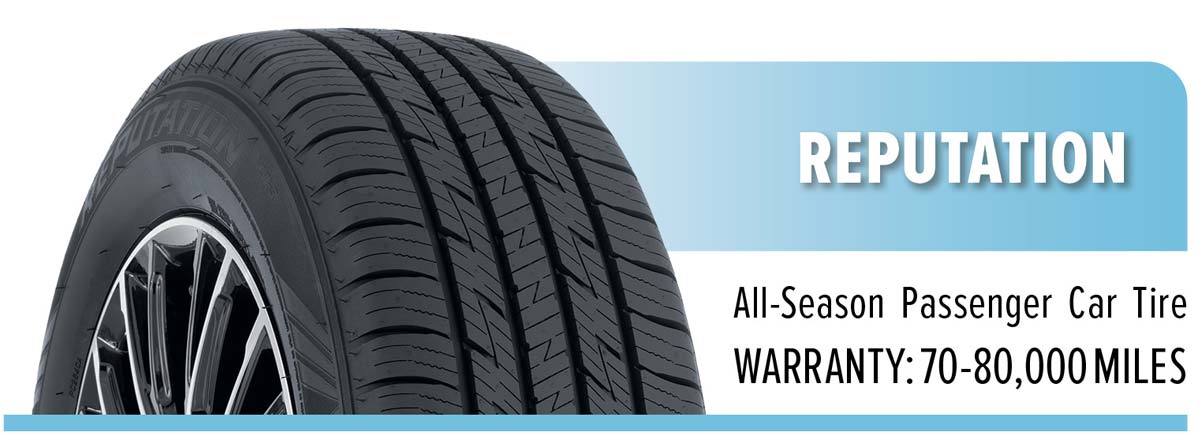
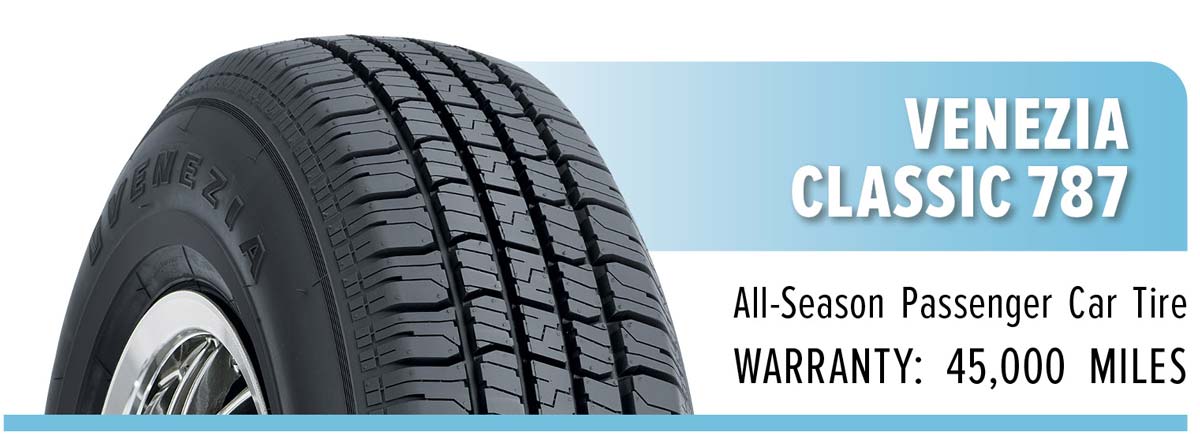
Tire pricing is typically based on what the tire delivers for comfort, ride quality, noise level, tread durability and traction features. Some tires for specific uses. For instance, light truck mud tires may have a higher price point because they have more rubber on them, which increases the cost to produce them. Prices also reflect the value you can expect from your tire; tread life typically ranges from 30,000 to 80,000 miles. This mileage can vary depending on whether you are looking at passenger car, performance car, light truck or SUV tires.
Q: Who Makes the Best Tires?
A: There are plenty of well-made tires. The biggest difference often comes down to the warranty. Most of what you get in a tire warranty is provided by the dealer, not the tire maker. If there’s a defect in the tire you buy, that’s covered by the manufacturer. However, many other warranty features are covered by the dealer that sold and installed your tires.
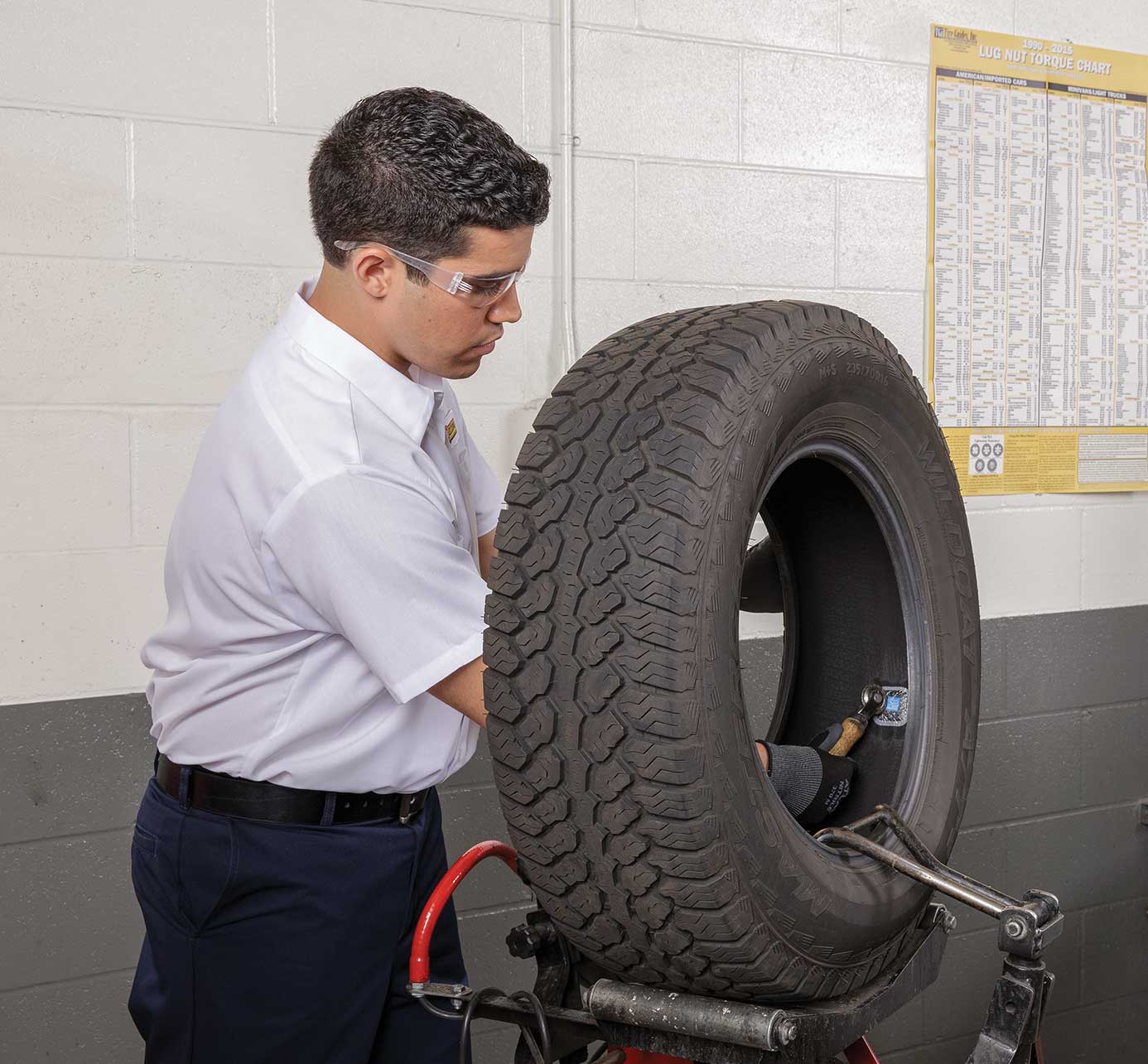
Tire service warranties vary greatly by dealer and can be worth hundreds of dollars over the life of a tire. A well-built tire is only as good as the warranty backing it, so consider everything that’s in the warranty. Here’s a list of what to look for:
- Length of coverage. The best warranties extend for the full life of the tire’s tread mileage guarantee, not a set number of years.
- Workmanship. Both the tire and the quality of installation/repairs should be covered.
- Free care. Flat repairs, regular inspections for wear, tire rotations and rebalancing should be free.
- Road hazard coverage. If you hit debris or a pothole and the tire is damaged beyond repair, is the value of the tire covered?
- Convenience. How many locations honor the warranty?
Be careful about buying extended tire coverage, like tire certificates, which replace your tires for free if you ruin them. It’s very rare to damage multiple tires beyond repair over the life of the tires. Usually, damage to a tire can be repaired and often it’s a single tire that’s involved. By the time you add up the cost of covering your tires with certificates, you could pay for any tire that gets damaged.
There are other drawbacks as well. Tire replacement certificates often expire after three years and some aren’t honored if the damage comes from running your tires at the improper inflation level.
The Les Schwab Tire Warranty is America’s Best Tire Warranty. Ours includes our no-hassle road hazard protection with 100% road hazard damage replacement with no expiration, a 60-day satisfaction guarantee to exchange your tires if you’re not completely satisfied (and no more than 2/32" of the tread is worn), and free tire maintenance including flat repairs, rotations, rebalancing, and air checks.
Q: Can I Change My Tire Size?
A: Swapping out your tires for bigger or smaller ones than what came new on your vehicle is a fun way to change your ride’s look. Understand that it may affect performance. Be aware that when you change to a taller tire, your speedometer will read slower than you’re going because your tire is spinning fewer revolutions per mile (RPM). You may get more road noise and differences in the way your vehicle handles.
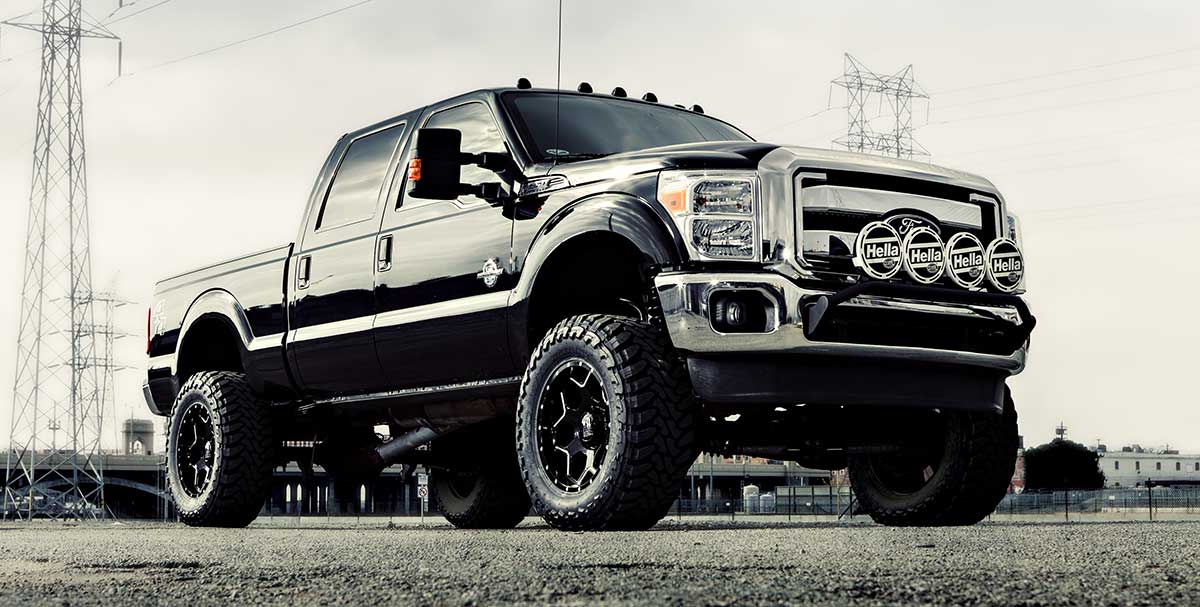
In contrast, lowering the profile of your car or truck by using a smaller tire size will alter both handling and how much clearance you have. You may bottom out on hills that you used to clear just fine and it may stiffen the ride.
You can use a tire size calculator to see how different sized tires will affect your RPMs and tire speed, but such tools are only estimates.
Be sure to cover all the unknowns by talking with a tire professional before you change sidewall height or tread width. An expert will know how to translate the difference in RPM, tire speed, load index and speed rating into what it will mean for your vehicle and driving. They’ll also explain how the tires or wheels you have your eye on will or won’t fit with your vehicle’s suspension, gearing and bodywork.
Q: Is It Ok to Replace One Tire at a Time?
A: It’s best to consider replacing tires in pairs, but read your owner’s manual. Even small size and type differences between your four tires can have big consequences, especially if you own an all-wheel drive (AWD).
Replacing one tire with a different brand, model, size or tread depth can cause a noticeable pull in the steering wheel or other handling issues. There are tight tolerances for AWDs, so they’re at greater risk for such problems.
A big difference in tread depth between tires can damage expensive parts. It is always a good idea to review your owner’s manual to see if the vehicle manufacturer has a point of view on this.
Q: Will Buying Tires Online Save Me Money?
A: It might save you some money if you’re a tire expert and have a place that will mount the tires on your wheels. If not and you don’t, you run the risk of getting the wrong type of tires for your vehicle and driving. Then that Internet bargain can add up to a lot more hassle, time and money than expected.
Another issue is finding a tire dealer that will service your tires by mounting and balancing them on your wheels at a reasonable cost. This can get expensive if you’re changing out summer and winter tires twice a year. Here are some cost and warranty factors to consider when you’re thinking of buying online.
Have other questions than what we’ve covered? See more answers in our Tire FAQ or find your local Les Schwab store to talk to a pro.
-
Are Nitrogen-Filled Tires Worth the Cost?
The main benefit of nitrogen-filled tires is that the loss of tire pressure is slower, because the gas in the tire escapes more slowly than air does. With more stable tire pressure, the thinking goes, you’ll get better gas mileage and get full tire life since you’re always rolling on fully inflated tires.
Claims are also made that nitrogen in tires prevents tire “rot” by limiting the moisture that naturally occurs inside tires and heads off corrosion of the wheel that can be caused by contact with moisture.
These claims are overstated. The advantages of tires filled with nitrogen, instead of plain ol’ air, aren’t big enough to justify the price tag or the inconvenience. On new car tires, the cost can range from $70 to as much as $179. On existing tires, you’ll pay up to $30 per tire for service to drain air and refill with N2. Refills will run you $5 to $7 per tire, which you can expect to do less often than with air-filled tires. But you’ll still need topping off every two or three months.
The Science of Putting Nitrogen in Tires
Small amounts of air naturally leak out of tires over time, especially when tires are subject to large temperature swings. This is because the walls of tires are slightly porous. When a tire gets hot the air inside it expands. The added pressure pushes minute quantities of air out through the pores, so you occasionally have to get your air topped off even if your tire doesn’t have a hole.
Promoters of nitrogen tires point out they don’t lose tire pressure as fast as air-filled tires. Since nitrogen molecules are bigger than normal air molecules, it is harder for them to leak out. This means a tire filled with nitrogen will maintain air pressure longer. Therefore, they say, you’ll roll on tires that are always properly inflated, resulting in better fuel economy and longer tire life.
A normal tire filled with regular air loses an average 1 to 2 PSI (pounds per square inch) per month. It’s true that there is a slower loss from nitrogen-filled tires. But this improvement is slight — only about 1.3 PSI less over the course of an entire year, according to Consumer Reports. It’s not enough to make a true difference in gas mileage or tire wear for people driving passenger vehicles.
This is partly because air is already made up of 78 percent nitrogen and just under 21 percent oxygen, with the rest a mix of water vapor, carbon dioxide and other gases. When tires are filled from a nitrogen air pump this ups the percentage of N2 to between 93 and 95 percent. It’s never 100 percent.
Bottom line: Nitrogen will slow the amount of tire inflation loss to about one-third of what you’ll experience with air. This means instead of losing one to two PSI per month, you’ll lose ⅓ to ⅔ PSI per month. You’ll still need to check and top off your air roughly every other month to stay within the ideal inflation range. And you’ll spend far more than you’ll save on gas and tire tread life. You’re better off making simple tire maintenance part of your routine.
Go Ahead and Do It If:
- Your ride is a racecar. Nitrogen is used to fill tires for track cars, since it does offer the advantage of more consistent pressure.
- You’re buying a new car with new tires that are being filled for the first time, you live close to a nitrogen filling tank, you have disposable income to spare and you never check your air pressure.
Nitrogen-filled Tires FAQ
There are more cons than pros for changing to N2 tires. For example, nitrogen filling tanks aren’t easily accessible like air compressor tanks. You’ll have to plan for refills in places that may be few and far between. This can cost you time and money. Here’s all the info.
Q. How much will it cost to get nitrogen in my tires?
A. For fills of new tires, between $70 to about $175 at some outlets. Drains of air and refills with nitrogen on current tires, up to $30 per tire. Topping off can be between $5 and $7 per tire. If you want to keep your tires within 1 PSI of the ideal, you’ll likely be topping off at least four times a year, probably more. This could be between $80 and $112 a year, and possibly a whole lot more. Compare this to paying nothing at all for regular air at a tire store, or around a buck per fill at a service station.
Q. Are they safe?
A. They’re as safe as regular tires. Nitrogen isn’t flammable and won’t cause your tires to explode.
Q. Will I get better gas mileage?
A. You’ll always get better fuel economy on properly inflated tires, whether they’re filled with nitrogen or air. Under-inflated tires can lower gas mileage by about 0.2% for every 1 PSI drop in the average pressure of all tires. They’ll also wear faster and be more prone to failure. The most economical way to make sure you’re driving on well-inflated tires is to just check your tire pressure once a month or get it done by a technician (free at good tire stores).
Q. Will nitrogen prevent tire rot? Wheel rust?
A. Nitrogen is a “dry” gas compared to oxygen (which makes up about one-fifth of regular air). Nitrogen-filled tires don’t generate as much moisture inside when tires expand from heat friction then contract when they cool.
However, rubber rot from moisture inside the tires of passenger vehicles is very unusual. Unless your tires are on a vehicle that’s rarely driven, it’s far more likely your tire tread will wear out before the small amount of moisture inside an air-filled tire degrades the rubber.
And today’s alloy wheels are coated to prevent corrosion on steel parts — the belts, beads and sidewall buttressing — that may come into contact with water, so that’s not a typical problem.
Q. Can nitrogen tires be filled with air?
A. Yes. It’s unsafe to drive around on under-inflated tires, so don’t hold off thinking you need to wait to top off until you can get to a filling tank. It’s perfectly fine to add air and just get your next fill with nitrogen.
Q. Do they run cooler?
A. There’s no significant difference between air-filled and nitrogen-filled tires in terms of running temperature.
Q. Where can I fill my tires?
A. Use this nitrogen dealer locator, but be aware that some filling stations require you to have purchased tires with them, or have a membership.
Q. Will I have a better ride?
A. There’s no difference in handling or ride quality between tires filled with air or nitrogen, so long as they’re kept properly inflated.
Q. How can I tell if I have nitrogen in my tires?
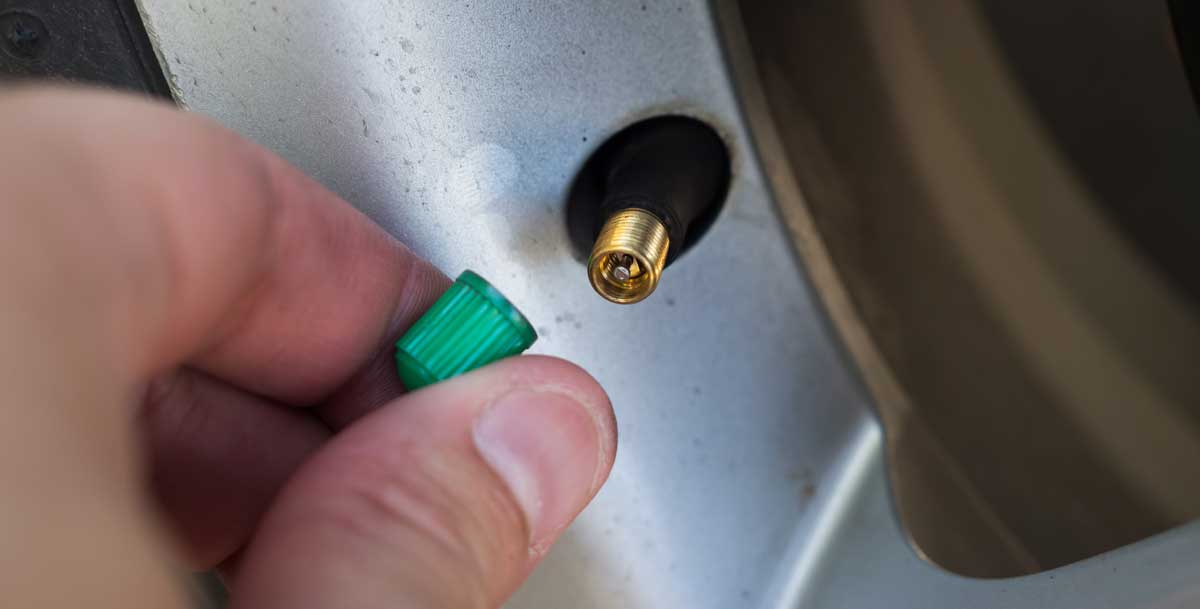
A. The tire valve stem will have a green plastic cap or a cap topped with a green indicator.
Q. How do tires get filled with nitrogen for the first time?
A. The tire is purged of air and filled with nitrogen several times using a machine, which takes out most of the oxygen along with any water.
Learn More -
5 Questions Any Good Tire Dealer Should Ask
Tires are a big investment most people make only every few years. If you want to make the right decision, you’ve got two choices:
- Become a tire selection expert.
- Become a tire dealer selection expert.
Option 2 is a lot easier. Make sure the salesperson asks you these five questions:
1. “What do you use your vehicle for?”
The best tire for a commuter in an economy car may not be the same as what’s needed for the family car. The tire that’s best for comfort and least noise for your long-distance commute may be overkill for a third car that's used less often. If you’re hauling loads or a trailer with your truck, that suggests a different choice than what’s right on a truck used for lighter duty.
Road conditions are a part of this equation. If you regularly go off-road, you’re driving streets with lots of potholes, or you live in a place with winding roads and tight curves, the salesperson’s recommendations will differ.
2. “What are your driving habits?”
If your dealer asks this question, they’re a keeper.
Literally and figuratively, tires aren’t one-size-fits-all. For example, a new driver in the family can change the ideal tire. So can your tendency towards conservative versus faster driving.
3. “Will you be doing any driving in winter conditions?”
You need tires that suit the weather conditions where you drive and your dealer knows that. A good one will ask.
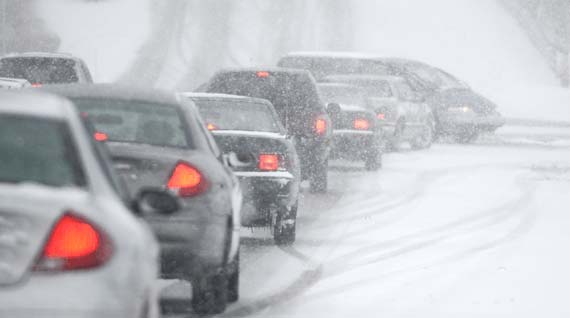
All season tires are the choice for drivers in sunnier places. If you’re driving on snow or ice every year, you’ll likely have winter tires for cold months and a different set for warmer weather. Your dealer’s recommendation on what’s going to last longest and perform best will also be different if you live in a place with extremes of heat and cold than someplace with more consistent weather.
4. “What’s your budget?”
All these factors — driving habits, safety, longevity, comfort, handling, noise — have to be balanced with your budget. A good dealer is happy to explain the differences between a quality, basic tire, a premium tire, and everything in between, because it narrows the choices to what's best for you. You should never get the feeling the store rep is pushing a tire just because it’s on sale or it’s the most expensive.
5. “Here’s how our warranty works …”
OK, it’s not really a question. But the best dealers will bring this up. If you want to get the best value for the money, it’s really important to think this through. Service warranties can include free services worth hundreds of dollars over the life of a tire. They vary substantially by dealer. Some features and limitations to find out about:
Does your service warranty cover flat tires?
- Road hazards: If you run over a pothole, nail, or debris that damages the tire beyond repair, is the value of the tire covered?
- Expiration: How long is the tire covered? Three years? Five years? The life of the tire?
- Workmanship: Are both the tire and the quality of installation/repairs covered?
- Free services: Are regular inspections for wear, tire rotations and rebalancing included? What’s the cost to fix flats?
- Locations: How many stores will honor the warranty? The service warranty that comes with tires you buy at a dealer is an agreement with the dealer, not the manufacturer. A service warranty goes beyond the standard workmanship and material warranty you get from the company that made your tires. It can cover labor and free maintenance services. But your service warranty is good only at the retailer that sold you the tires. (If you’re weighing buying online, consider that if you get a flat, or a tire is defective, you have to get it off your vehicle and return it yourself.)
Find the Right Dealer and You Don’t Have To Become a Tire Expert
Real professionals will be happy to talk your ear off about technical features — tread bars, siping, harmonic noise — or just give you the basic benefits of a tire in layperson’s language, your preference. Make sure they’re asking the questions above as a starting point. The answers will make the best choice obvious.
-
When Your Flat Tire May Need to Be Replaced
It’s easy to learn how to change a flat tire and install your spare. What’s not as easy is knowing when your flat tire can’t be repaired or patched, and when it will need to be replaced with a new tire. Here are 8 indicators you may need a new tire.
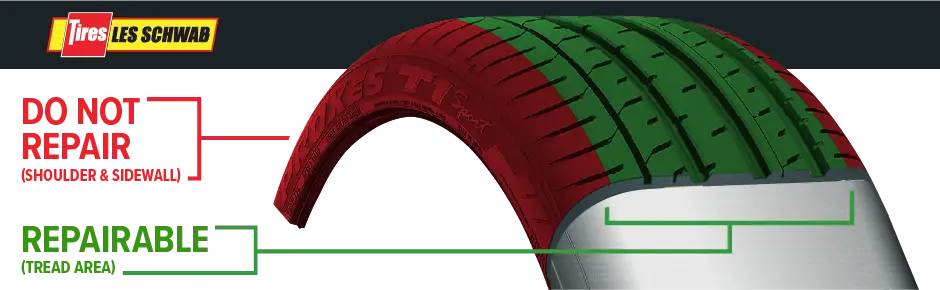
- The tire has a sudden loss of air and you drive on it flat. This can cause internal damage, which can’t be fixed.
- The sidewall has a puncture, a cut exposing the cord, or a visible bubble or bulge.
- The shoulder has damage (more than cosmetic), such as a small puncture.
- You spot a bulge on the tread or sidewall (following an impact, etc.).
- There’s a gash deep enough to expose the nylon or steel belts (which are part of the internal structural components of the tire).
- The size of the gash or hole in the tread is greater than one-quarter inch.
- The tire has been repaired before and the new damage is close to the previous repair.
- If for any reason the repair exceeds the tire manufacturer’s recommendations.
Underinflated Tires May Damage the Sidewall From Excessive Heat
Tires with low air pressure may be hard to detect while driving. An underinflated tire generates a lot of heat quickly, which may cause the sidewall to break down in seconds. Therefore, an underinflated tire can be damaged beyond repair within a short distance. Simply driving on a severely underinflated tire from the fast lane to the shoulder can cause irreversible damage.
Slow Leaks in the Contact Patch Can Be Repaired
If you have a slow leak from a puncture in the main part of the tread, chances are good the tire can be repaired. Done right, your repaired tire should be safe to drive on for its full tire life. Additionally, the repair may be free (depending on your warranty).
Les Schwab Tip: We do more than just patch tires. Our experts use a multi-step process to ensure your tire is properly repaired.
Basics of Flat Repair
First, the tire technician will identify the location of the leak and make sure there are no others by submerging the tire and wheel in water. Then they’ll take the tire off the wheel (called dismounting), and inspect the inside and outside for structural problems and previous repairs.
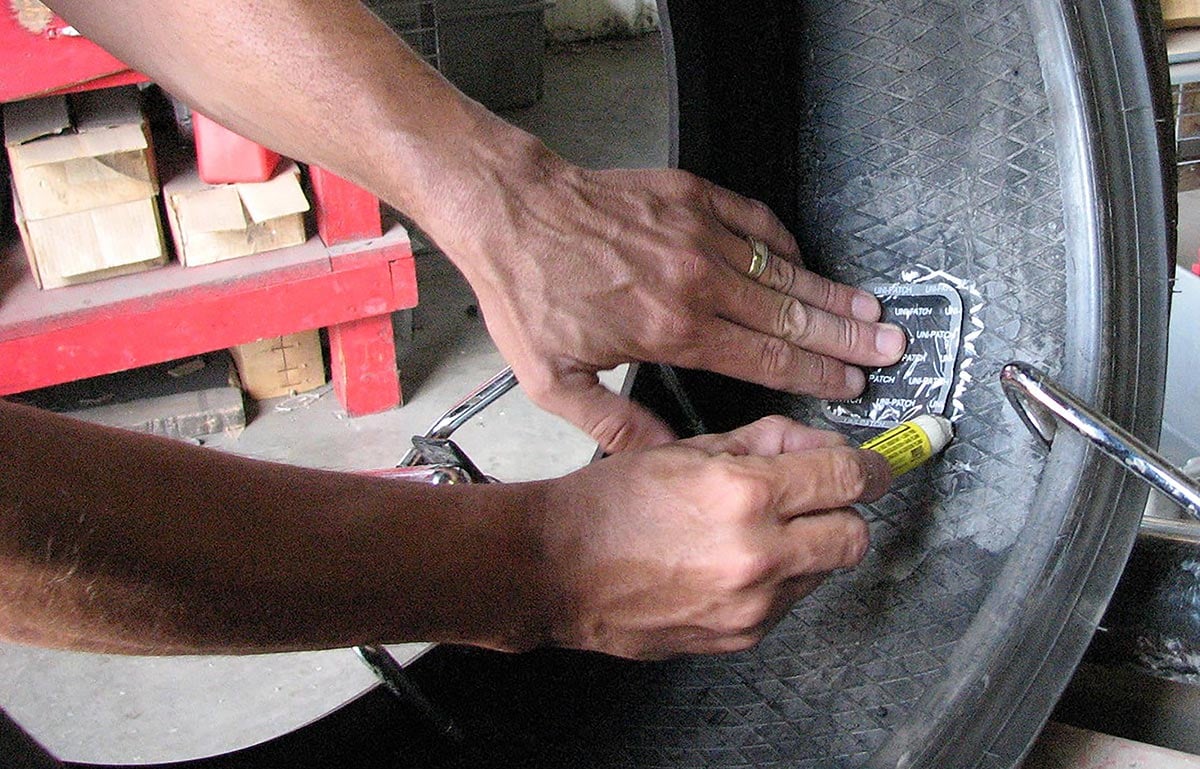
If the tire is repairable, they’ll start by buffing the affected area being careful to avoid any damage to the liner. Then they’ll use vulcanizing compound and a one- or two-piece plug patch combination to fill the hole and seal the liner. This method ensures an airtight seal and that the cord material is protected.
Do Emergency Tire Repair Kits Work?
If your vehicle doesn’t have a spare, or you need to get out of an emergency situation, you may be relying on a sealant kit or other quick-fix option when you get a flat. This isn’t a substitute for proper repair.
At Les Schwab, we’ve been cleaning, sealing, and repairing flat tires for a long time. We’ve seen a lot of do-it-yourself options over the decades, but emergency plug kits are not among the best options. The use of a plug kit to fill a hole from the outside of your tire can cause additional, internal damage that may be difficult or impossible to repair. Additionally, some aerosol sprays can damage the TPMS sensor in your wheel, which can be expensive.
Bring Your Flat Tires to Les Schwab
If you’re driving on a set of Les Schwab tires, we’ll fix your flat for free. If the tire cannot be repaired, we’ll show you all of your options and get you back on the road safely.
Schedule a Flat Repair -
Do You Know How to Drive If Your Tire Goes Flat?
When a tire goes flat or completely comes apart while you’re driving at highway speed, you can catch even the most experienced driver off guard.
Here’s what to do if it happens to you, along with a checklist for preventing flats.
How Can You Prevent Flat Tires?
Avoid tire failure by following these easy tips.
- Check tire pressure monthly, including the spare.
- Slow down if you have to drive over a pothole or other object in the road.
- Don’t run over curbs or other foreign objects in the roadway, and try not to hit or rub the curb when parking.
- Inspect tires for uneven wear patterns on the tread, cracks, foreign objects, or other signs of wear or trauma.
- Remove any stones, bits of glass or other foreign objects wedged in the tread.
- Make sure your tire valves have caps.
- When carrying heavy loads, you should be extra careful about proper tire pressure. Overloading and low tire pressure can cause a tire to overheat, leading to tire failure.
Learn More -
Can I Mix Run-Flat Tires with Standard Ones?
You’ll have safer handling and prevent damage to other parts of your car when all four tires on your vehicle match closely in type, tread depth and size. This is not the case when you mix and match run-flat tires with standard tires. Here’s why.
Run-flat tires (RFTs) are built with reinforced sidewalls, which make them a lot stiffer. This is why they can be driven between 50 and 100 miles (depending on the type) at about 50 mph with low or no air.
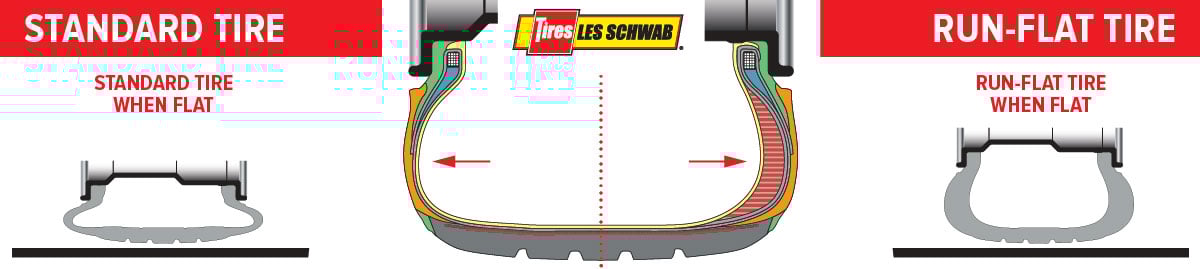
When there’s a big difference between your front and rear tires’ sidewall flex, your car’s handling will be imbalanced. You won’t have proper stability, especially when you need it most: around corners, at highway speeds and when swerving.
Due to the way they’re made, RFTs typically wear out long before standard tires. If you mix and match, you may end up with significant differences in tire tread depth between your front and rear axles. This could result in other problems if you replace only the two worn-out tires.
Consider costs, repairability, and convenience if you’re thinking about getting or ditching RFTs.
Costs
RFTs (also called zero-pressure tires) come standard on about 12 percent of new vehicles. You can expect to pay more for them than regular tires. That’s not the only expense to factor in:
- You’ll be replacing them sooner. RFTs wear out an average of 6,000 miles before standard tires.
- While some manufacturers say it may be OK to repair RFTs in some circumstances, driving any distance on a flat RFT can damage the internal construction of the tire. No type of tire should be run when it is very low on air pressure. You’ll not only ruin the tire but risk damage to the wheel.
- It’s a misperception that RFTs can be driven flat and still be usable. You’re looking at buying a new tire whenever you drive on a tire with zero air in it. A single flat can, therefore, start adding up in cost.
Can a Run-Flat Tire Be Patched?
Some may be repairable in limited circumstances: It’s a simple, small puncture in certain parts of the tire, you didn’t lose a whole lot of air and no internal damage is done.
The tire technician should inspect the exterior for severe shoulder wear and sidewall scuffing. The tire should be unmounted and the interior checked for puncture size, possible bead problems or other damage. Driving with really low air generates a lot of tire heat which can destroy the rubber and plies. It can be difficult to detect such internal damage. Any of these indicators likely mean the tire isn’t fixable.
If a repair is possible, check to be sure that the tech doing the repair has the specialized equipment and certification to do it right. The shop should use a rim-clamp-style mounting machine to put the tire back on and take care not to damage TPMS sensors.
Be aware that once an RFT has been repaired it may void all other aspects of the warranty.
Are They Really More Convenient?
If you simply must avoid ever changing a flat tire and you live someplace where you’re always within 50 miles of a service station, run-flats may be an option to consider. But the conveniences of zero-pressure tires are very limited.
If you hit some large debris or the tire suffers damage to the sidewall, you’re going to be stranded. RFTs cannot roll at all when the sidewall structure is compromised.
And when it comes time to get one replaced, they may be hard to find. They’re specialty tires. You may be waiting for a replacement.
Run-Flat Tires or Not?
RFTs offer some convenience and quick steering response. You can get safely off a busy freeway when you have a flat or skip changing a tire in the cold rain. If one suddenly deflates, you’ll have more stability when steering through the tire failure.
But some drivers find them noisy and stiff-riding. They cost more, especially if you end up with a flat. They don’t last as long as standard tires. Since RFTs won’t visibly sag if the air is low, it’s especially important to maintain correct pressure and be sure that the TPMS system is working at all times.
If you have a roadside assistance plan as part of your auto insurance or with AAA, evaluate whether it may be cheaper and more convenient to buy traditional tires and rely on a tow in case you get a flat. (And consider whether it may be better to carry a spare.) If you decide you want to replace the run-flats that came on your car with standard tires, it’s perfectly fine to mount them on your existing wheels. They’ll fit properly so as long as they’re the same size.
-
Does Hitting a Pothole Damage My Tires & Suspension?
Have you ever hit a pothole so hard that you apologized to your vehicle? Hitting large asphalt chasms is never fun, but those road ravines can do more than rattle your senses or spill your favorite beverage. Repeatedly hitting potholes can puncture your tires, cut the sidewall or belts, bend or crack a wheel, damage parts of your suspension, or simply throw your car or truck out of alignment. Here’s what to look for after several run-ins with canyons in cul de sacs.
Recognizing Hidden Damages from Potholes
The damage from a pothole might not be visible right away. Small cracks on your tire’s sidewall can lead to slow leaks and eventual tire failure. If you have aluminum or steel wheels, the impact can cause a dent. That small blemish can cause an air leak between the rim and the tire. Other less visible signs of problems include damage to your shocks, springs, ball joint, struts, or tie-rods.
Give Your Vehicle a Quick Inspection
After hitting a pothole, check for any of the following signs of pothole damage.
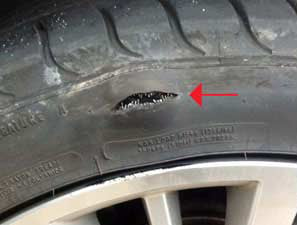
Tire Problems
A bulge or cut on the tire sidewall is an indicator that the tire was pinched or punctured between the edge of the pothole and the wheel causing the internal plies to be weakened or severed.
Steering Issues
Your steering wheel feels off-center or your vehicle wants to pull to one side or the other. The impact may have been hard enough to affect the alignment or damage a steering or suspension component.
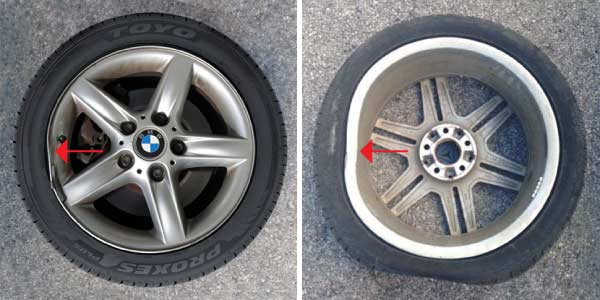
Wheel Damage
Potholes can dent or bend aluminum or steel wheels. This can cause an air leak or safety issue.
Vibrations
If you feel abnormal vibrations in the steering wheel, seat or floor, the pothole may have damaged your suspension.
Noises
New noises could mean something has been bent or displaced and could be rubbing on the tire/wheel assembly.
Warning Lights
If a dashboard warning light appears, get to your mechanic or come to any Les Schwab.
Performance Issues
There may have been damage if your cornering is impacted, your vehicle starts to sway or bob up and down a lot over speed bumps, or your steering and braking feel impacted.
How Badly Can Potholes Damage My Vehicle?
Depending on the severity of the impact and the size of the pothole, potholes can cause bent wheel rims, internal tire damage, alignment problems, as well as shock and strut issues.
But not all impacts are instantly recognizable. Some problems develop over time. If you suspect you may have bent a wheel, punctured a tire, or caused damage to any parts of your suspension, stop by anytime or book an appointment at Les Schwab for an evaluation. Ignoring any potential issues can add to the cost. Something as simple as a damaged shock or strut can cause issues to other parts of your vehicle, including your brakes.
The professionals at Les Schwab will give your vehicle an inspection for the following issues:
- Wheels/steering knocked out of alignment
- Damage to the tire’s steel belts
- Missing tire balancing weights
- Bent or cracked wheel rim
- Damage to shocks and struts
- Other broken suspension components
Tips to Minimize Post-Winter Pothole Damage
Here’s what you can do to minimize the damage when facing potholes or damaged roads.
- Always drive on tires that are properly inflated and in good condition. This will give you the best chance of absorbing the impact safely. This can also help avoid damage to your shocks, struts, and suspension.
- Drive defensively. Slow down when you’re on an unfamiliar or rough road, and avoid distracted driving.
- Be alert to what’s ahead, and make sure you keep enough distance between you and the vehicle in front of you so you can avoid issues.
- Recognize that though you might miss the first pothole, there may be another waiting.
- When you can’t avoid a pothole, take your foot off the gas and hold your steering wheel tightly. Don’t brake. This will allow you to maintain the most control during the impact.
Les Schwab Has Experience with Pothole Damage
Our pros have seen plenty of pothole damage and can offer recommendations, including tire repair and replacement, alignment work, and more. Stop by your local Les Schwab for a free inspection. If you need new tires, wheels or alignment, we’ll help get you and your family quickly and safely back on the road.
Opens warranty information dialog with language options


